
Last updated September 10, 2026
Level 1 sweep and inspection to the NFPA 211 annual standard - flue, crown, cap, and flashing checked and photographed
Chimney sweep logs do not sweep chimneys. They loosen some creosote - which then falls where a brush and vacuum still have to collect it.
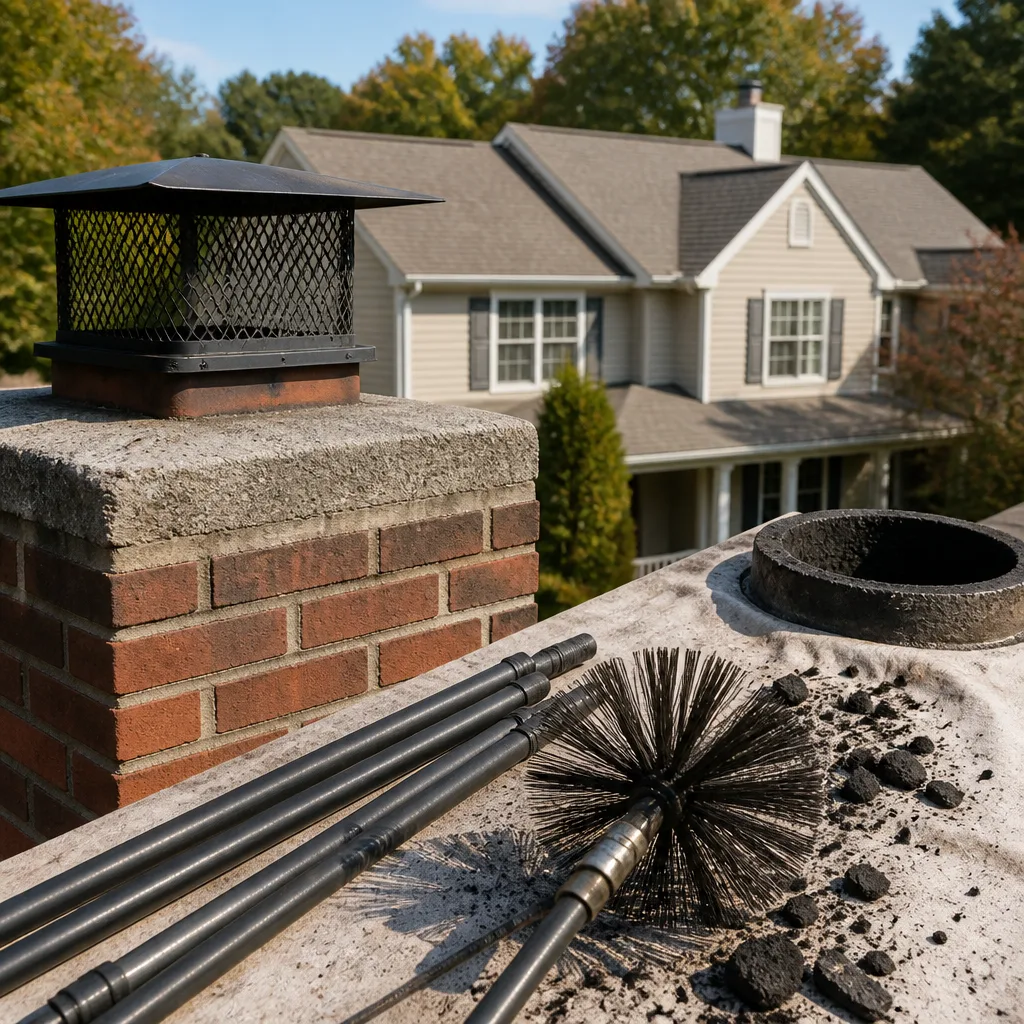
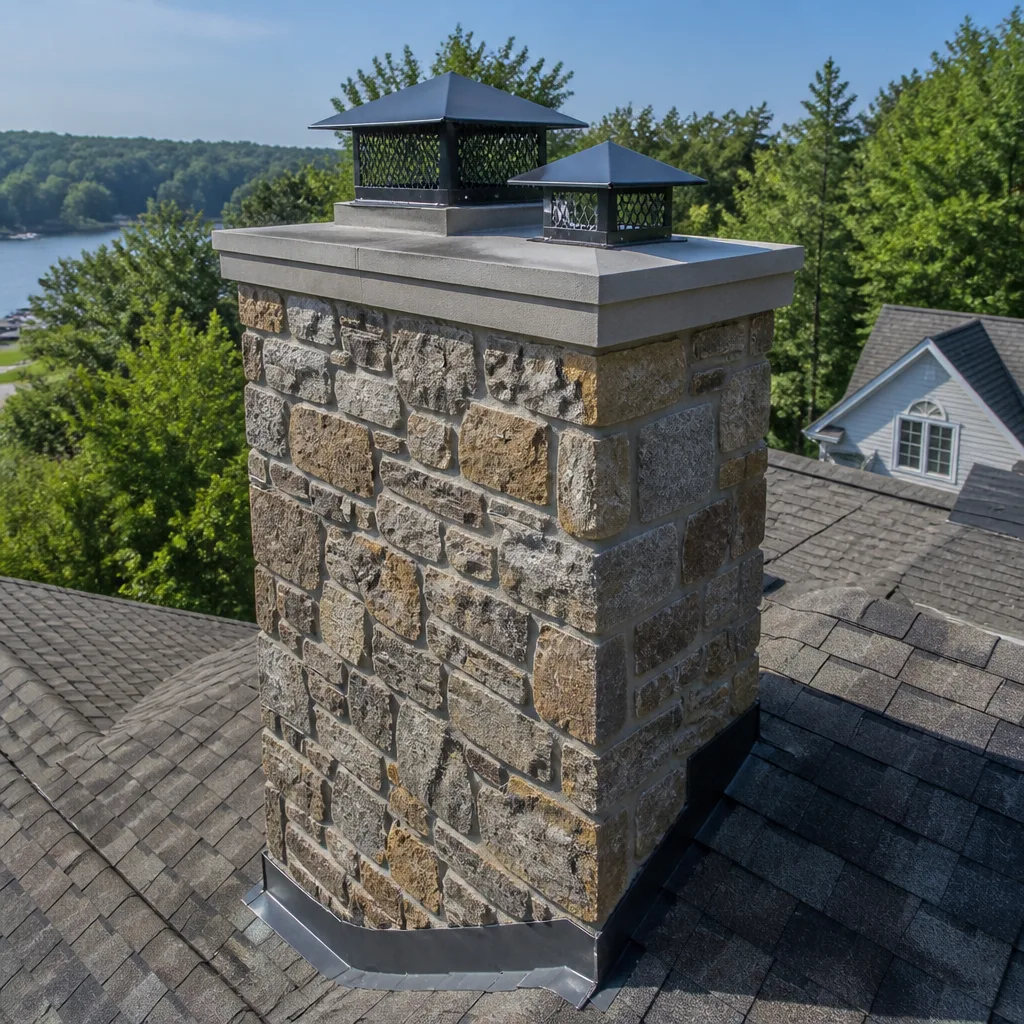
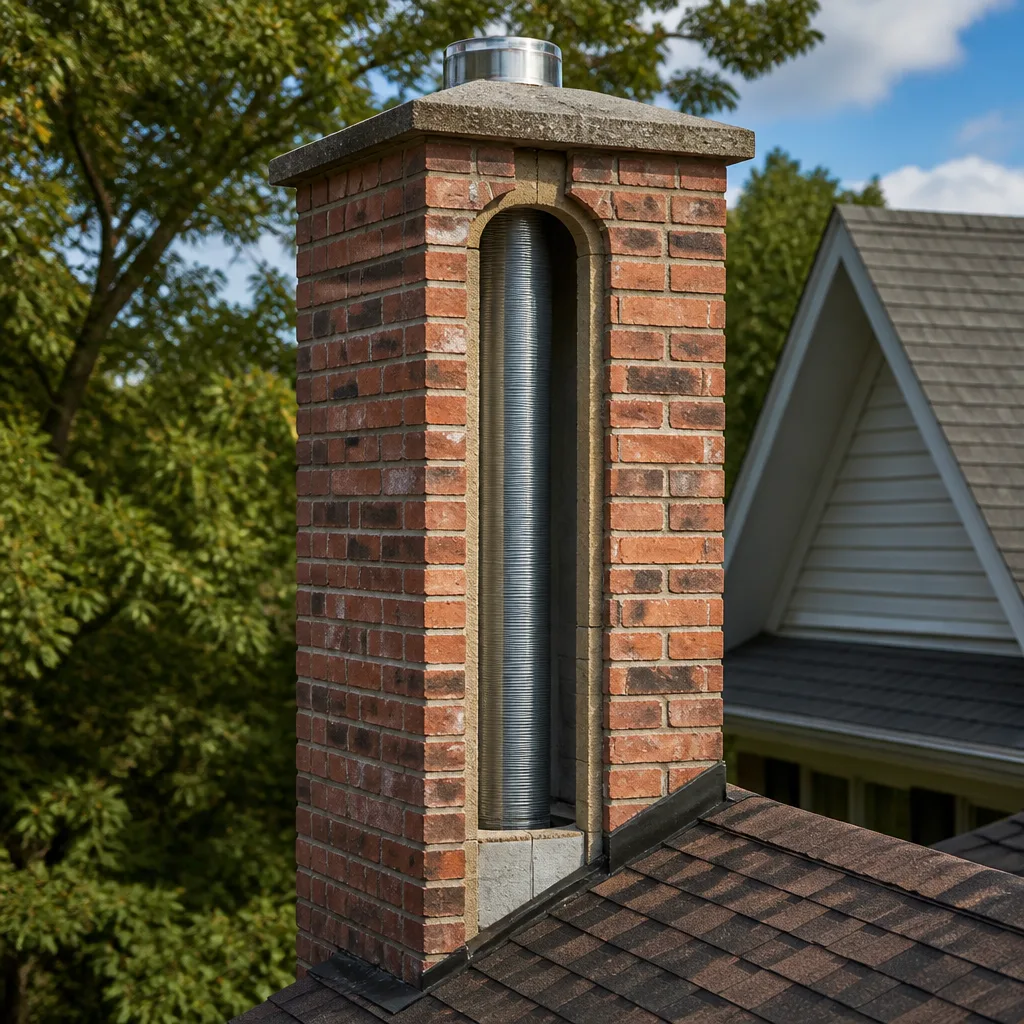
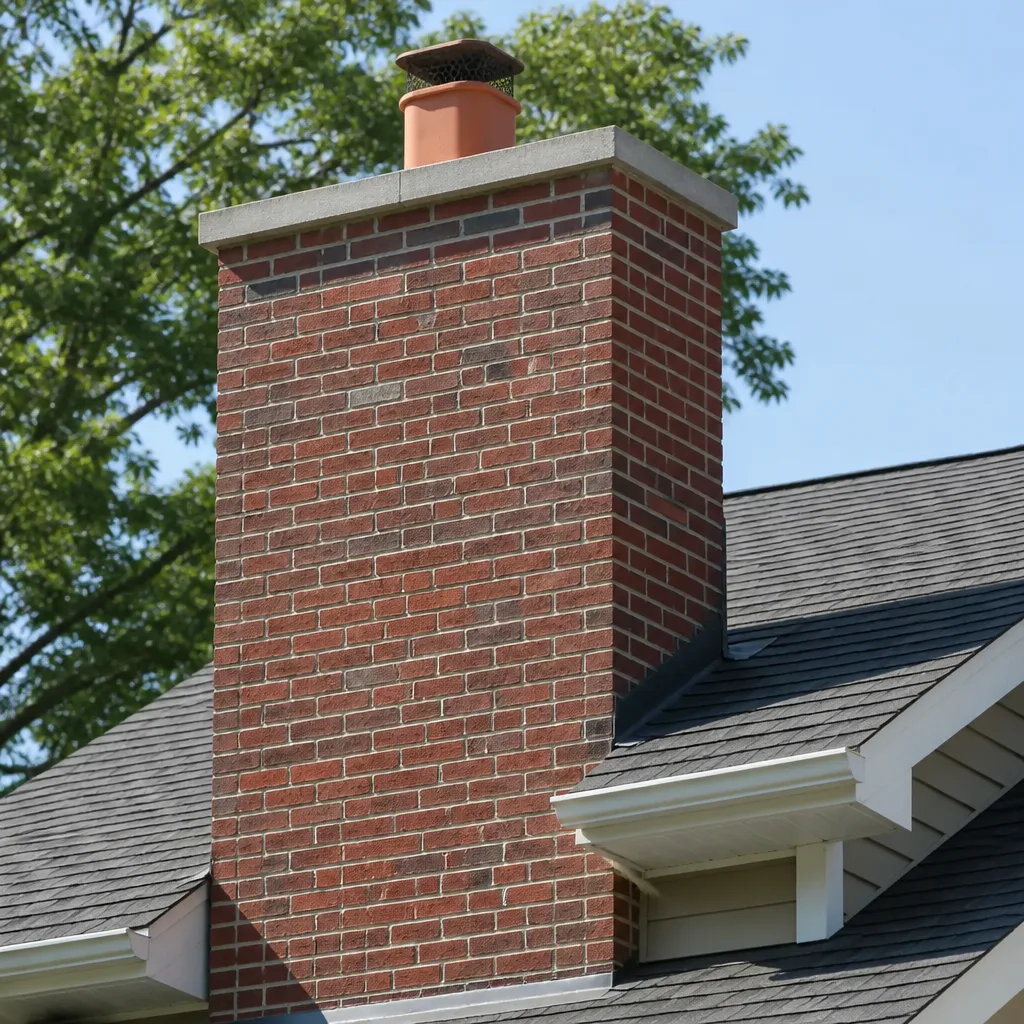
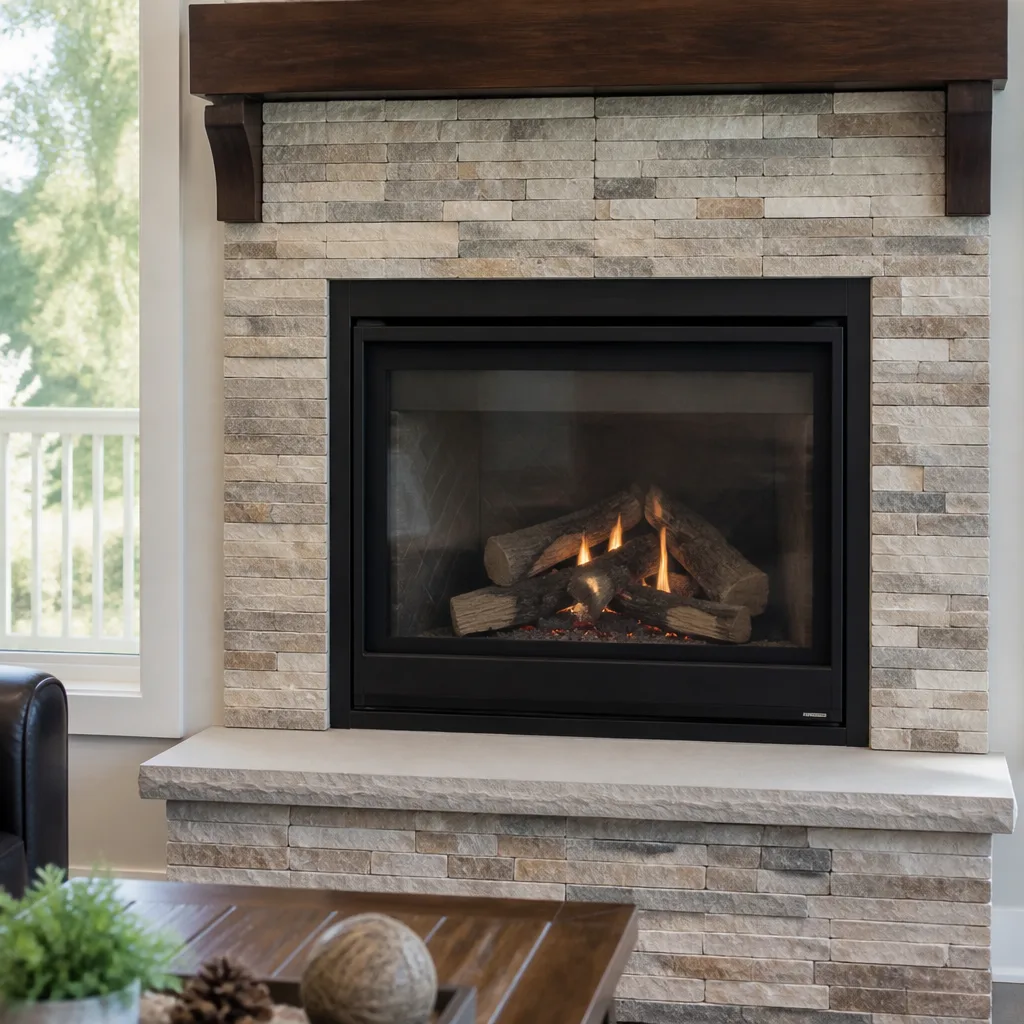
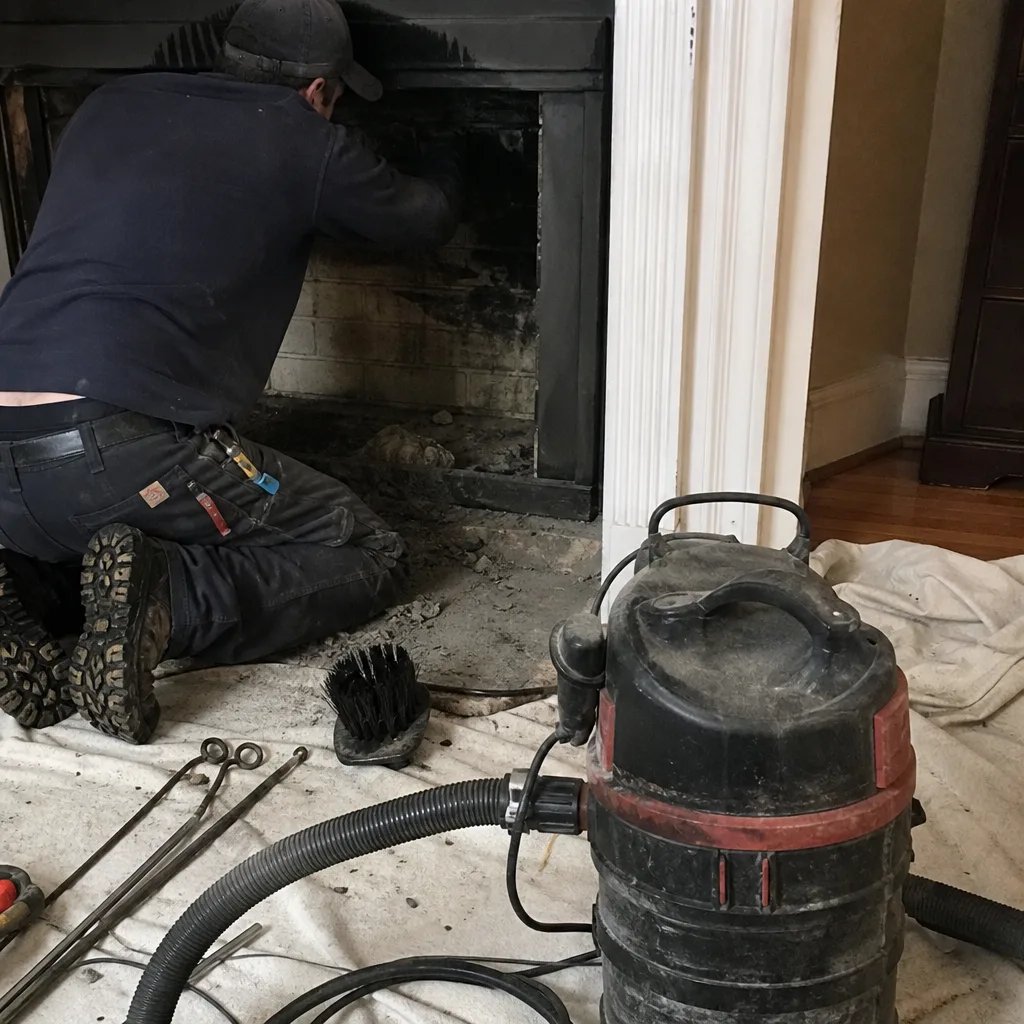 Before
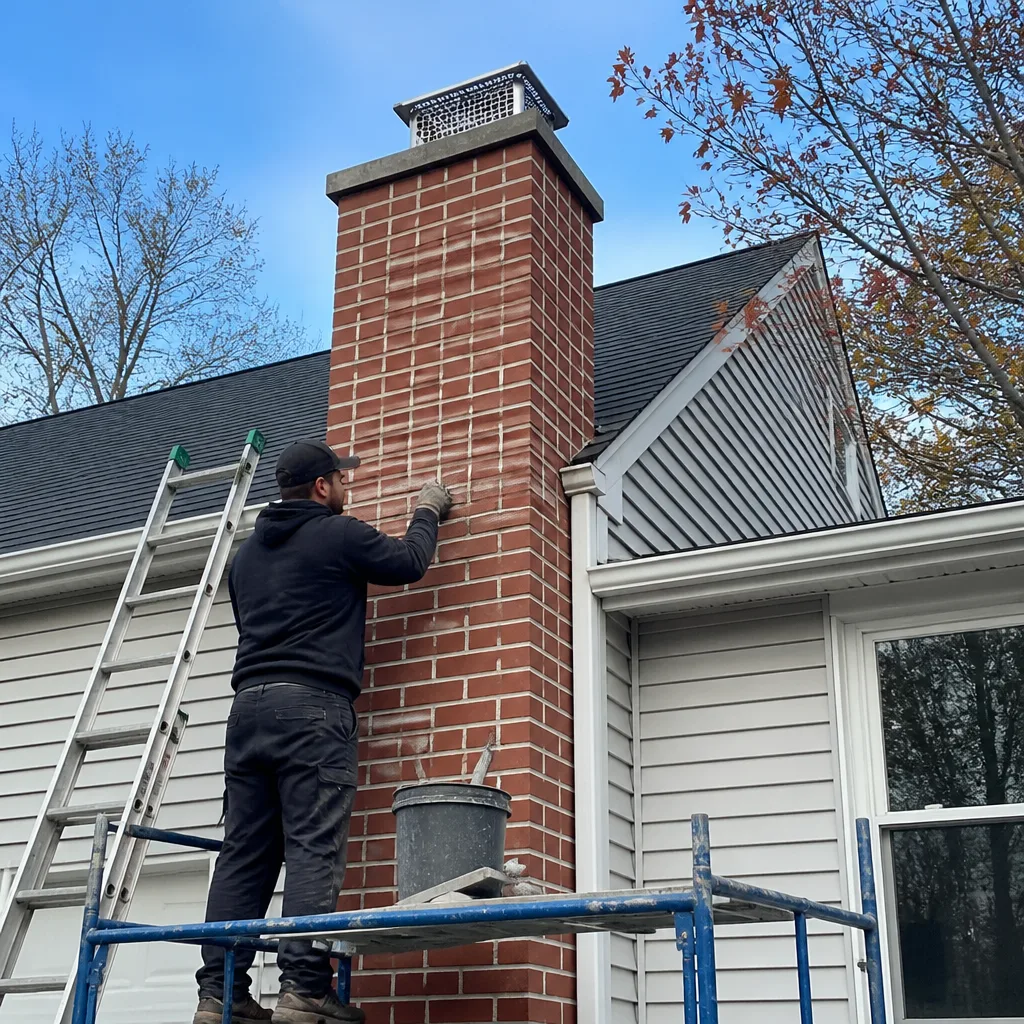 After
After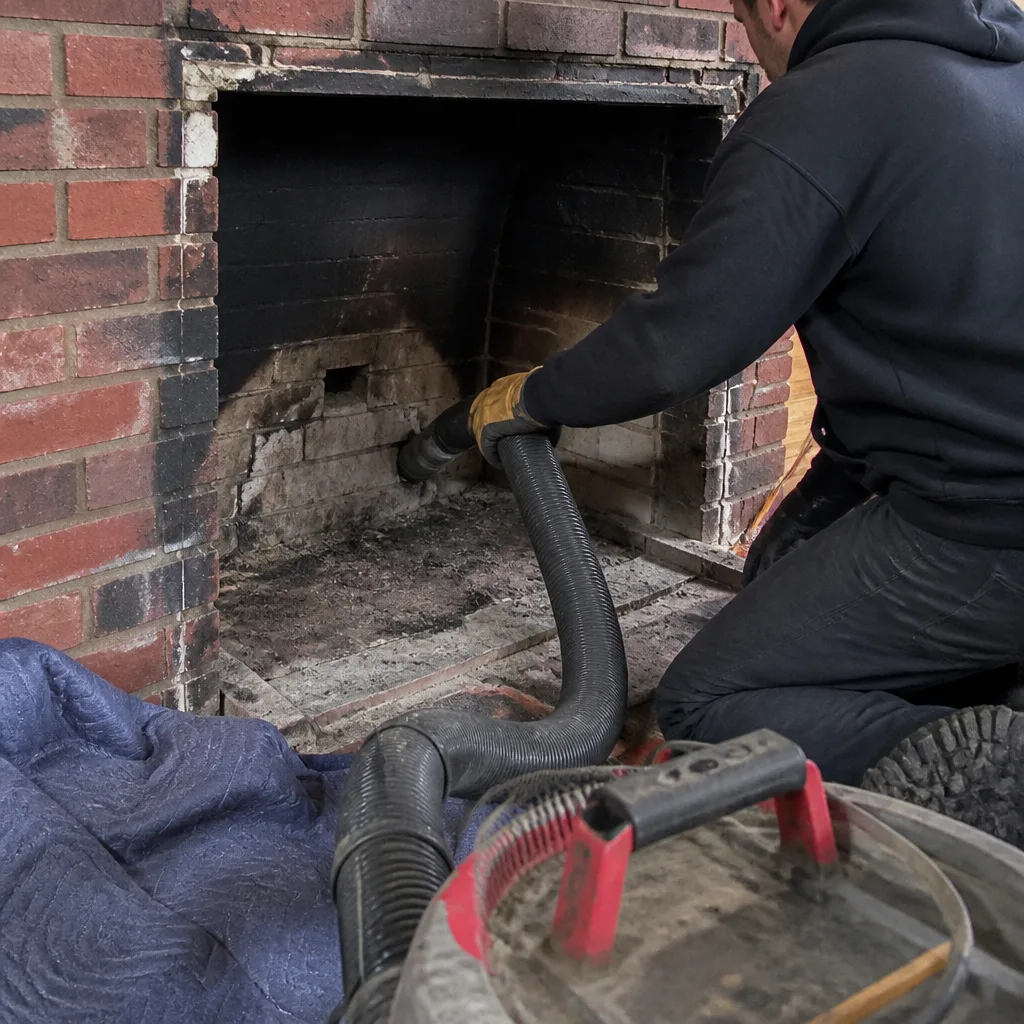 Before
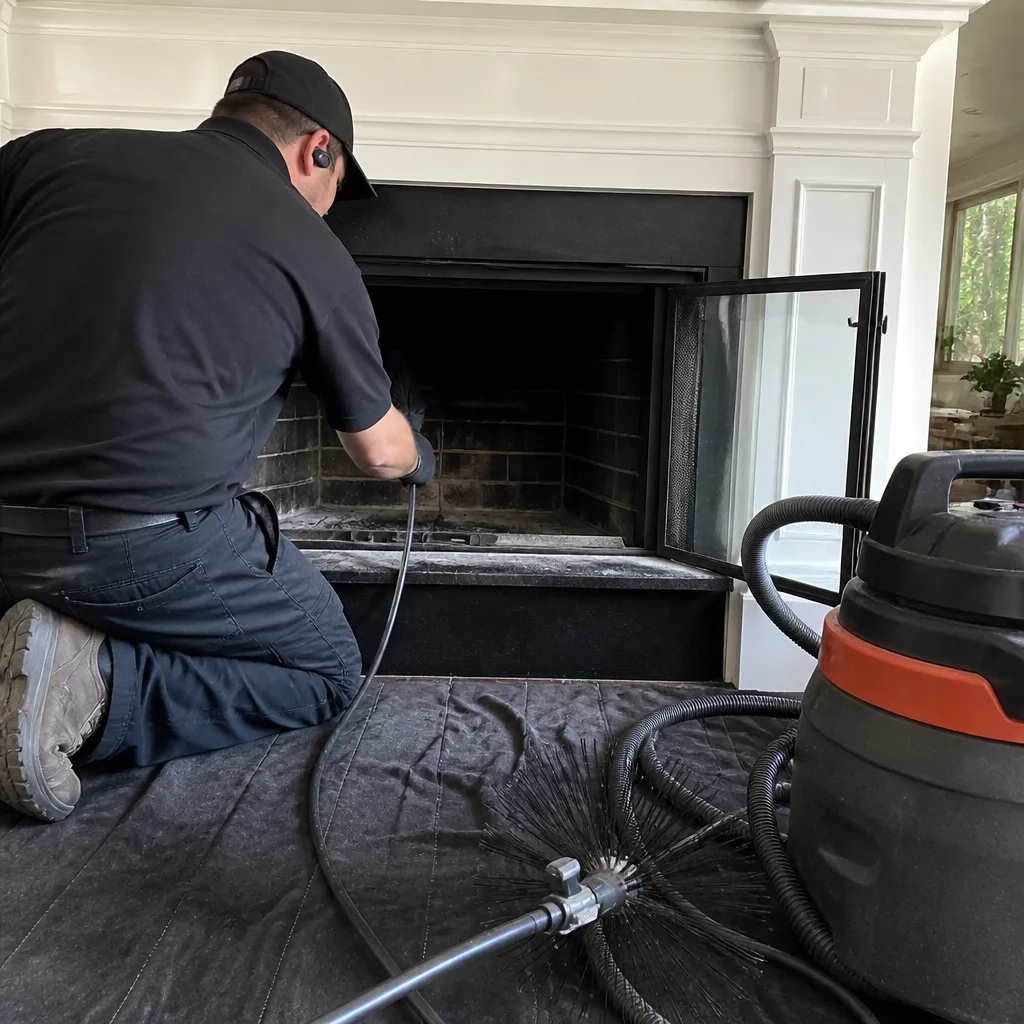 After
After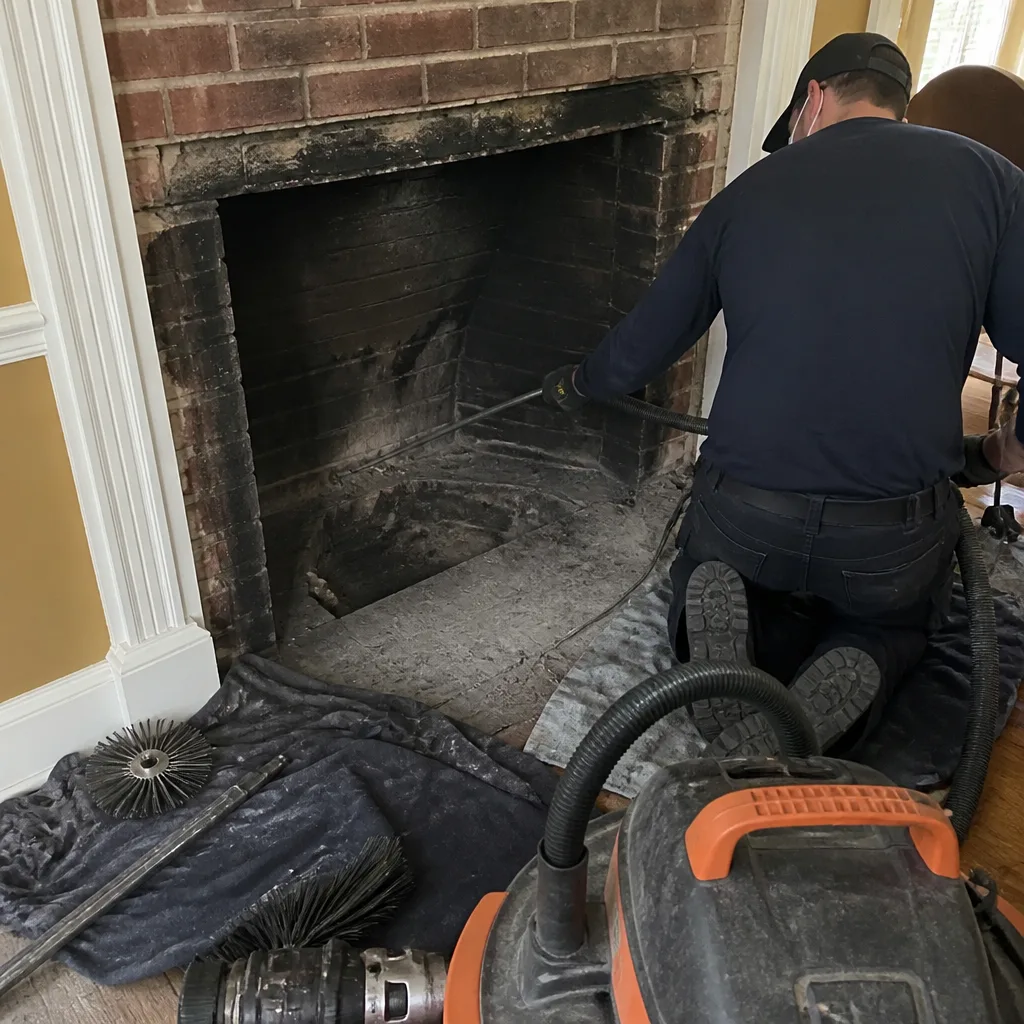 Before
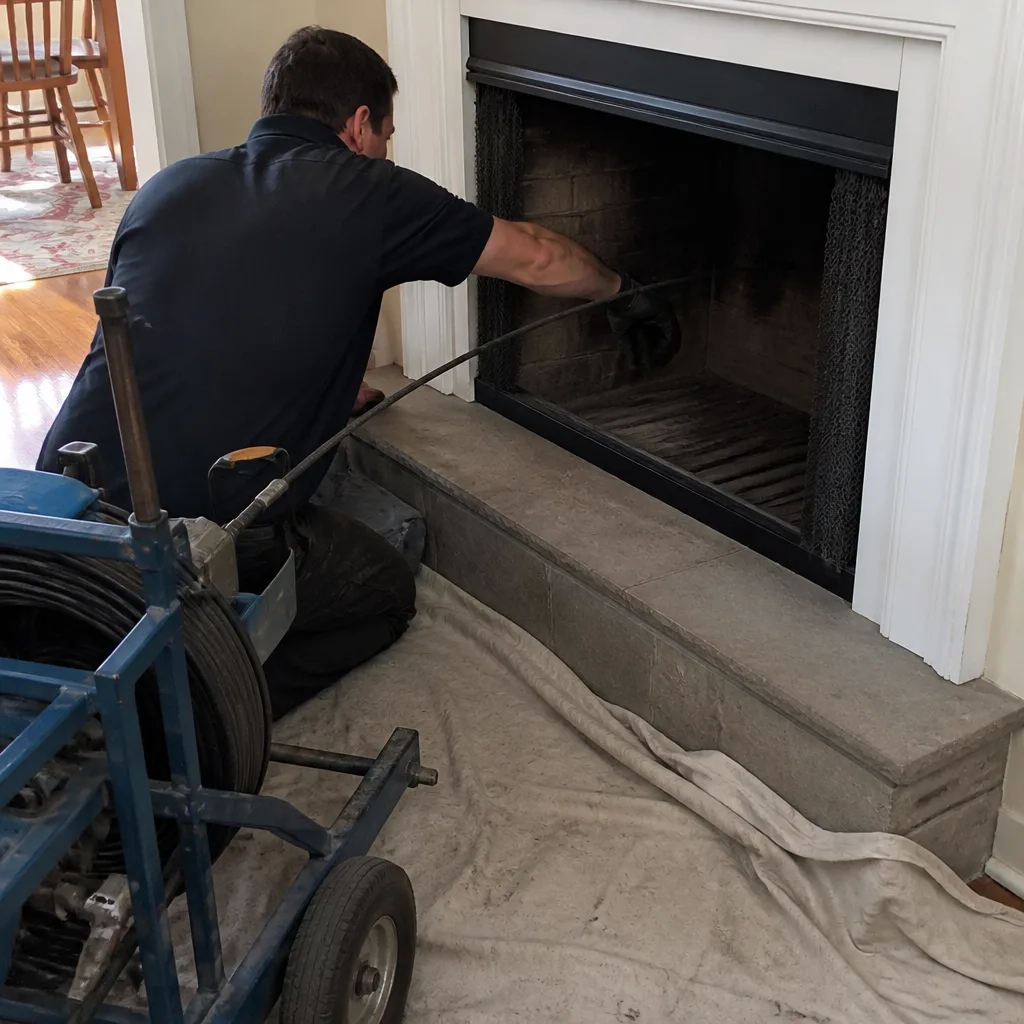 After
AfterDIY vs Professional Chimney Cleaning: The Framingham Homeowner’s Decision Guide
Chimney cleaning brushes cost $40 at the hardware store. That’s not the part I’d argue with. It’s the assumption that the deposit you’re knocking loose is the only problem in there. Most Framingham homeowners who call us after a DIY attempt aren’t calling because they failed to remove creosote. They’re calling because the brush knocked something loose they couldn’t see, or because the flue wasn’t the shape they assumed it was, or because the smoke started backing up worse than before. This guide will walk you through what a homeowner can honestly do with a brush, what they can’t, and how to know which side of that line your chimney sits on, or check our more guides & resources for related maintenance topics.
Quick Answer
A careful homeowner with a straight, accessible flue and first-stage creosote can handle a light cleaning with a wire brush and drop cloths. But if your chimney has an offset, a liner you can’t see clearly, or creosote that looks shiny or crusted, a professional sweep with a rotary system and a flue camera is the only safe route. In Framingham, where heating season runs hard from October through April, the cost of getting it wrong is a chimney fire or a cracked liner you won’t know about until it’s expensive.
Table of Contents
- What DIY Chimney Cleaning Can Honestly Accomplish
- The Three Things DIY Can’t Know Going In
- Understanding Creosote Stages: What’s on Your Flue Walls
- The Equipment Gap: A $40 Brush vs. a Rotary System and Camera
- The Insurance and Liability Angle Nobody Mentions
- What Professional Cleaning Actually Costs in Framingham
- The Straight Recommendation Matrix
- Common Mistakes to Avoid
- When to Call a Professional
- Frequently Asked Questions
- The Bottom Line
What DIY Chimney Cleaning Can Honestly Accomplish
Let’s be straight about this. A homeowner with a 6-inch round flue, a straight run from firebox to cap, and access from the roof or through the firebox can remove first-stage creosote with a wire brush, extension rods, and some patience. First-stage creosote is the flaky, sooty, brownish deposit that brushes off with moderate effort. It accumulates from wood fires that burn reasonably hot and chimneys that get used regularly but not heavily. If that’s what’s in your flue, a DIY cleaning can knock it down to the point where the chimney is safe to use again.
Here’s what an honest DIY job looks like, step by step:
- Get eyes on it first. Shine a bright flashlight up from the firebox and down from the roof. If you can see straight through and the walls look sooty rather than shiny or glazed, you’re likely dealing with first-stage creosote.
- Seal the firebox opening. A sheet of plastic and painter’s tape across the fireplace opening keeps the dust in the chimney instead of your living room. We’ve cleaned up after homeowners who skipped this step. It’s the most common DIY complaint we hear in Framingham.
- Brush from the top down or bottom up, but stay consistent. Attach the brush to your first rod section, work it in short strokes, add rods as you go deeper. If you meet resistance that feels like more than friction, stop. Don’t force it.
- Sweep out the firebox and smoke shelf. The debris has to go somewhere. A shop vac with a fine-dust filter helps, but wear a respirator. Creosote dust is not something you want in your lungs.
- Dispose of the creosote properly. Double-bag it. Don’t put it in your garden. It’s toxic to plants and it will kill beneficial soil bacteria.
That’s the job. It’s dirty, it’s physical, and it takes most homeowners two to four hours the first time. If your roof is steep, that part alone should give you pause. Framingham homes split roughly between ranches with walkable roofs and colonials with pitches that make a ladder nerve-wracking. We get called to plenty of both.
One thing DIY can’t do is give you a clean bill of health for the rest of the system. You can remove visible soot. You can’t see the liner seams, the smoke chamber cracks, the crown hairline fractures, or the flashing gaps. Professional chimney cleaning in Framingham includes a camera inspection because the flue walls are where the real story lives, and the brush never sees most of it.
The Three Things DIY Can’t Know Going In
Here’s the honest part, and it’s the part the hardware store won’t tell you. The three things that send DIY chimney cleaning sideways are also the three things you can’t know going in without a camera.
First: the creosote stage. A brush handles first-stage creosote. It barely touches second-stage, which is the shiny, tar-like deposit that forms when flue temperatures run lower. Third-stage is a hard glaze that forms when second-stage bakes on repeatedly. That stuff laughs at a wire brush. Removing it requires chemical treatment or a rotary cleaning system with carbide-tipped chains. If you spend two hours running a brush over third-stage glaze and then light a fire, you’ve done nothing but give yourself false confidence and a sore back.
Second: the flue geometry. Not every chimney goes straight up. Offsets are common in Framingham homes where the fireplace sits off-center from the roofline, especially in the older neighborhoods near downtown and the post-war expansions south of Route 9. If your flue has a 30-degree elbow, a brush on flexible rods will follow it partway, push debris into the bend, and then pull back clean while leaving a blockage you can’t see. Debris packed into an offset is a chimney fire waiting for the right conditions.
Third: the liner condition. Clay tile liners crack. It happens in Framingham every winter when thermal cycling stresses the tiles, and it happens faster in chimneys that have already experienced a flue fire. A wire brush passing over a cracked tile can catch the crack edge, widen it, and turn a $200 inspection finding into a $3,000 reline job. You won’t know the liner is cracked going in. The brush will find it for you, and not in the way you want.
In our experience, these three unknowns are exactly why the DIY conversation is really an inspection conversation. The cleaning itself is often the easy part. Knowing what you’re cleaning is the part that matters.
Understanding Creosote Stages: What’s on Your Flue Walls
Your flue doesn’t care how the fire looks. It cares how it breathes. And what it breathes out condenses on the flue walls as creosote. The stage of that creosote determines whether DIY is realistic or whether you’re in over your head.
- First-degree creosote is the flaky, sooty, brownish deposit. Brushing removes most of it. This is what a careful homeowner can handle. If your last inspection was clean and you burn seasoned wood hot, this is likely what you’re dealing with.
- Second-degree creosote is shiny and compact, like dried tar. It forms when flue gas cools faster than it should: on exterior chimneys, during low smolder fires, or with unseasoned wood. A brush removes maybe a third of it. The rest stays, and it’s fuel.
- Third-degree creosote is a hard glaze, often black and glossy, with the texture of broken glass. It burns long and hot once ignited. Removing it takes a rotary system with specialized chains or a chemical treatment protocol. First-degree creosote is a brush job. Third-degree is a glaze. Catch it early.
Here’s what this means for a Framingham homeowner specifically. We have long heating seasons. We have plenty of wood-burning stoves and open fireplaces in homes built before 1980. We have exterior chimneys on older colonials that run up the gable end and never get warm enough to keep creosote at first stage. Those chimneys build second and third-degree creosote faster than interior flues, and the homeowners who own them often can’t tell the difference without a camera.
If you burn more than two cords a year, or you burn anything that isn’t hardwood seasoned at least a full summer, assume you’re past first-stage. That’s not a judgment. It’s just how wood combustion works.
The Equipment Gap: A $40 Brush vs. a Rotary System and Camera
The $40 brush kit at the hardware store comes with rods, a brush head, and a set of instructions that assumes your chimney is a straight cylinder of uniform diameter. Most Framingham chimneys are not that. The professional setup is different not because it’s fancier but because it solves different problems.
- A brush cleans by abrasion. It scuffs soot off the walls and lets it fall. It works on first-stage creosote in a straight flue. It does not inspect anything, and it does not tell you whether the job worked.
- A rotary cleaning system spins flexible rods and specialized heads at speed, like a weed whacker for flues. The spinning action breaks up second-stage creosote and can cut through third-stage glaze with the right head. It follows offsets without packing debris into bends because it’s actively clearing as it goes.
- A flue camera is the difference between assuming and knowing. After a rotary pass, the camera shows what remains. It shows the cracks, the gaps, the missing mortar joints, and the spots where the liner has begun to spall. The camera footage and a plain-English verdict: every time, no exceptions.
The honest comparison isn’t brush vs. brush. It’s brush vs. brush-plus-camera-plus-rotary-system-plus-the-experience-to-know-what-the-camera-is-showing. One is a cleaning tool. The other is a diagnosis. A doctor with a stethoscope and a doctor with an MRI are both doctors, but they’re not doing the same job.
We run a rotary system with a camera on every single cleaning we do in Framingham, not because the cleaning needs the camera but because the homeowner needs to see what we see. If we tell you the liner has a crack, you should be able to put your eyes on it. If we tell you the flue is clean, the footage backs that up too. That’s the standard, and it’s the one we would want if it were our house.
The Insurance and Liability Angle Nobody Mentions
Here’s the part most DIY guides skip. If you have a chimney fire and you file a claim, your insurance company will ask for documentation. Most homeowners’ policies in Massachusetts include language requiring that fireplaces and chimneys be properly maintained, and “properly maintained” means a paper trail. A receipt from a licensed chimney professional. A dated inspection report. A record of cleaning.
A DIY cleaning produces none of that. You can’t document what you don’t have, and after a chimney fire, you’ll wish you had it. We’ve talked to enough Framingham homeowners who found this out the hard way to know it’s real. The insurance adjuster doesn’t care that you bought a brush at Aubuchon. They care whether a professional can attest that the chimney was safe and maintained before the event.
There’s a second angle too: liability if you sell the house. Buyers ask about chimney condition. A home inspector flags an unlined or uncertified chimney and the deal gets complicated. A file of professional cleanings and inspections, going back years, answers the question before it becomes a negotiation point. Ask anyone on your street who’s sold a house in Framingham in the last five years. The chimney comes up.
This isn’t a scare tactic. It’s the same logic as oil changes on a car: the record has value beyond the service itself. The receipt from a professional sweep is part of what you’re paying for, and it’s a bigger part than most people realize.
What Professional Cleaning Actually Costs in Framingham
Let’s put numbers on it. A professional chimney cleaning and inspection in Framingham runs $180 to $340 for a standard single-flue fireplace or wood stove. That includes the rotary cleaning pass, the camera inspection, and a written report. If you add a second flue, which many older Framingham homes have (often a furnace flue next to the fireplace flue), expect to add $80 to $150. Repairs are separate and quoted after the camera shows what’s there.
Here’s the cost structure so you can compare honestly:
- DIY brush kit: $40 to $75 at a hardware or big-box store
- Additional DIY supplies: $25 to $50 for drop cloths, tape, respirator, shop-vac filter
- Professional sweep and camera inspection, single flue: $180 to $340 in Framingham
- Second flue add-on: $80 to $150
- Rotary cleaning (included in our standard sweep): part of the standard price, not an upsell
- Chemical creosote treatment (third-stage cases): $100 to $250, depending on severity
- Liner repair or replacement (if camera finds damage): $1,800 to $6,000, depending on scope
Now, the honest framing. The DIY route saves you $150 to $250 on paper. It costs you whatever you value two to four hours of dirty, physical work at, plus the gap in what you know afterward. If the camera would have found a $400 repair, DIY didn’t save you $200. It deferred a $400 problem into a $3,000 problem.
No one should feel pressured into a professional cleaning to avoid the cost. The cost is real and it matters. But the right comparison is total cost over the life of the chimney, not the invoice line for one afternoon. Chimney repair in Framingham is always more expensive than the inspection that catches the problem early.
The Straight Recommendation Matrix
Here’s the decision framework, plain and simple. If all three of these are true, DIY is a reasonable choice and we’ll tell you that with a straight face:
- Your last professional inspection was clean. Not “you think it was clean” or “it’s been fine.” A professional said, on the record, that the liner is intact and the creosote was first-stage last time it was checked.
- You burn occasionally and burn well. Less than two cords a year. Hardwood, seasoned. Fires run hot rather than smoldered. No unseasoned pine, no cardboard, no wrapping paper.
- Your flue is straight and accessible. You can see from firebox to cap with a flashlight. The roof pitch doesn’t require a harness and a prayer. You have ladders you trust and a spotter who can call 911 if something goes wrong.
If any of those three is false, call a professional. Here’s why:
- No clean inspection history? You don’t know what’s in there. A brush could be the right tool or the wrong one, and you won’t know until you’re already committed.
- Occasional smolder fires or mystery wood? Assume second-stage creosote at minimum. A brush won’t clear it. A rotary system will.
- Offset flue or steep roof? The risk isn’t the cleaning. It’s the access. A fall off a roof costs more than any chimney cleaning ever will. And an offset packs debris in ways a straight pipe doesn’t.
- Assuming the brush did the job because the brush came out dirty. Dirty brush means the brush touched something. It doesn’t mean the flue walls are clean. Without a camera, you’re guessing.
- Forcing the brush past resistance. If the rod binds, the brush may be catching on a cracked tile or a displaced flue section. Forcing it turns a finding into damage. Ease off and reassess.
- Skipping the smoke shelf and smoke chamber. The flue is the highway, but the shelf and chamber are the off-ramp where debris piles up. A clean flue with a loaded smoke shelf still drafts poorly and still poses a fire risk. Most DIY homeowners don’t even know these areas exist.
- Using chemical creosote logs as a substitute for cleaning. The logs can loosen first-stage creosote. They don’t remove it, and they do nothing for second or third-stage. They’re a supplement, not a service.
- Cleaning from the roof on a pitched surface without fall safety. We hear the phrase “it’s not that steep” from the hospital bed. If the roof slope is too much to stand on comfortably without a harness, it’s too steep to work on in shorts and sneakers. Framingham has plenty of 8/12 and 10/12 pitches, especially on the older colonials.
- Ignoring the off-season. Once a year, burn or no burn. Chimneys break in the off-season too. Rain, freeze-thaw cycles, animals, and time all work on your chimney when you’re not using it. The summer is the cheapest and easiest time to get a Framingham chimney sweep on your schedule.
That’s the whole decision. Not a vague “it’s better to be safe” hand-wave. Three yes answers, DIY is honest work you can do. One no, and the economics and safety both point toward a sweep.
Common Mistakes to Avoid
When to Call a Professional
Call a professional if you see shiny or glazed creosote, if your chimney has an offset you can’t see through, if your last inspection wasn’t clean, if you smell smoke in the house after the fire is out, if you see cracks or spalling anywhere on the chimney exterior, or if it’s simply been more than one year since anyone looked at the system. Those are the triggers. In all of those cases, the camera and the rotary system aren’t upgrades. They’re the minimum standard for doing the job correctly.
Top Hat Chimney offers free estimates in Framingham. Call (781) 390-9211 and you’ll get a live person, a straight answer, and a price before a single tool comes off the truck.
Frequently Asked Questions
A standard single-flue cleaning and camera inspection in Framingham runs $180 to $340. The price varies based on flue type, creosote stage, and access. Call (781) 390-9211 for an exact quote. Estimates are free and the number you hear is the number on the invoice.
You should see the camera footage before anyone replaces a liner. If the liner has cracks, gaps, or spalled sections, the repair is necessary for fire safety and for code. If someone quotes a liner replacement but won’t show you the footage, get a second opinion. Top Hat Chimney offers a free second opinion on any written estimate.
Once a year, burn or no burn. Chimneys break in the off-season too. The National Fire Protection Association says annual inspection, and cleaning frequency depends on what the inspection finds. Heavy burners in Framingham might sweep twice a season. Occasional burners might go two years with a clean annual inspection.
First, creosote accumulates. Second, it reaches a stage where it becomes fuel rather than residue. Third, one hot fire ignites it and you have a chimney fire that can reach 2,000 degrees and crack the liner from the inside out. After that, you’re not paying for a cleaning. You’re paying for a rebuild. Call (781) 390-9211 to schedule a sweep before it gets to that point.
Yes, for some setups, using a bottom-up method through the firebox with flexible rods. But you’re still blind to the upper flue condition and the smoke chamber. Bottom-up DIY is viable only for first-stage creosote on a straight flue where you’ve already had a professional camera inspection. Otherwise, you’re cleaning what you can’t see in a space you can’t verify.
A cleaning removes deposits. An inspection evaluates the entire system: liner, crown, flashing, damper, smoke chamber, and clearances. Our standard sweep in Framingham includes both, with camera footage from top to bottom. The camera captures what the brush touches and what it can’t.
The Bottom Line
A $40 brush is not the problem. The problem is that cleaning without inspecting is maintenance without diagnosis. If your chimney is straight, clean at the last check, and lightly used, DIY is a reasonable job that a careful homeowner can do safely. If any of those conditions doesn’t hold, the math stops being about $40 versus $300 and starts being about an unseen crack, a packed offset, or an insurance adjuster asking for paperwork you don’t have. The honest recommendation from a Framingham sweep is this: know what’s in there before you decide who cleans it. A camera answers that question in twenty minutes.
Written by Wendell Pike, Owner at Top Hat Chimney, serving Framingham since 1999.