
Last updated September 10, 2026
Level 1 sweep and inspection to the NFPA 211 annual standard - flue, crown, cap, and flashing checked and photographed
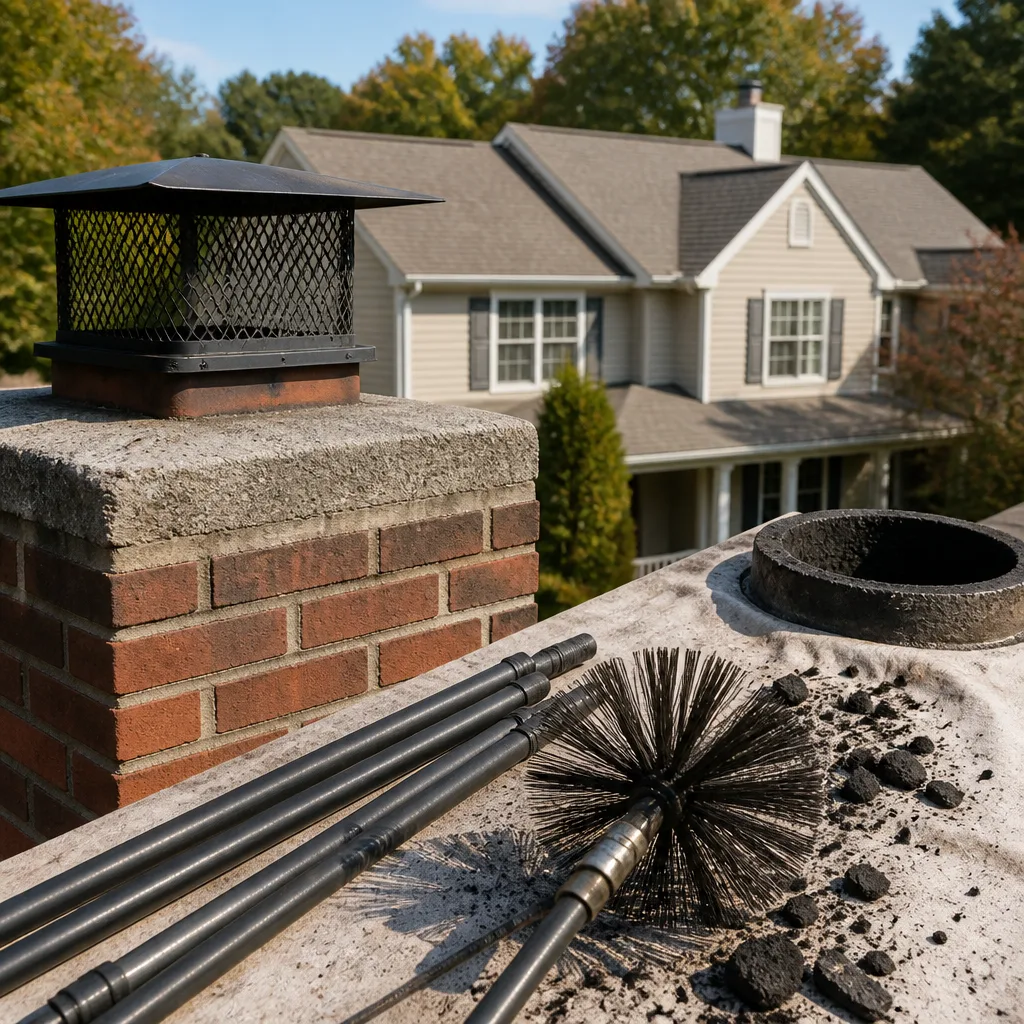
Chimney sweep logs do not sweep chimneys. They loosen some creosote - which then falls where a brush and vacuum still have to collect it.
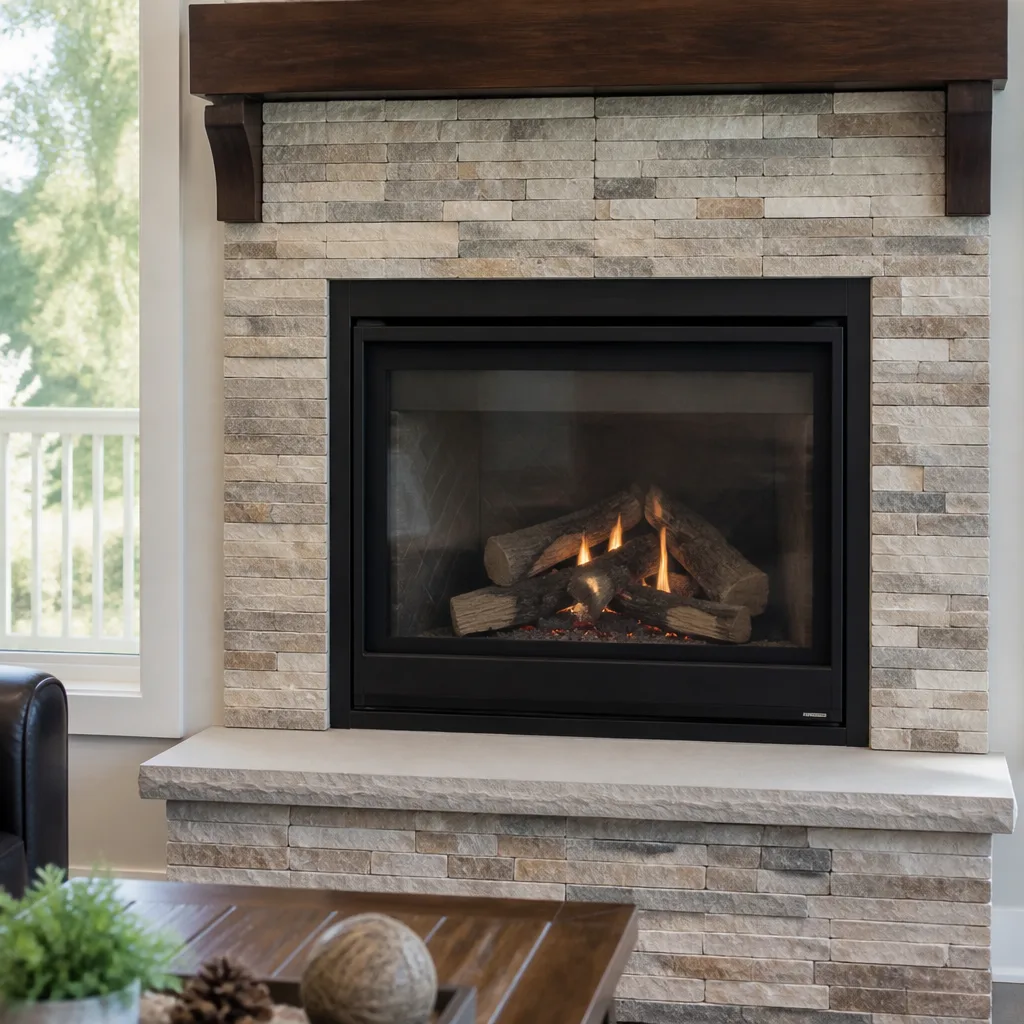
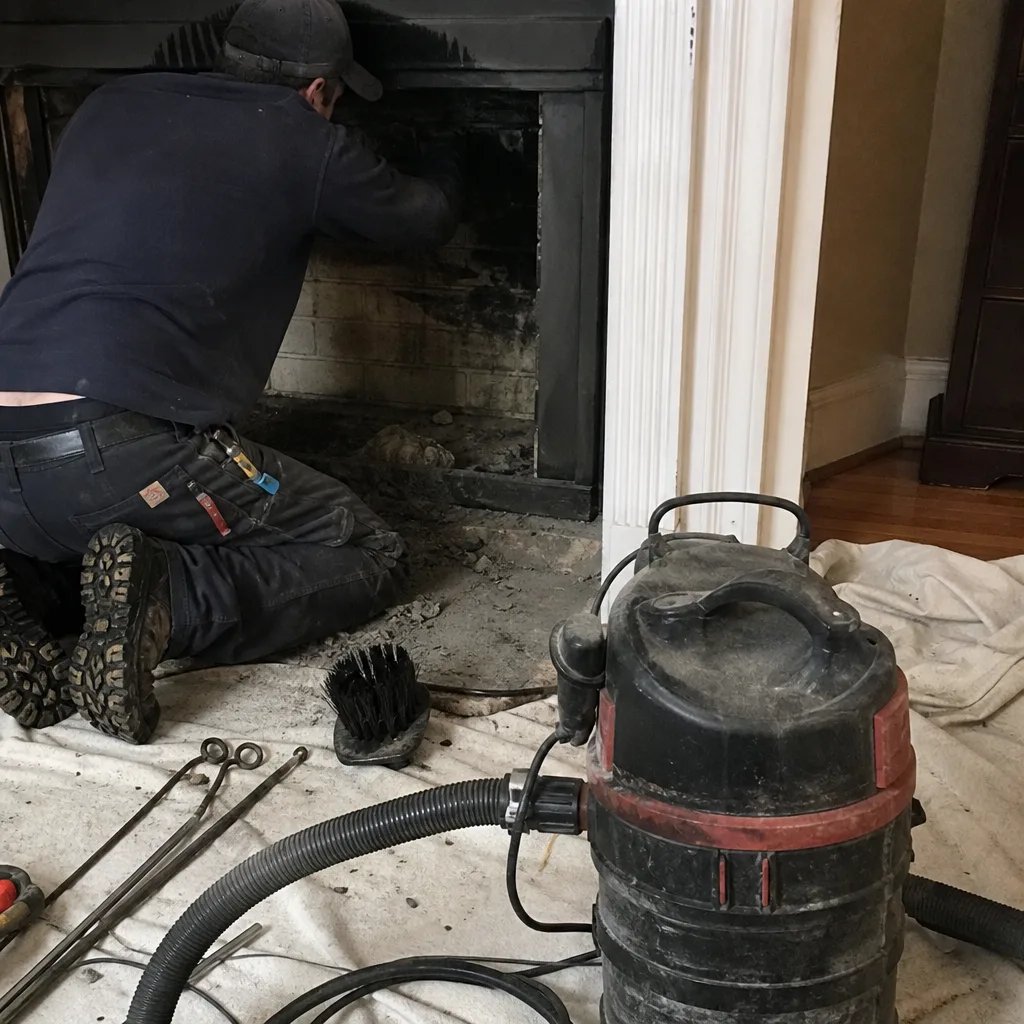 Before
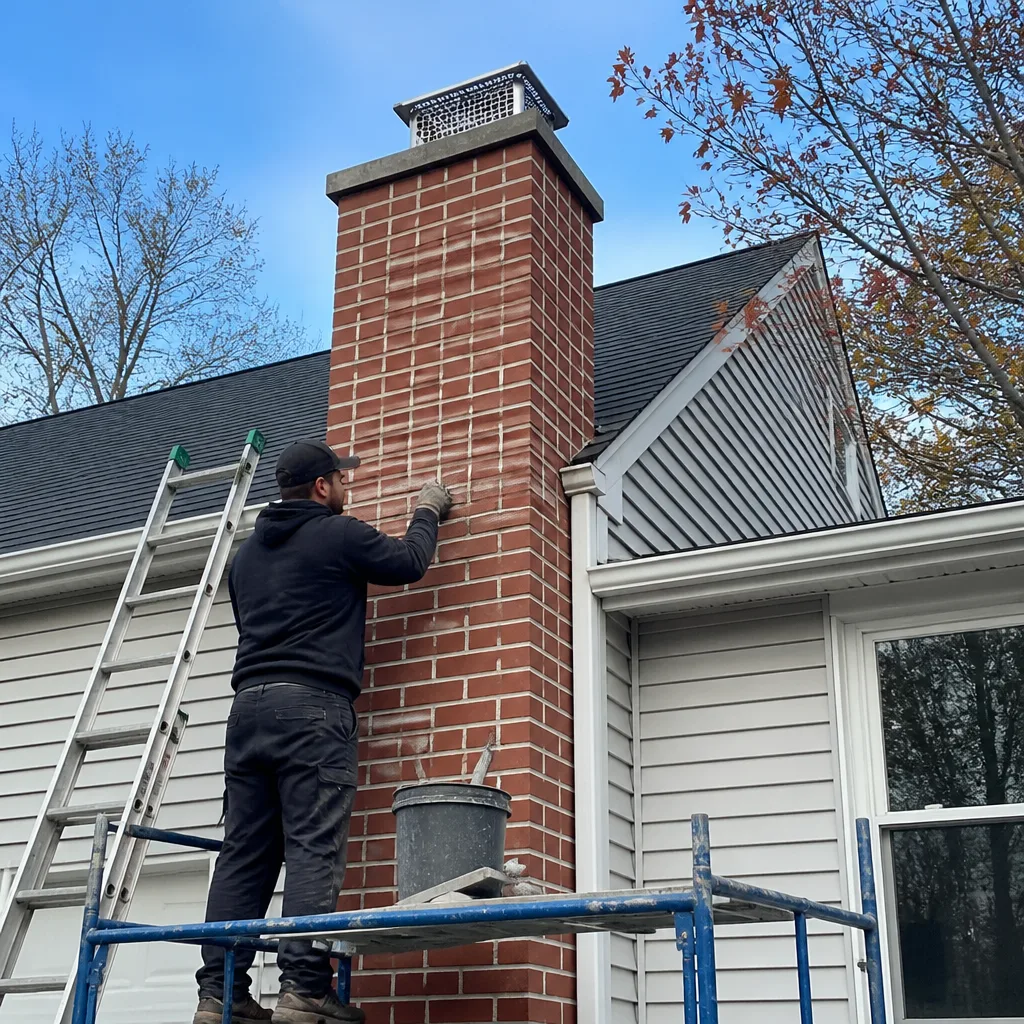 After
After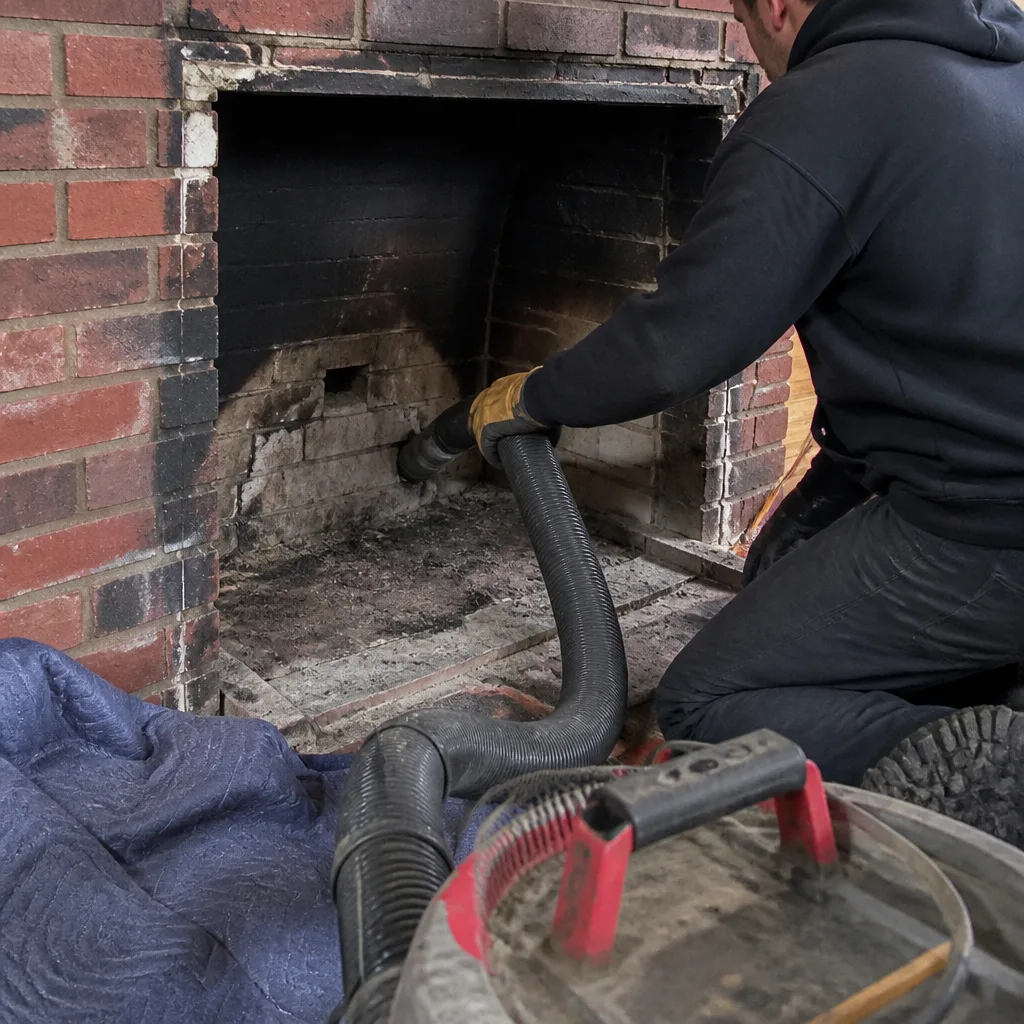 Before
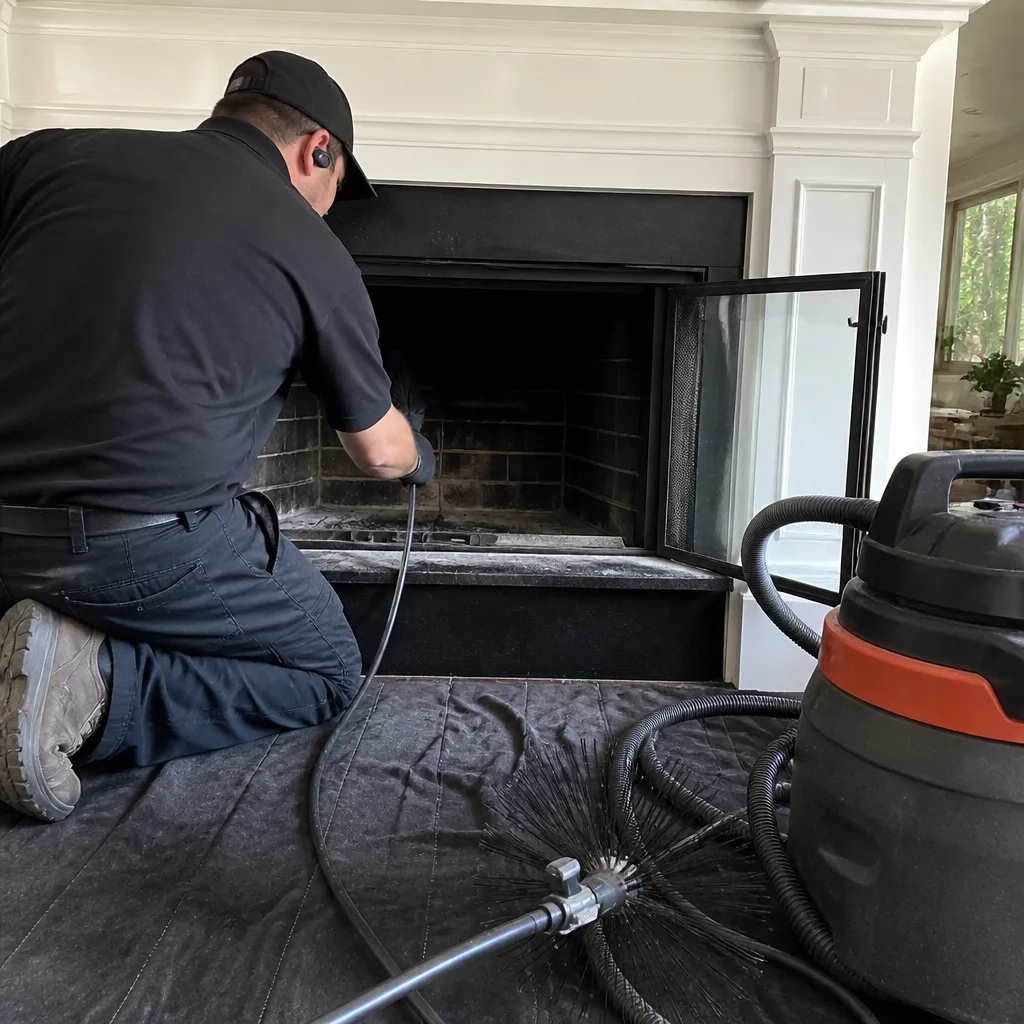 After
After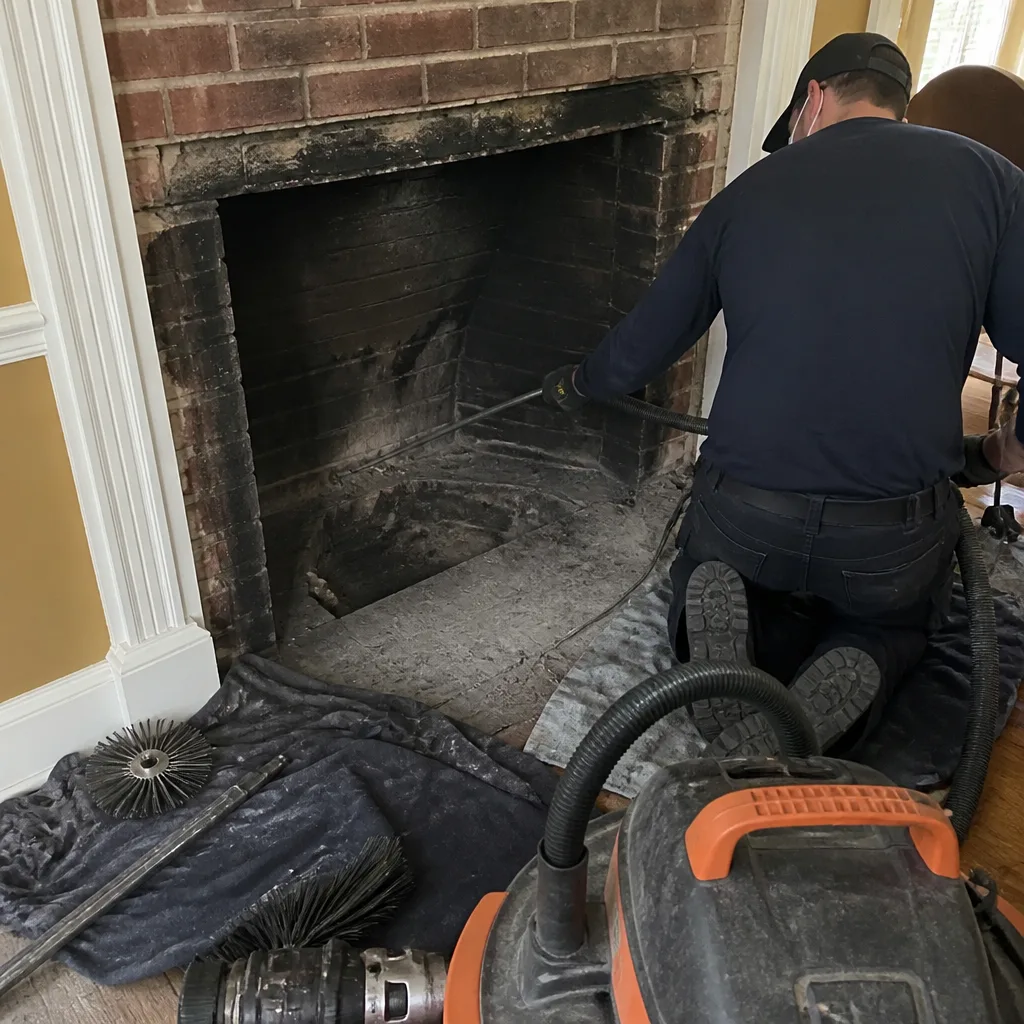 Before
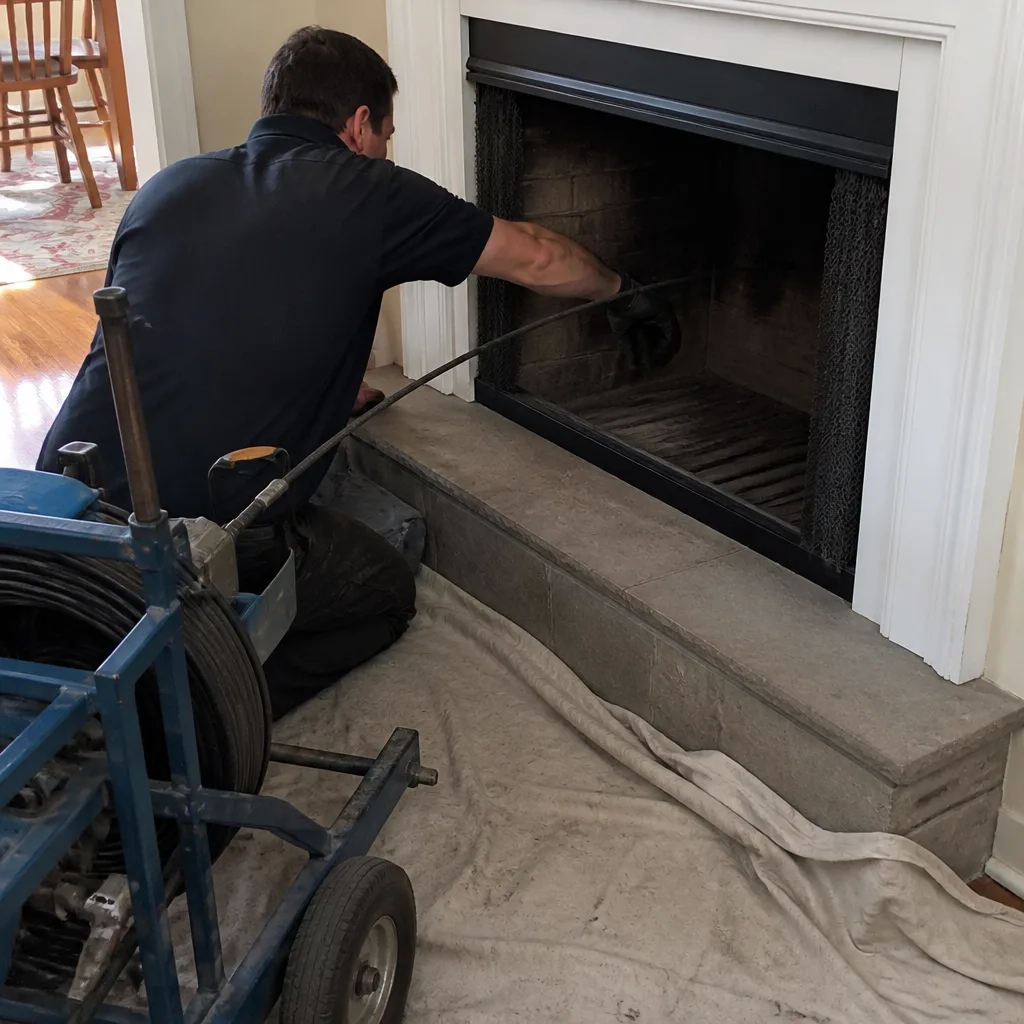 After
AfterSeasonal Chimney Cleaning Care for Framingham: Year-Round Homeowner’s Guide
Every chimney company in eastern Massachusetts markets fall cleanings. I do most of mine in May and June. The reason why changes how you think about chimney maintenance entirely. This guide walks through what Framingham’s climate actually does to your chimney across all four seasons, what you can check yourself in five minutes with no tools, and why the spring sweep is the single smartest move a homeowner here can make. If you’ve got a fireplace or wood stove, you’ll finish this knowing exactly when to clean, what to watch for, and when to leave it alone.
Quick Answer
The best time to clean a chimney in Framingham is late spring, between April and June, not the fall. Creosote comes off easier before summer heat bakes it hard, animals have not yet nested, and any repairs found can be scheduled before the October rush. A yearly sweep during this window protects your chimney through the heavy winter burn season and saves you the stress of competing with every other homeowner in Middlesex County come September.
Table of Contents
- Why Spring Is the Right Time to Clean Your Chimney
- What Framingham’s Climate Does to Your Chimney, Season by Season
- Month-by-Month: What to Check Yourself in Five Minutes
- The Fall Booking Rush: What It Really Costs You
- Off-Season Problems: Smoke Smell in July and Other Mid-Summer Calls
- Understanding Creosote: First-Degree Is a Brush Job, Third-Degree Is a Glaze
- The Spring Sweep Checklist: What a Thorough Cleaning Actually Includes
- Animals, Nests, and Framingham Wildlife: What Gets In and When
Why Spring Is the Right Time to Clean Your Chimney
The conventional wisdom says to sweep in September or October, right before burning season. That advice is not wrong, exactly, but it’s not the best thing for your chimney either. Here’s what we’ve learned in the years we’ve been inside Framingham chimneys.
Creosote is the tar-like residue that builds up on your flue walls every time you burn wood. In its early stages, it’s flaky and loose. A brush takes it off without much trouble. But creosote changes with temperature. When summer heat sits on your roof and bakes down through your chimney, that soft, flaky residue cures into something harder. By August, what would have been a straightforward brushing in May can become a glaze that requires chemical treatment or even mechanical removal. Sweeping in spring catches creosote before the heat bakes it.
Spring is also before nesting season. Chimney swifts, raccoons, and squirrels all look for sheltered spots to raise young, and an uncapped or damaged chimney in Framingham is an open invitation. Once a nest is in place, you’re not supposed to remove it while babies are present. That means waiting weeks or dealing with a more involved removal. If the sweep happens in April or May, the flue is still empty and any cap or screen damage that would have let animals in gets fixed before they arrive.
Then there’s the scheduling reality. Every chimney company in eastern Massachusetts gets slammed from late September through December. That’s when homeowners suddenly remember the fireplace exists. But the work capacity doesn’t grow in the fall. The same number of sweeps are trying to cover twice the calls. The result is longer wait times, less flexibility, and sometimes a more hurried job. When we sweep in May or June, there’s no pressure behind the brush. We can take the time the chimney actually needs.
And if the sweep turns up a problem, finding cracked flue tiles, a deteriorating crown, or a damper that’s not seating right, you have the entire summer to get it repaired on your schedule. No one wants to discover in October that they need a new liner, then wait three weeks for the part while nights drop below freezing. Spring gives you runway.
Once a year, burn or no burn. Chimneys break in the off-season too. The spring sweep is the off-season vote that pays off in January.
What Framingham’s Climate Does to Your Chimney, Season by Season
Your flue doesn’t care how the fire looks. It cares how it breathes. And Framingham’s specific weather patterns take a toll on every component of your chimney, from the cap down to the firebox, in ways that differ by season. Here’s what actually happens month to month.
Winter: December through February
This is the heavy burn season. Framingham winters regularly drop into the teens and single digits, which means long fires and lots of them. That’s when creosote accumulates fastest. Cold flue walls condense the smoke as it rises, and that condensation deposits creosote. The colder the outside air, the more efficient the deposit. January and February are when first-degree creosote builds into second-degree in a single season if you’re burning frequently. This is also when freeze-thaw action starts working on any water that has seeped into tiny cracks in the brick or crown. Water freezes and expands by roughly 9 percent, prying those cracks wider each time. By March, what was a hairline fissure can be a visible crack.
Spring: March through May
March is when the freeze-thaw damage from winter becomes visible. Mortar joints that were stressed all winter show spalling, which means the face of the brick or mortar has popped off. You may notice little piles of sandy grit at the base of your chimney or on the hearth. That’s not dirt. That’s your chimney wearing away. April brings the real freeze-thaw grand finale, with warm afternoons and cold nights cycling the masonry again. April and May are also when raccoons and squirrels start scouting for den sites. A missing or damaged cap is an open door. We regularly find raccoon handprints inside uncapped flues in the Saxonville and Nobscot areas, where the trees run right up to the rooflines.
Summer: June through August
Summer is the season everyone forgets about, which is exactly when chimneys quietly degrade. Humidity is the enemy here. Framingham summers get muggy, and that moisture pulls into the porous brick and mortar of your chimney. When humid air meets the cooler interior of your flue, condensation forms. That’s why people sometimes smell smoke or a stale fireplace odor in July even though no fire has burned for months. The creosote is absorbing moisture and releasing its odor back into the house. It’s also why the damper can feel stuck or stiff in August. Rust forms on the metal parts. The heat itself bakes whatever creosote remained from last winter into a harder, shinier deposit. What was a brush job in April can be a chemical job in September.
Fall: September through November
September and October are when everyone calls. The first cold snap sends homeowners to the fireplace, and that’s when they discover the problem that’s been sitting there since spring. Leaves and debris that accumulated over summer mix with rainwater and sit in the flue, forming a wet, acidic sludge that can eat at the flue liner. Rodents that nested in the fall start creating blockages. And the chimney that needed a crown repair in May has spent six more months taking on water. The fall is a fine time to burn, and a fine time to have work done if you absolutely have to. It’s just the worst time to schedule it.
Month-by-Month: What to Check Yourself in Five Minutes
You don’t need any tools for these checks. You don’t need to get on the roof. Just eyes, a flashlight, and five minutes. Here’s a rhythm that catches most problems before they become expensive ones, tuned for Framingham’s seasonal patterns.
- January and February: Look at the firebox after each burn. If you see shiny, dark, tar-like buildup on the firebrick or on the damper, that’s creosote accumulating faster than it should. Also note any smoke that drifts into the room instead of up the flue. Cold flues can cause minor backdrafting, but persistent smoke smell after the fire is established is a sign something is restricting the draft.
- March: Walk outside and look at the chimney from the ground. Check for any white staining, called efflorescence, which means water is moving through the brick. Look for missing mortar joints or brick faces that appear to have popped off. After a February of freeze-thaw cycles, March is when the damage shows up.
- April: Open the damper and shine a flashlight up the flue. You’re checking for any visible debris, leaves, or twigs that found their way in during winter storms. Also check the firebox for any animal droppings. April is when raccoons start scouting, and an uncapped flue is an open invitation.
- May: This is the best month to have the full sweep done, and you’ll want to check the exterior cap from the ground. Look for any visible rust, missing sections of screen, or a cap that’s sitting crooked. A compromised cap in May becomes a raccoon nursery in June.
- June: With the summer humidity starting to build, do the smell test. Stand near the fireplace when the house is closed up, or after a humid day. Any stale smoke or campfire odor means creosote is absorbing moisture. That’s the signal to schedule the sweep if you didn’t do it in May.
- July and August: Check for dampness around the firebox walls and hearth, particularly after heavy rain. If the brick feels cool and clammy or you see water staining, that points to a crown or flashing problem, not just humidity. Also give the damper handle a gentle pull to make sure it moves freely. A damper that’s seized in August needs attention before burning season.
- September: Do a final check before burning. Shine the flashlight up the flue again, look for any spider webs, wood, nests, anything that collected since spring. Open the damper fully and leave it open for twenty minutes before the first fire to let the stack air out.
- October: Light a small kindling fire and watch the draft. If smoke spills into the room instead of drawing up, hold a lit match near the damper opening. If the flame pulls toward the flue, the draft is fine and the problem is elsewhere. If the flame doesn’t move, you have an obstruction or a cold flue problem.
- November and December: Keep an eye on creosote pace. If you’re burning daily and noticing shiny buildup on the damper plate by mid-December, you may be one of the homes where a mid-season sweep makes sense. Some Framingham homes with older, exterior chimneys build creosote faster than others because the flue never fully warms up.
The Fall Booking Rush: What It Really Costs You
Every year, the phone starts ringing in Framingham around the third week of September. By the first week of October, every chimney company in the area is booked two or three weeks out. That rush changes the work itself.
When a crew is running six or seven calls a day, the temptation is to move faster. Not maliciously. Just practically. The job has a checklist, and the checklist gets done. But the slower, more careful inspection that happens on a quiet Tuesday in May doesn’t always happen on a packed Saturday in October. The sweep takes longer because the creosote has had all summer to bake into the flue walls. The inspector has one less minute to look at the crown. The camera might skip the part of the liner that would have been checked more carefully if the sun weren’t going down and three more houses were waiting.
You avoid all of that by scheduling in spring. The same crew, the same equipment, the same care, but with time to do it right. The number you hear on the phone is the number on the invoice, and that doesn’t change with the season either.
There’s also the simple math of wait times. In October, a chimney problem doesn’t get fixed for two weeks or more. That’s two weeks of the fire you planned to enjoy sitting cold, or worse, two weeks of burning in a chimney that needed a repair. In May, wait times are measured in days. If we find something that needs addressing, the repair can be scheduled within the week, well before the first frost. If you need a liner replacement, ordering from Chimney Repair in Framingham has a much shorter lead time in June than it does in November when every supplier in New England is running behind. DuraFlex and HeatShield components ship faster in the off-season too.
Off-Season Problems: Smoke Smell in July and Other Mid-Summer Calls
It’s July, the air conditioning is on, and you walk past the fireplace and catch a whiff of last winter’s fires. Or you notice the damper won’t close all the way. Or the cat keeps staring at the fireplace like something’s in there. What do you do?
Some of these justify an immediate call. Some can wait. Here’s the honest word on which is which.
Call now:
- You hear animal sounds in the flue or firebox. Scratching, chirping, rustling. That’s a live animal, and it needs to be dealt with before it dies in there or starts a litter. The longer you wait, the more complicated the removal.
- You smell gas or see water actively dripping into the firebox during or after rain. Water entry is always urgent, whether it’s the crown, flashing, or cap. Every day of water intrusion is another day of freeze-thaw damage waiting for winter.
- You see damaged or missing sections of the exterior chimney, especially the cap or crown. A missing cap means animals and rain coming in. A cracked crown means water getting into the brick.
Can typically wait for a routine appointment:
- Stale smoke odor when humidity is high. This is usually creosote absorbing moisture, not an emergency. It’s a sign the chimney is ready for its yearly sweeping, which you were going to do anyway. Call to schedule the sweep; just don’t panic.
- A damper that’s stiff but still moves with a firm pull. Rust and humidity are the usual culprits. It should be addressed, but it’s not a same-week emergency in July.
- A small amount of spalling showing on the exterior brick. This does need repair before freeze-thaw season, but it can be scheduled in late summer and still be well ahead of the problem.
If you’re not sure which bucket your situation falls into, call us and describe what you see. Wendell or whoever answers will tell you straight whether it’s urgent or whether it can wait for a regular appointment. No charge for the conversation, and no pressure either way. That’s how we’ve done business in Framingham since 1999.
Understanding Creosote: First-Degree Is a Brush Job, Third-Degree Is a Glaze
Creosote is the single most important thing to understand about chimney maintenance. It’s the residue left behind when wood smoke condenses inside the flue, and it’s the primary fuel for chimney fires. Not all creosote is the same. The degree matters.
First-degree creosote
First-degree creosote is flaky and dry. It looks like dark brown or black soot with a dusty or granular texture. It comes off with a standard chimney brush without much difficulty. Most chimneys that are swept yearly stay in this range. This is what we want to find in May, because a brush takes it off in one pass.
Second-degree creosote
Second-degree is more tar-like. It’s shiny in places, with a texture closer to chunky peanut butter. It still comes off with a brush, but it takes more effort and may require more aggressive brushing techniques. Chimneys that go over a year between cleanings, or that burn a lot of softwood, often land here.
Third-degree creosote
Third-degree creosote is a glaze. It’s the shiny, hard, tar-like coating that looks like glass. It has been baked and concentrated. A standard brush will often skip right over it. Removing third-degree creosote typically requires chemical treatments or specialized rotary equipment. It’s also the most dangerous form. Third-degree creosote burns hot and fast if it ignites, and it can fuel a chimney fire that spreads to the house structure.
The progression from first to third degree is directly tied to time and temperature. The longer creosote sits in the flue, and the hotter and drier the season, the more it sets. That’s one more reason spring is the right season for a sweep in Framingham. You’re catching the creosote in its youngest, softest state, before summer heat bakes it into the stubborn form that makes fall jobs harder.
If you burn softwoods like pine frequently, or if you burn unseasoned wood, you’ll build creosote faster. If your chimney runs up the exterior wall of the house, which is common on some of the older homes near Framingham Centre, it runs colder than an interior chimney, and a colder flue condenses more smoke into more creosote. Every home burns differently. The camera footage tells you exactly where yours stands.
The Spring Sweep Checklist: What a Thorough Cleaning Actually Includes
A proper chimney cleaning is more than running a brush up the flue. When we do a full sweep, here’s what the job actually covers, step by step.
- Protect the house. Drop cloths go down in front of the fireplace. A high-powered vacuum with a HEPA filter runs during the entire process to keep dust from getting into the living space. When we leave, the hearth should be as clean as when we arrived.
- Inspect the firebox and damper. We look at the firebrick for cracks and spalling, check the damper for seating and rust, and note anything that should be watched or addressed.
- Brush the flue. Using a properly sized brush for your flue dimensions, we clean the entire length from the firebox to the top of the chimney. The brush should have real friction on the walls. If it’s spinning freely, it’s the wrong size.
- Clean the smoke chamber. Above the damper, the smoke chamber has sloped walls and ledges where creosote and debris collect. This area doesn’t always come clean with a flue brush alone. It needs targeted attention.
- Check the flue liner. Whether it’s a clay tile liner or a stainless steel liner like DuraFlex, we inspect it for cracks, gaps, or corrosion. This is where a camera inspection earns its keep. We can see what a flashlight can’t reach.
- Inspect the crown and cap. From above, we check the concrete crown for cracks, the cap for damage, and the screen for any gaps an animal could exploit.
- Check the flashing. Where the chimney meets the roof, the metal flashing is your first defense against water. If it’s separated or rusted through, that’s a fix for before the next rain.
- Provide a plain-English report. You get the camera footage and a plain-English verdict, every time, no exceptions. If it’s clean and healthy, we tell you that. If it needs work, we show you exactly what we saw and what it means.
The goal is not to find something to sell you. It’s to give you an honest assessment. Ask anyone on your street. The company that tells you your liner is fine when it’s fine is the one you call again next year.
To see the full chimney maintenance checklist, visit our Chimney Cleaning & Sweep in Framingham page.
Animals, Nests, and Framingham Wildlife: What Gets In and When
Framingham has trees. A lot of them. Which means it has squirrels, raccoons, birds, and the occasional bat. And every one of them would happily spend a season in your chimney.
The two animals we see most often in the flue are raccoons and chimney swifts. Raccoons use chimneys as denning sites in spring, and a female raccoon with kits in the firebox is a messy, complicated removal. We’ve seen it in neighborhoods throughout Framingham, especially where the tree canopy touches the roofline. Chimney swifts, which are federally protected birds, nest in chimneys in early summer. You cannot legally remove an active chimney swift nest. You have to wait until the birds fledge, typically in late summer. That’s weeks of not being able to use your fireplace even if you wanted to.
The prevention is simple: a properly fitted cap with intact screening. Famco and Copperfield both make caps we install regularly. A cap with a spark arrestor does double duty: keeps animals out and keeps embers from landing on your roof. If your cap is old, rusted through, or was knocked loose by a storm, you’ll know because the animals will find it. They always do.
If you hear scratching in the chimney in April or May, call someone. If you hear chirping in June, it may be chimney swifts, and the answer is to wait until they’re gone, then get a proper cap installed before they come back next year. Either way, the fix is almost always the same: deal with the current inhabitant, then put a cap on the problem.
For fireplace-specific maintenance questions, see our Fireplace Services in Framingham page.
Common Mistakes to Avoid
- Waiting until fall to schedule the sweep. By October, you’re competing with every other homeowner in Framingham for the same few appointments. The creosote has also had a summer to bake, which makes the job harder and sometimes more expensive.
- Assuming no fires means no cleaning needed. Chimneys break in the off-season too. Creosote absorbs moisture, animals move in, mortar cracks. The yearly sweep matters whether you burned three cords or three logs.
- Ignoring the exterior chimney. The brick, mortar, crown, and cap are your chimney too. A crown with cracks lets water in, and in Framingham, water that freezes is what splits chimneys apart.
- Burning unseasoned wood. Wood that hasn’t dried for at least six months produces more smoke at lower temperatures. That’s a recipe for fast creosote buildup. You can’t see the difference in the fire, but your flue can.
- Treating the fireplace as a decoration. If you use it, it needs maintenance. If you don’t use it, it still needs an annual inspection, because it’s an open hole in your roof with a path directly into your house.
- Taking the lowest quote without question. A sweep is a skilled trade. The guy doing it for half the price may be doing half the job. The number on the phone should match the number on the invoice, and the person standing in your living room should be someone whose name you can verify.
- Skipping the camera inspection. If you’re told you need a liner replacement or major repair, you should see the evidence. The camera footage tells you what’s real and what’s a sales pitch. Any honest sweep will show it to you.
When to Call a Professional
Call a professional when you see or smell anything that suggests the chimney is not functioning as a clean, contained pathway for smoke: persistent smoke backing into the room, a strong campfire odor when no fire has burned, water damage around the firebox, visible exterior cracks, or any evidence of animals. You should also call for the yearly sweep and inspection, ideally in spring. If you’re not sure whether what you’re seeing is a problem, call anyway. A good chimney company will tell you honestly whether it needs attention now or can wait. Top Hat Chimney home offers free estimates in Framingham. Call (781) 390-9211 and talk to a live person, day or night.
Frequently Asked Questions
Once a year, burn or no burn. The National Fire Protection Association standard is an annual inspection and sweeping as needed, and that holds true in Framingham even if you only light a few fires a season. Be sure you understand Chimney Cleaning Permits, Codes & Inspections in MA: What You Need to Know before scheduling. Creosote builds up with use, animals move in without it, and freeze-thaw damage continues regardless of whether you burn. Call (781) 390-9211 to schedule a sweep. A live person answers, day or night.
In Framingham and the surrounding Middlesex County area, a standard chimney sweep typically runs between $200 and $350, depending on the height of the chimney, the condition of the flue, and what kind of access is needed. For full details, see our Chimney Cleaning Cost Breakdown: The Framingham Homeowner’s Reference for 2026. If a camera inspection or a specialized creosote treatment is added, the total can run higher. The price you hear on the phone should be the price on the invoice. For an exact quote, call (781) 390-9211. Estimates are free.
You can buy a brush and rods at the hardware store, but a homeowner with a ladder and a brush only reaches what they can see. The smoke chamber, the upper flue, the crown, and the cap all need attention that a do-it-yourself job typically misses. You also won’t have a camera showing you whether the job actually got everything. In our experience, the homeowners who save money doing it themselves are usually paying for it later. If you want to try it, at least have a professional inspect afterward.
That smell is creosote absorbing moisture from humid summer air and releasing the odor of last winter’s fires back into the room. Framingham’s humid July and August weather makes it worse. The fix is a proper cleaning that removes the creosote, not just an air freshener. Once the flue is clean, the smell goes with the source.
Cracked clay tile liners let heat and combustion gases escape into the chimney structure, and that is how chimney fires spread to the house. The degree of cracking matters, and not all cracked liners are an immediate emergency. But a liner that’s degraded to the point of visible cracks and gaps should be addressed before the next burning season. Stainless steel liner systems from DuraFlex or HeatShield repairs can often solve the problem without a full rebuild. Get the camera footage, get a straight answer, and get a second opinion if you want one. We’ll give you a free second opinion on any written estimate.
Spring and summer. The weather is warmer, which means better working conditions on the roof and faster curing for masonry work. The suppliers aren’t backed up the way they get in fall, so parts like caps, dampers, and liner components arrive sooner. And you won’t be burning anyway, so there’s no pressure to finish before the next cold front. That’s why we recommend the spring sweep, so any needed repairs surface in May instead of November.
The Bottom Line
The right time to clean your chimney in Framingham is not when everyone else does it. It’s late spring, after the last frost but before the summer heat bakes the creosote hard, before the animals settle in, and before the fall rush turns a careful inspection into a hurried one. You’ll get a better job, an easier schedule, and an honest assessment with room to fix whatever needs fixing. Once a year, burn or no burn. Chimneys break in the off-season too. If the smoke smells wrong, the damper sticks, or the brick is showing its age, call (781) 390-9211. A live person answers, every time. And if the quote you get says more than you’d like, ask for the camera footage. We’ll show it to you.
Written by Wendell Pike, Owner at Top Hat Chimney, serving Framingham since 1999.