
Last updated September 10, 2026
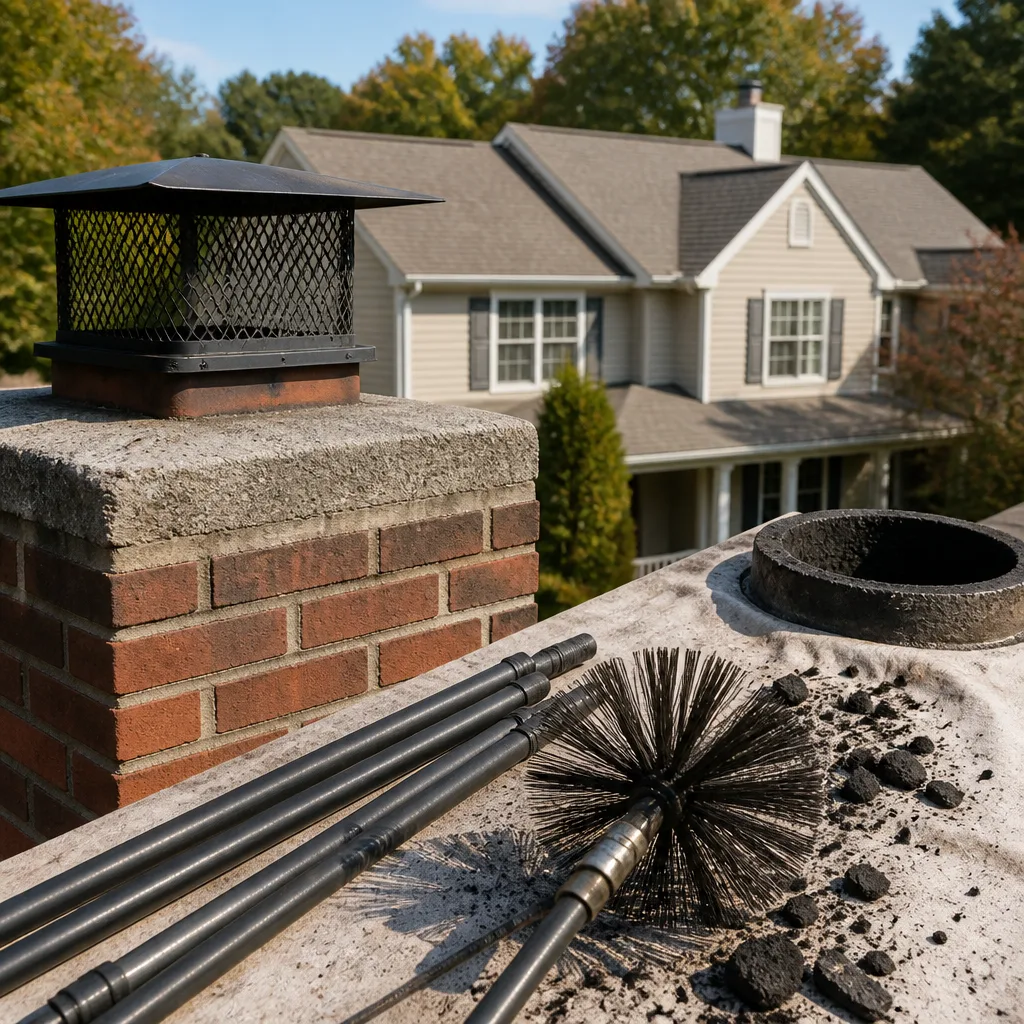
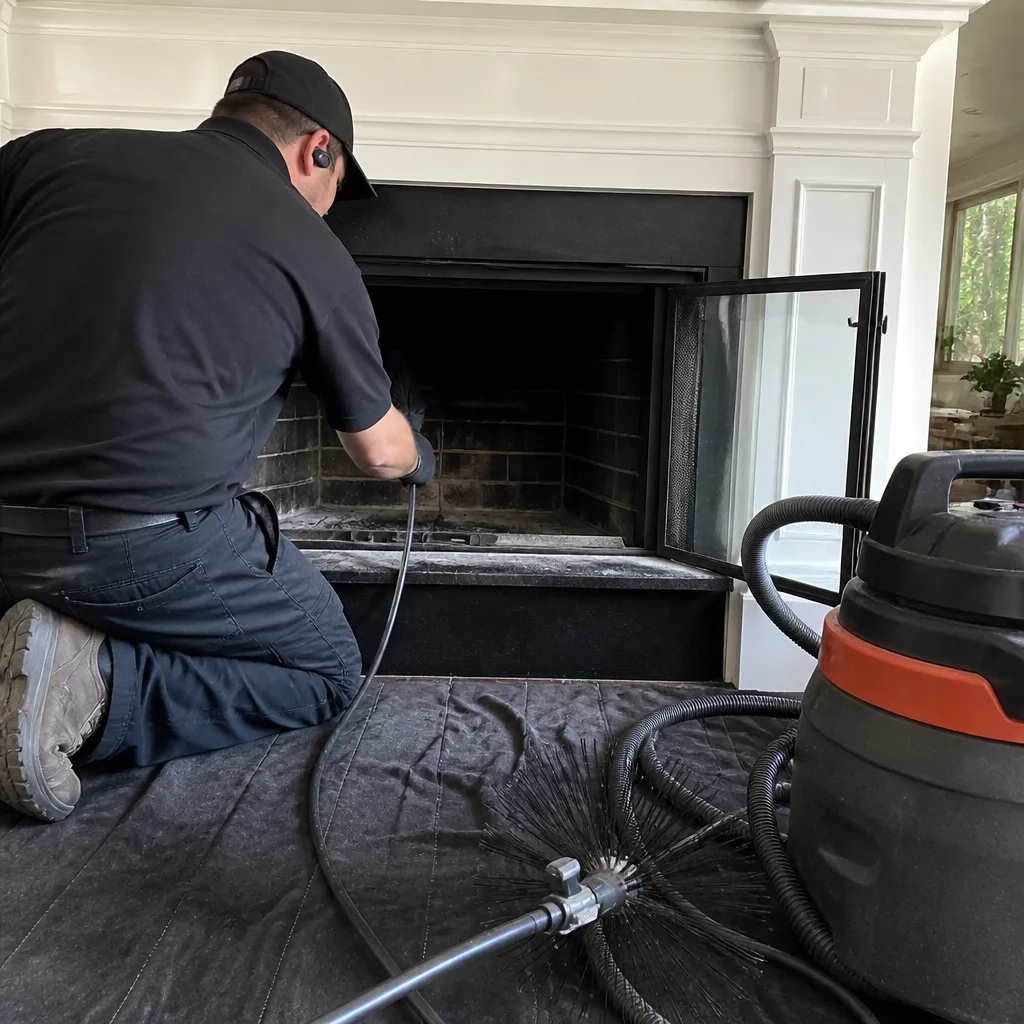
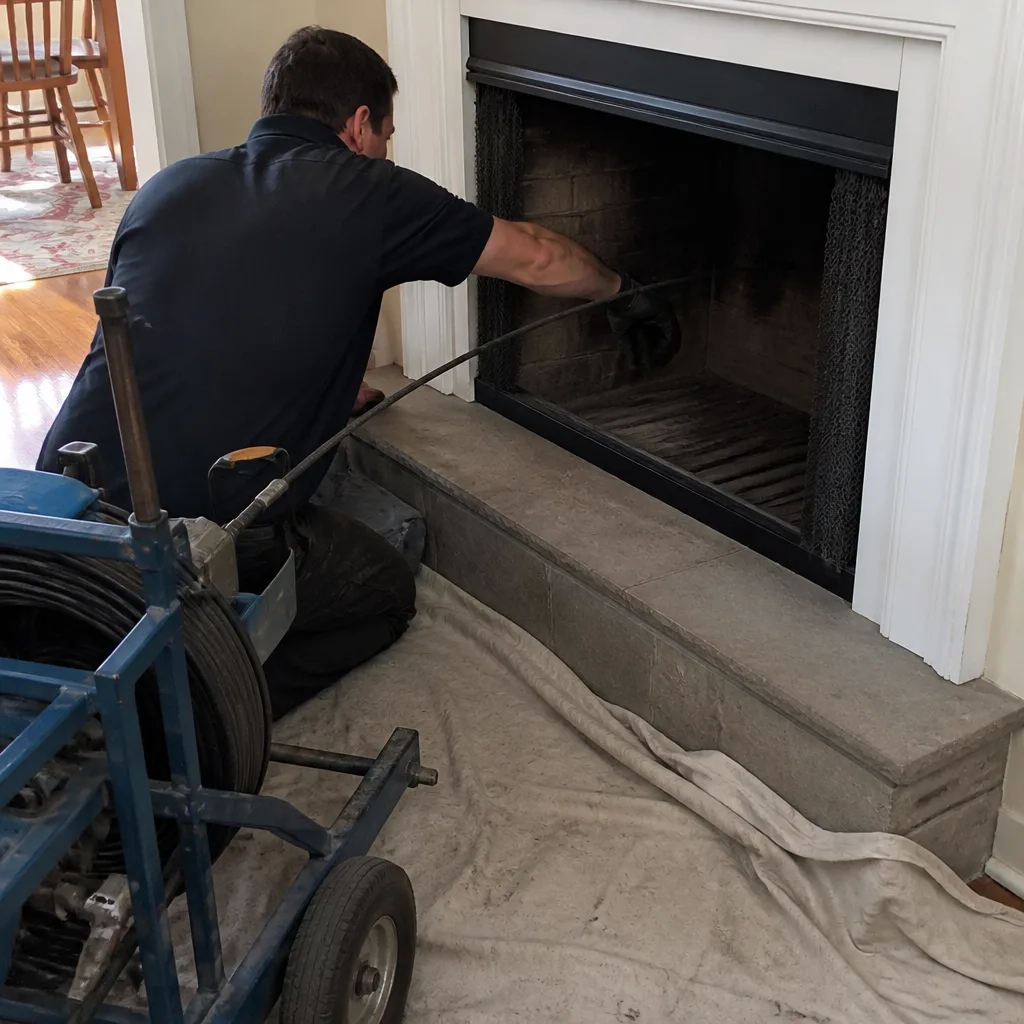
Level 1 sweep and inspection to the NFPA 211 annual standard - flue, crown, cap, and flashing checked and photographed
Chimney sweep logs do not sweep chimneys. They loosen some creosote - which then falls where a brush and vacuum still have to collect it.
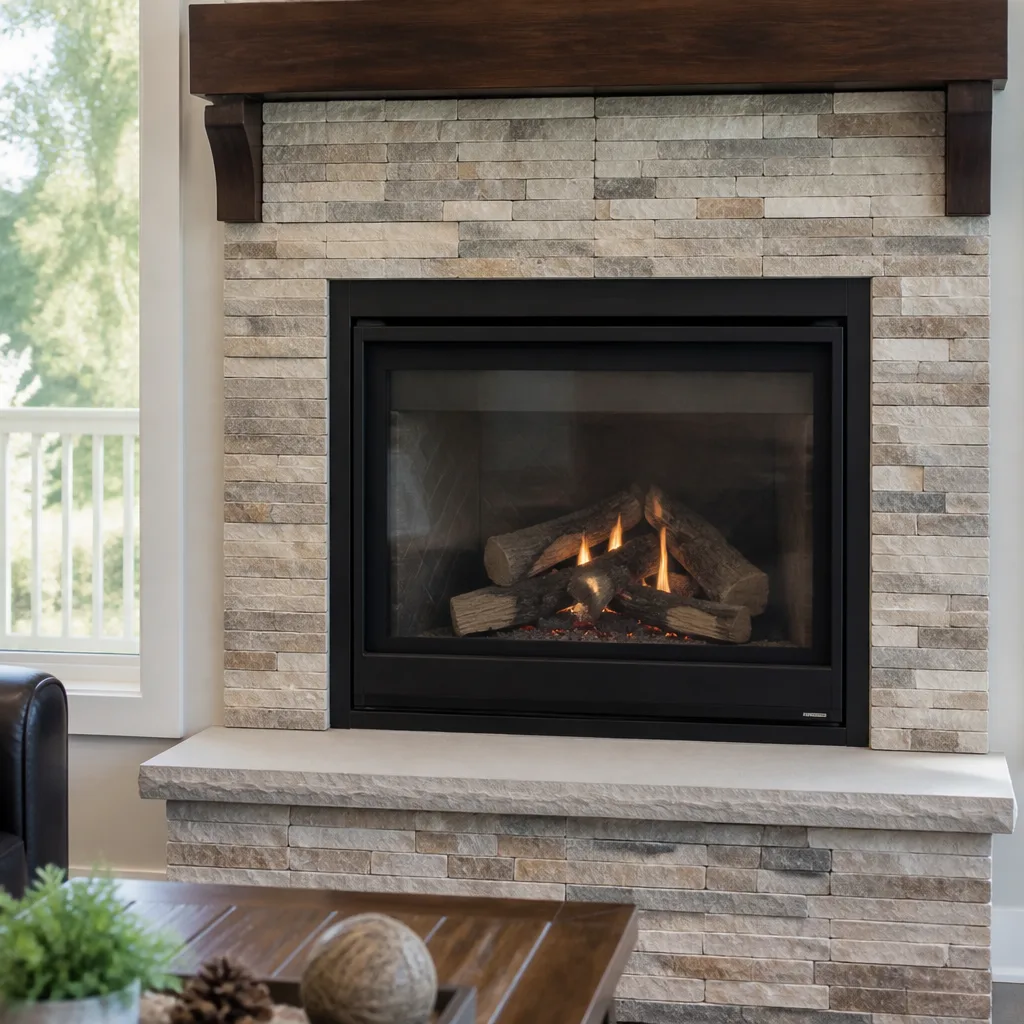
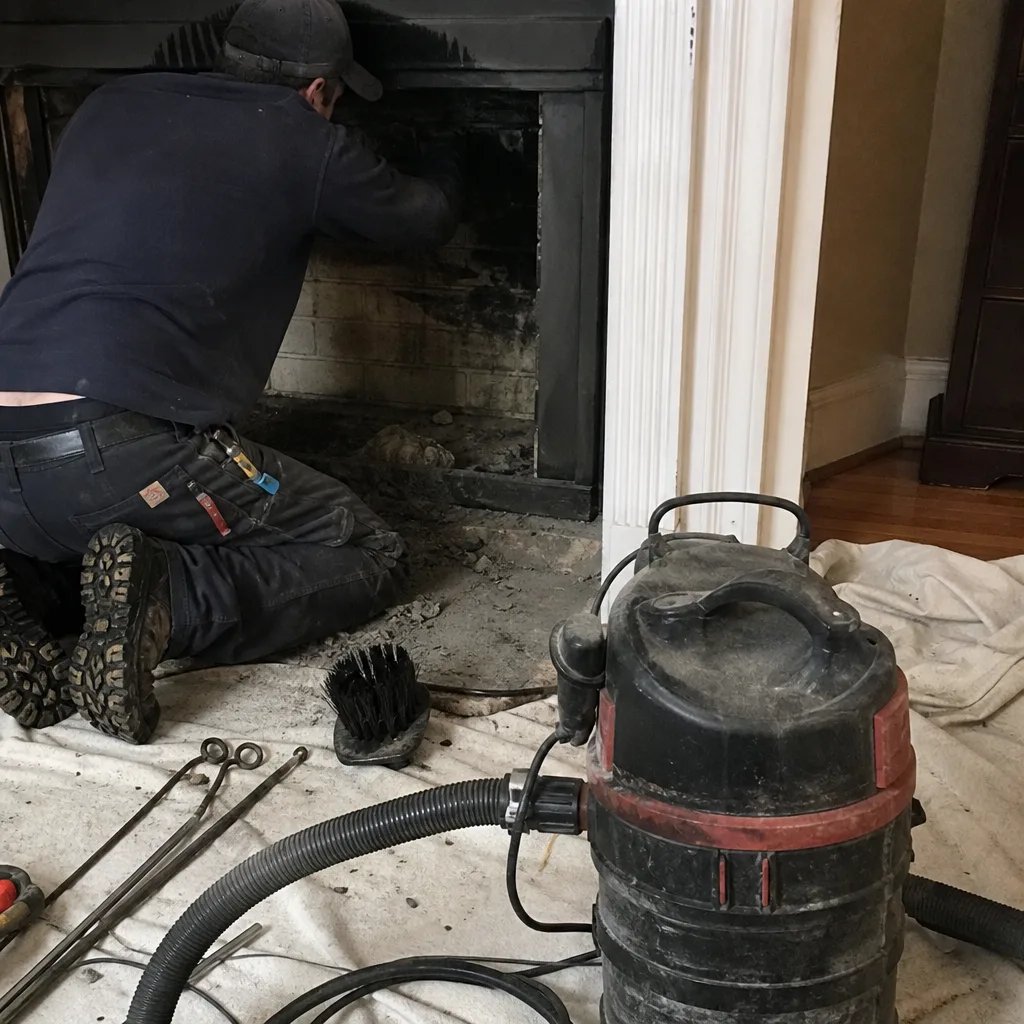 Before
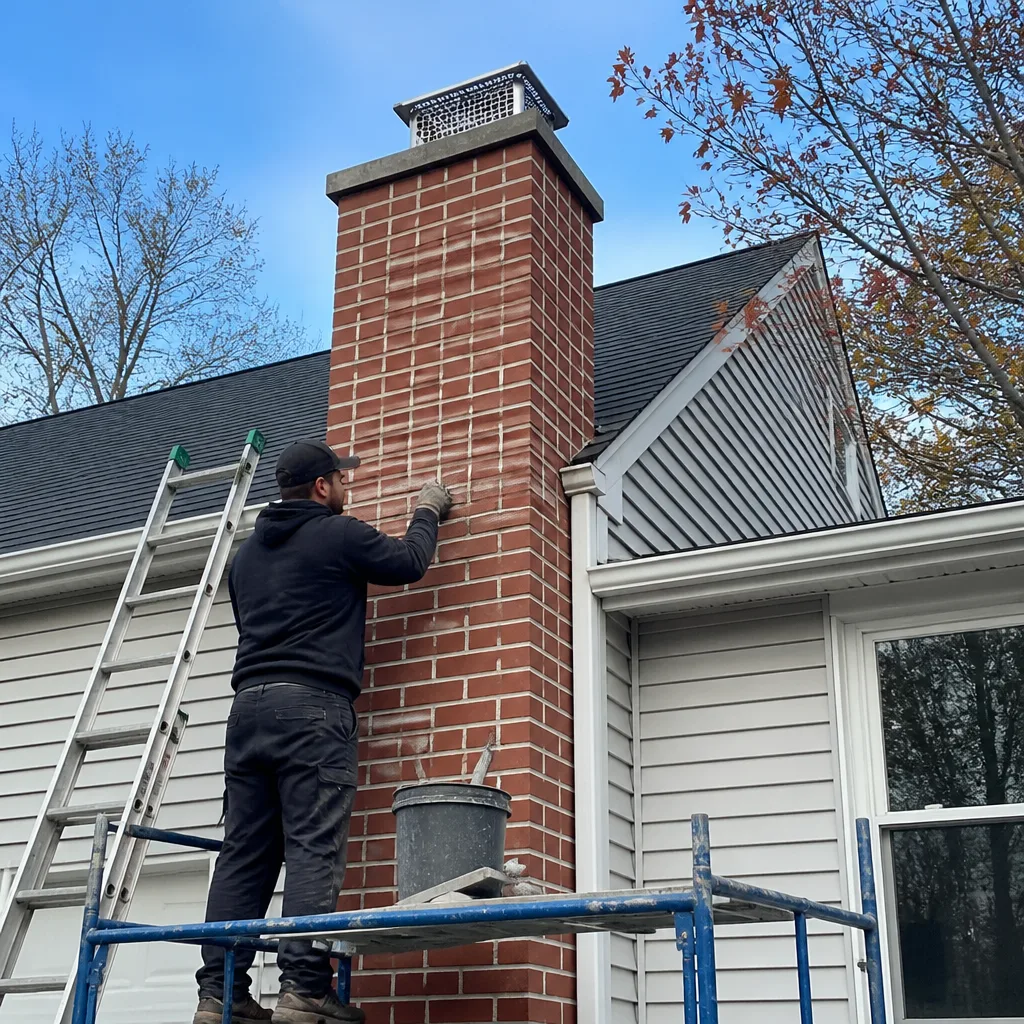 After
After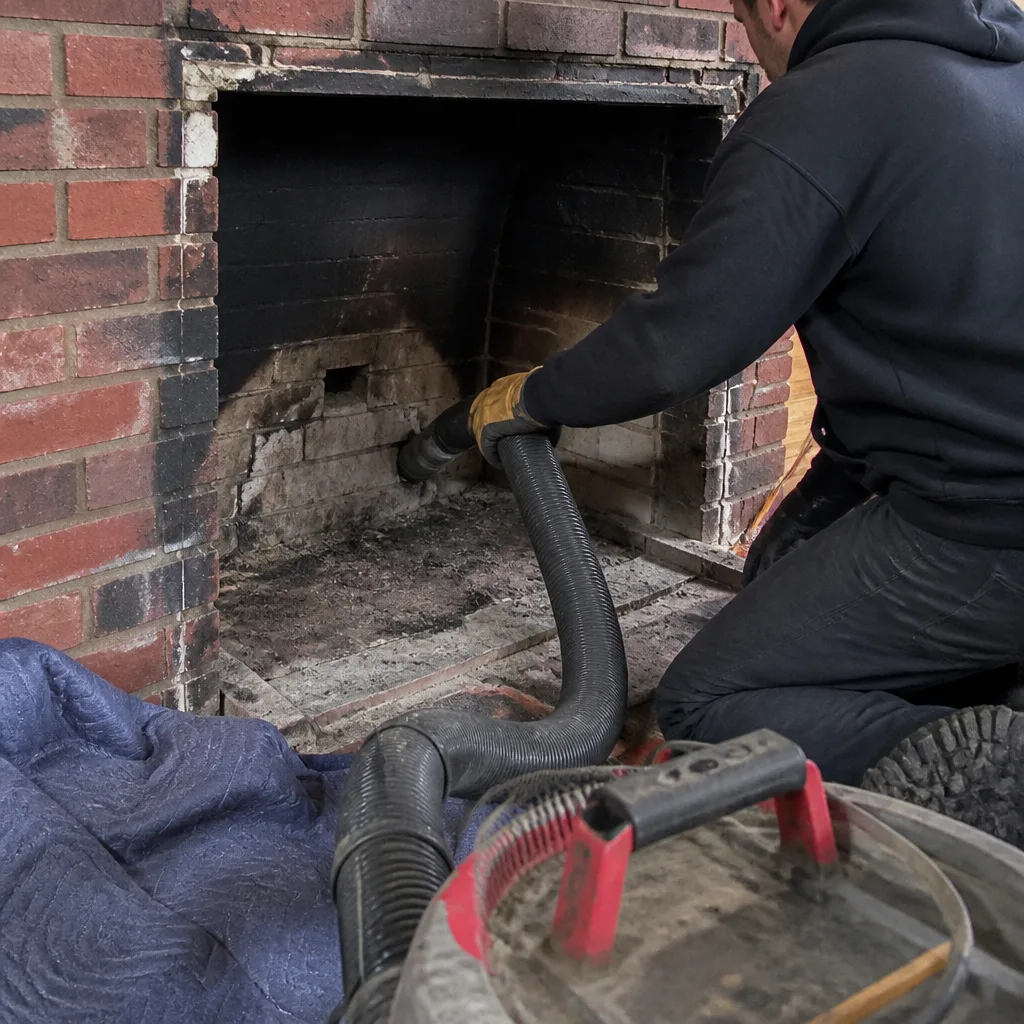 Before
 After
After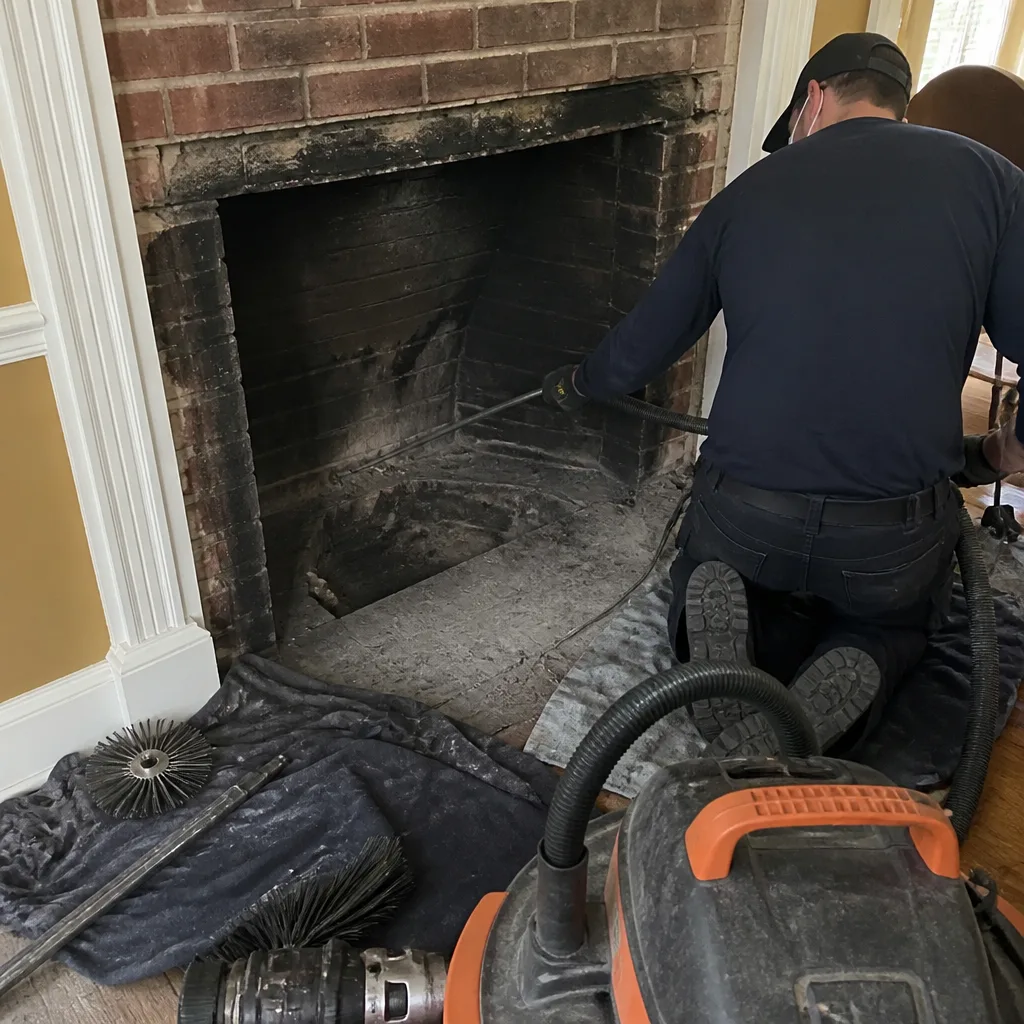 Before
 After
AfterChimney Cleaning Warning Signs: A Framingham Homeowner’s Reference Guide
A white stain on your chimney’s exterior isn’t cosmetic. It’s your masonry telling you water is getting through, and it’s been saying it for a while. Most Framingham homeowners don’t notice the quiet signals a chimney sends until a repair quote lands in the thousands. This guide and our Complete Guide to Chimney Cleaning in Framingham walk you through what those early warnings look like, smell like, and sound like, so you can catch problems before they catch fire. Read it once and you’ll know more about your chimney than most people learn in a lifetime of burning fires.
Quick Answer
The chimney warning signs that matter most in Framingham are the quiet ones: white efflorescence staining on exterior brick, a damper plate with rust on it, a fire that never quite draws right, and smells that shift between campfire, wet basement, and burnt plastic depending on the problem. None of these mean your house is about to burn down. They do mean moisture, creosote, or a flue sizing problem is already at work, and the cheapest fix is almost always the one you schedule before winter forces your hand.
Table of Contents
- Efflorescence: The White Stain That’s Been Warning You
- What Your Nose Knows: Decoding Chimney Odors
- Slow Draw: When the Smoke Lingers and the Fire Struggles
- Interior Warning Signs Most Homeowners Miss
- Sweep This Week vs. Before Next Season vs. Keep an Eye on It
- What Framingham’s Climate Does to Your Chimney
- How Often Should You Actually Sweep It?
- Common Mistakes to Avoid
- When to Call a Professional
- Frequently Asked Questions
If you want to understand your chimney before any of these signs show up, start with our Chimney Cleaning & Sweep in Framingham page. It explains what a thorough cleaning actually involves and why the price is what it is. But if you’re seeing something worrisome right now, keep reading.
Efflorescence: The White Stain That’s Been Warning You
Efflorescence is the technical name for the white, chalky residue that appears on chimney brick. In plain English, it’s salt. Brick and mortar are porous. Water seeps in, dissolves the natural salts inside the masonry, and carries them to the surface. When the water evaporates, the salt stays behind. What you’re looking at is proof that water has been moving through your chimney for months or years before you ever noticed the stain.
Here’s the part most guides skip: by the time efflorescence shows up on the outside of the chimney, the water has already traveled from the crown or the brick face down through several feet of masonry. The stain might be at eye level, but the entry point is usually up top. A cracked crown, missing chimney cap, or deteriorated mortar joints let water in at the roofline. Gravity does the rest. The stain you see halfway down the chimney is just where the water finally evaporated.
In Framingham, the freeze-thaw cycle makes this worse. Water saturates the brick, then winter drops temperatures below freezing. The water expands as it turns to ice, which pries apart mortar joints from the inside. One winter of this is gentle. Ten winters is structural. By the time a Framingham homeowner sees efflorescence, the chimney has usually been through several freeze-thaw cycles already, and the interior masonry has micro-fractures that will only widen.
What to do about it:
- Brush the stain gently with a dry, stiff brush. Do not scrub with water or acid-based cleaners. You’ll just push the salts back in.
- Look up. Check the crown for cracks, the cap for rust-through, and the mortar joints for crumbling. The stain is a symptom. The cause is up top.
- If the stain reappears within weeks of a good rain, water is actively entering. Call a sweep who does masonry work, not just brush work.
Efflorescence on its own doesn’t mean you need a rebuild. It means you need a diagnosis. And any sweep worth hiring will show you the camera footage of what’s going on inside before recommending anything. That’s the standard at Top Hat Chimney on every job, and it’s the only way to separate a crown repair from an unnecessary reline.
What Your Nose Knows: Decoding Chimney Odors
Your flue doesn’t care how the fire looks. It cares how it breathes. And when it breathes wrong, it tells you through smell. Most homeowners write off chimney odors as “that old house smell.” But there are three distinct odors, and each points to a different problem. Learn to tell them apart and you’ll know what you’re dealing with before anyone shows up with a camera.
The campfire smell that won’t go away. This is the most common odor and the easiest to misread. A faint, dry, smoky smell after a fire is normal. What’s not normal is a sharp, acrid, almost chemical version of that smell that gets worse on humid days. That’s third-degree creosote, the glazed, tarry form that builds up when fires burn cool and incomplete. It’s not just dirty. It’s fuel. Glazed creosote ignites at roughly 2,000°F and burns hot enough to damage liners. If your chimney smells like a stale campfire that got doused in diesel, read our DIY vs Professional Chimney Cleaning guide and get a sweep out this season, not next year.
The wet basement smell. If you catch a musty, damp, earthy smell coming from the fireplace, that’s water. Not always a leak. Sometimes it’s condensation from warm indoor air hitting a cold flue, especially in spring when the weather swings and the chimney sits unused. But if the smell persists through summer, it’s more likely a cracked crown or leaking cap, and the water is soaking into the liner or the masonry. A damp flue ages faster. It also makes whatever creosote is already in there smell twice as strong.
The burnt plastic or dead animal smell. This is animal intrusion, plain and simple. A squirrel, bird, or raccoon got in through an uncapped or damaged flue, and either it’s still in there or it didn’t make it out. Either way, nothing you burn will fix it. The animal needs to come out, the nest material needs to come out, and a cap with proper screening needs to go on. We’ve pulled bats, squirrels, and more nests than we can count out of Framingham chimneys over the years. The standard fix is a stainless cap from Fireplace Services in Framingham, which we can size and install same-visit.
Here’s the plain truth: if you can smell your chimney from the couch, the chimney is already telling you something. Trust your nose. It’s the cheapest diagnostic tool you own.
Slow Draw: When the Smoke Lingers and the Fire Struggles
Here’s one of the most misunderstood warning signs in the chimney trade. A fire that smokes into the room, or just never seems to pull right with the damper open, is usually not a cleaning problem. It’s a physics problem. The flue is either the wrong size, the wrong height, or losing to negative pressure in the house.
Negative pressure is the big one in Framingham. Modern homes are sealed tighter than the drafty Colonials and capes that made up most of the housing stock fifty years ago. New windows, added insulation, a kitchen exhaust fan that moves serious air, a furnace that draws combustion air from inside: every one of these makes the house compete with the fireplace for air. The fire needs air to pull up the flue. If the house won’t give it, the smoke stays in the room.
Flue sizing is the other culprit. A fireplace that was built for an open hearth, then retrofitted with a small insert, now has a flue sized for a completely different appliance. Or a chimney built with an undersized flue from day one. In either case, no amount of sweeping will fix the draw. The fix is a properly sized liner, and that’s a different job entirely.
How to test what you’re dealing with:
- Open the damper fully and crack a nearby window about two inches.
- Light a small fire and watch how it behaves for the first ten minutes.
- If the draw improves with the window open, you have a negative pressure problem, not a dirty flue.
- If the smoke still rolls into the room with the window open, it’s a flue sizing, height, or blockage problem.
- Either way, stop using the fireplace until a professional figures it out. Smoke in the house is carbon monoxide and fine particulates, not just a nuisance.
We’ve seen slow draw in every neighborhood in Framingham, from Saxonville to the south side, and the cause is rarely what the homeowner assumes. That’s why the camera footage and a plain-English verdict come standard on every appointment. You’ll see what’s actually happening in your flue, not guess at it.
Interior Warning Signs Most Homeowners Miss
The outside of a chimney hides most of its problems. But there are a handful of signs inside the house that tell the same story, and almost nobody knows to look for them. These show up quietly, often over years, and they’re the difference between a $300 sweep and a $3,000 liner job.
Rust on the damper plate. Open the damper and look at the metal plate itself. If it’s rusted, water has been coming down the flue. Dampers are steel. They rust when water sits on them, which means water is getting past the cap or crown and riding the inside of the flue all the way down. A little surface rust on an old damper is normal. Heavy flaking rust, or rust that reappears after you clean it, is a water problem that will not fix itself.
Staining inside the firebox above the smoke shelf. Shine a flashlight up into the firebox and look at the area just above the damper, where the walls angle inward. If you see dark staining, streaking, or what looks like liquid trails, that’s water or condensation mixing with creosote and dripping back down. It looks like coffee stains on the brick. Most homeowners never look up there, but it’s one of the earliest visible signs of a leaking chimney.
Wallpaper peeling or paint bubbling near the chimney wall on upper floors. This one sounds like a house problem, not a chimney problem. It’s both. If you have a chimney running through the interior of your home, and the wallpaper or paint near it on the second floor is peeling, bubbling, or staining, moisture is migrating through the masonry and into the surrounding wall. It might be a leaking chimney. It might be condensation from a flue that’s too cold. Either way, it’s not just a decorating issue, and repainting will not fix it.
Crumbling mortar joints at eye level. Go outside and look at the mortar between the chimney bricks. Run your finger along a joint. If it feels sandy and comes away on your finger, the mortar has lost its binder. That’s called spalling, and it’s the masonry equivalent of your chimney’s bones going soft. Left alone, the joints erode, the bricks shift, and the whole structure begins to lean. In Framingham’s climate, this process moves fast once it starts.
None of these signs demand a panic call. But all of them mean someone should look before the next burning season. The 90-Day Done Right Promise exists for exactly this reason: one call after we’ve done the work, and we’re back. But the promise only matters if the problem is caught before the chimney becomes unsafe.
Sweep This Week vs. Before Next Season vs. Keep an Eye on It
Not every warning sign is an emergency. Any honest sweep will tell you that, and Wendell has been saying it in Framingham since 1999. Some problems need attention within days. Some can wait until the weather breaks. Some are just things to watch. Here’s the straight version.
Sweep this week:
- Smoke actively rolling into the room when the damper is open and the fire is lit.
- A strong, acrid creosote smell that gets worse on warm or humid days.
- You burned at least a cord of wood last winter and have not swept since.
- Signs of animal entry: sounds in the chimney, droppings in the firebox, or a dead animal smell.
- Visible flames in the flue, even a brief chimney fire you thought you put out.
Before next burning season:
- Light efflorescence that’s new this spring.
- Rust starting on the damper plate but no active drip.
- A slow draw that showed up only when the house was sealed up tight.
- Crumbling mortar joints you can see from the ground.
- Any chimney that hasn’t been inspected in three or more years.
Keep an eye on it:
- Faint smoke smell the day after a fire, then gone.
- Very light efflorescence on old brick that hasn’t changed in years.
- A small crack in the crown that doesn’t widen after a winter.
- Paint peeling near the chimney on the second floor, but no interior staining or moisture to the touch.
The point is simple: not every sign means danger, but every sign means something. If you’re not sure which bucket your chimney falls into, a free estimate costs you nothing and tells you exactly where you stand. Call Chimney Repair in Framingham with whatever you’re seeing, and you’ll get a straight answer before any work gets scheduled.
What Framingham’s Climate Does to Your Chimney
Framingham sits in a weather pattern that punishes masonry. We get real winters with hard freezes, wet springs with heavy rain, humid summers, and a fall that lurches between crisp and damp. Every one of those seasons adds stress to a chimney in a different way.
Winter is the obvious one. The freeze-thaw cycle we mentioned earlier works like a hydraulic jack inside your mortar joints. Water seeps in, freezes, expands, thaws, and repeats. Each cycle widens micro-cracks a little more. Over a Framingham winter, that’s dozens of freeze-thaw events. Over a decade, it’s a chimney that’s quietly falling apart from the inside out.
Spring is worse than most people think. March and April bring heavy rain and lingering snowmelt, and that water sits on the crown longer than it should. If the crown has even a hairline crack, water gets underneath it and begins working into the masonry below. By the time the weather warms up and you’re thinking about the deck and the grill, your chimney has been holding water for six weeks.
Summer is when the trouble from spring becomes visible. Efflorescence blooms in hot, dry weather because evaporation happens faster. Hairline cracks widen as the masonry heats and expands. And the chimney sits baking and empty, which brings us to the rule Wendell repeats on every job: once a year, burn or no burn. Chimneys break in the off-season too. The winter freeze is what everyone worries about, but the damage is often done in July and found in November.
Fall is the crunch. The first cold snap sends every Framingham homeowner to the fireplace at the same time, and that’s when the calls pour in. Honestly, the best time to have your chimney swept in Framingham is late summer or early fall, before the heating season panic starts. You’ll get your pick of dates, the weather is good for masonry work, and you’ll know before the first fire whether the chimney is safe to use. The worst time to discover a problem is the first freezing night in November when every sweep within thirty miles is booked for two weeks.
How Often Should You Actually Sweep It?
The old rule of thumb is once a year, and for most Framingham homeowners, that’s still right. But the National Fire Protection Association actually says it more precisely: chimneys should be inspected at least once a year and cleaned as needed based on what the inspection finds. The “as needed” part is where honesty matters, because not every annual visit ends with a brush in the flue.
Here’s what actually determines cleaning frequency:
- How much you burn. A chimney that sees two cords of seasoned hardwood every winter needs more attention than one that hosts six fires a season.
- What you burn. Seasoned hardwood produces far less creosote than pine, wet wood, or pressed logs. Burning unseasoned wood is the single fastest way to build up glazed creosote.
- How hot you burn. Cold, smoldering fires create creosote. Hot, clean-burning fires produce less. A stove or insert that runs hot and efficient will stay cleaner longer than an open fireplace that’s always starved for air.
- Your liner type. A smooth stainless liner resists creosote buildup better than a rough clay tile liner. If you’ve had a reline done with a product like DuraFlex or Gelco, your cleaning needs may be less frequent, but the annual check is still worth it.
- Whether anything nests in the off-season. An uncapped chimney in a leafy Framingham neighborhood is an open invitation to squirrels. We’ve been out to homes where an entire off-season of nesting material went up in the first fire. Annual inspections catch this before the fire does.
In our experience serving Framingham homeowners, the answer for most folks is an annual visit. Sometimes that visit ends with a full cleaning. Sometimes it ends with “you’re clean, see you next year, keep the cap on.” Either way, the homeowner knows. That’s the whole point of the annual check: knowledge before fire, not after.
Common Mistakes to Avoid
- Waiting for a visual problem to call. Most serious chimney damage starts where you can’t see it: inside the flue, behind the smoke shelf, under the crown. By the time it’s visible from the living room or the lawn, it’s been brewing for years.
- Burning unseasoned wood. Wet wood is the number one cause of glazed creosote in Framingham. If you hear the wood hiss when it burns, it’s not ready. Season it a full year, split and stacked, covered on top and open on the sides.
- Assuming a slow draw means the chimney needs sweeping. Usually it means negative pressure or a sizing problem, and sweeping won’t touch either one. You’ll pay for a sweep and still have smoke in the room.
- Scrubbing efflorescence off and calling it fixed. The stain is a symptom. The water entry point is the problem. Remove the stain without fixing the crown or cap, and it’ll be back by spring.
- Replacing a chimney cap with one that has the wrong mesh size. Mesh that’s too fine clogs with creosote and chokes the draft. Mesh that’s too coarse lets in sparks and animals. A proper cap from Famco or Copperfield installed by a pro is sized to the flue, and it matters.
- Skipping the annual visit because you “didn’t use the fireplace much.” The off-season is when animals move in, water sits, and masonry shifts. Once a year, burn or no burn. The annual check costs a fraction of what a rebuild does.
When to Call a Professional
Call a professional when any of the following applies: you see efflorescence that reappears after cleaning, you smell creosote from inside the house, your fire won’t draw even with a window cracked, there’s rust on the damper or staining above the smoke shelf, or you haven’t had the chimney looked at in three years. Also call if you’ve had animals in the flue, or if you suspect any kind of chimney fire, even a small one. Chimney fires can damage liners invisibly, and a damaged liner is a carbon monoxide risk.
Top Hat Chimney offers free estimates in Framingham and throughout the surrounding county. No trip charge inside the county, a free second opinion on any written estimate, and always $40 off any repair over $200. Call (781) 390-9211 and you’ll reach a live person, not a voicemail tree. Wendell puts his name on every job and backs it with the 90-Day Done Right Promise in writing.
Frequently Asked Questions
A standard chimney cleaning and inspection in Framingham typically runs between $180 and $320, depending on the flue type, height, and accessibility. The number you hear on the phone should be the number on the invoice, and if it isn’t, that’s a red flag about who you’re dealing with. Call (781) 390-9211 for an exact quote; the estimate is free and there’s no trip charge inside the county.
You need a new liner only if the current one is cracked, deteriorated, or the wrong size for the appliance it’s serving. The only way to know is with a camera inspection, and any honest sweep will show you the footage and explain what you’re seeing. If someone recommends a liner without camera evidence, get a second opinion. It’s free with us, and it should be free with anyone.
Creosote builds up. In its early forms, it’s a brush job. Left alone, it glazes into a hard, tarry layer that ignites at around 2,000°F. A chimney fire can crack the liner and, in bad cases, spread to the house. Skipping one season with light use is usually fine. Skipping five seasons with a cord a year is how houses have chimney fires.
At least once a year for most homes, even if you don’t burn much. The annual visit catches off-season animal problems, water intrusion, and masonry movement before any of it becomes visible or dangerous. Heavy burners with a couple of cords per winter should consider a mid-season check too.
Summer chimney smells are usually either glazed creosote off-gassing in the humidity, or water-damaged masonry and liner material absorbing moisture. Both get stronger in warm, damp air. If the smell persists past a day or two, have someone look at it before fall.
Yes, a properly sized cap with the right mesh keeps squirrels, birds, raccoons, and bats out while still allowing proper draft. The cap needs to be sized to the flue and installed so it doesn’t restrict airflow. We stock caps from Famco and Copperfield and can usually install one same-visit. Call (781) 390-9211 and we’ll get it done.
The Bottom Line
The chimney warning signs that matter are the quiet ones. White staining on brick, rust on a damper, a fire that never quite pulls, a smell that shifts with the weather. None of these scream emergency, but all of them are your chimney talking to you. In Framingham’s climate, water and freeze-thaw cycles turn small problems into structural ones faster than most homeowners realize. Check your chimney once a year, burn seasoned wood, keep the cap on, and trust your nose when it tells you something’s off. When in doubt, explore more guides & resources or call (781) 390-9211. You’ll get a straight answer and a live person, and if the work’s not right, the 90-Day Done Right Promise means one call brings us back.
Written by Wendell Pike, Owner at Top Hat Chimney, serving Framingham since 1999.