
Last updated September 10, 2026
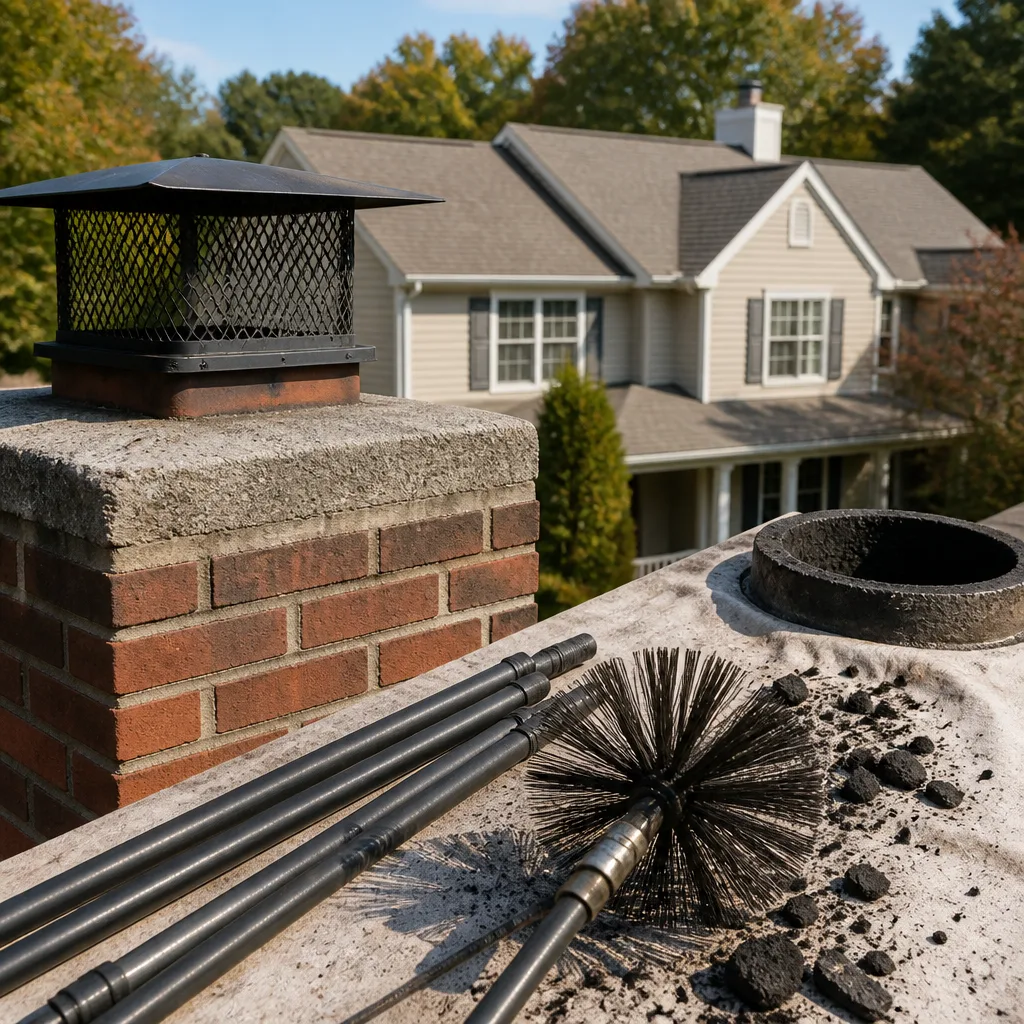
Level 1 sweep and inspection to the NFPA 211 annual standard - flue, crown, cap, and flashing checked and photographed
Chimney sweep logs do not sweep chimneys. They loosen some creosote - which then falls where a brush and vacuum still have to collect it.
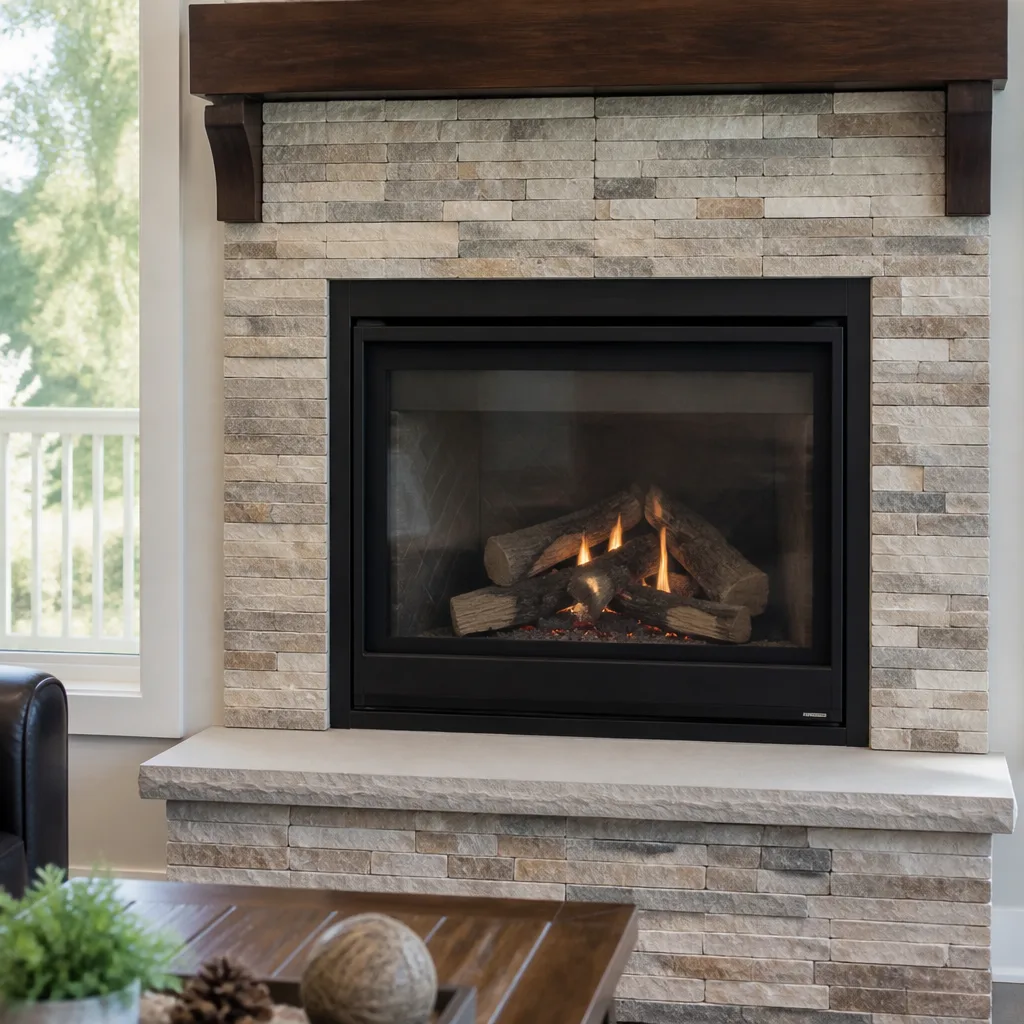
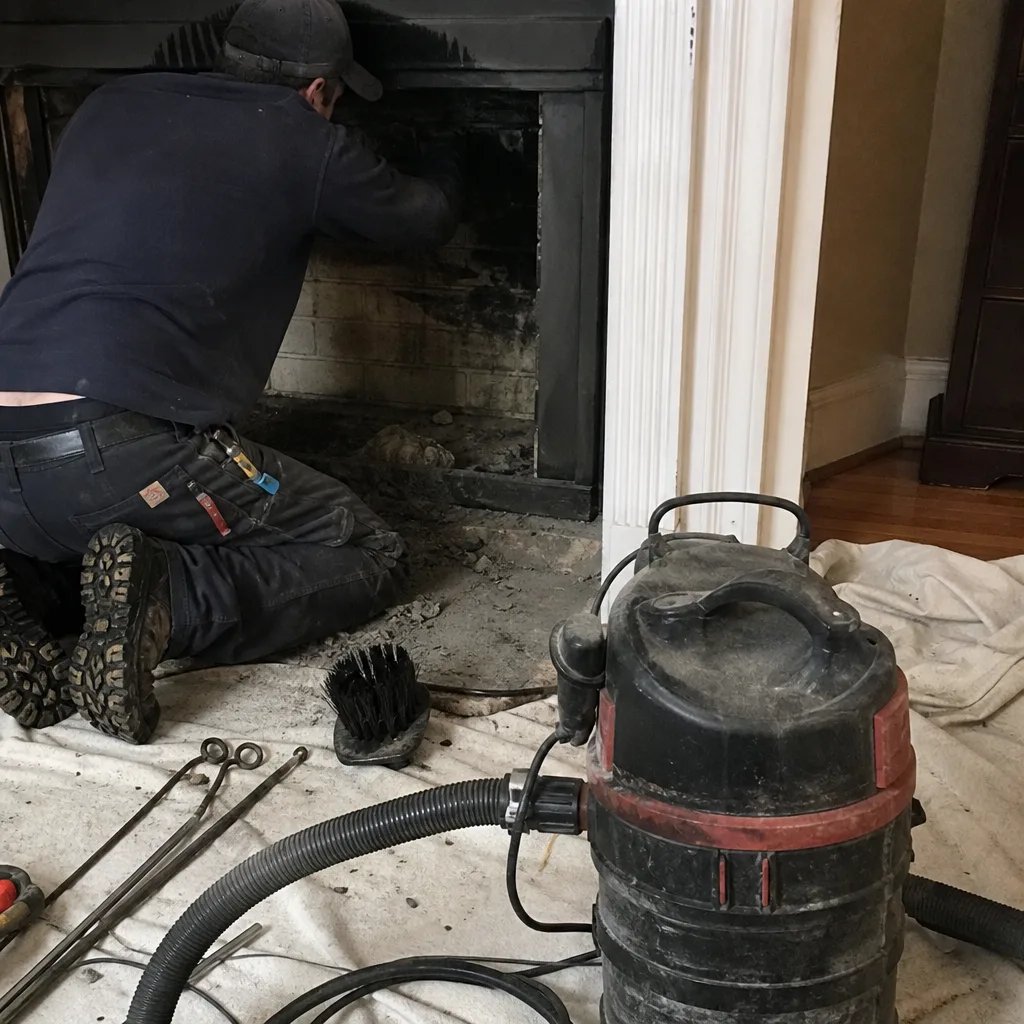 Before
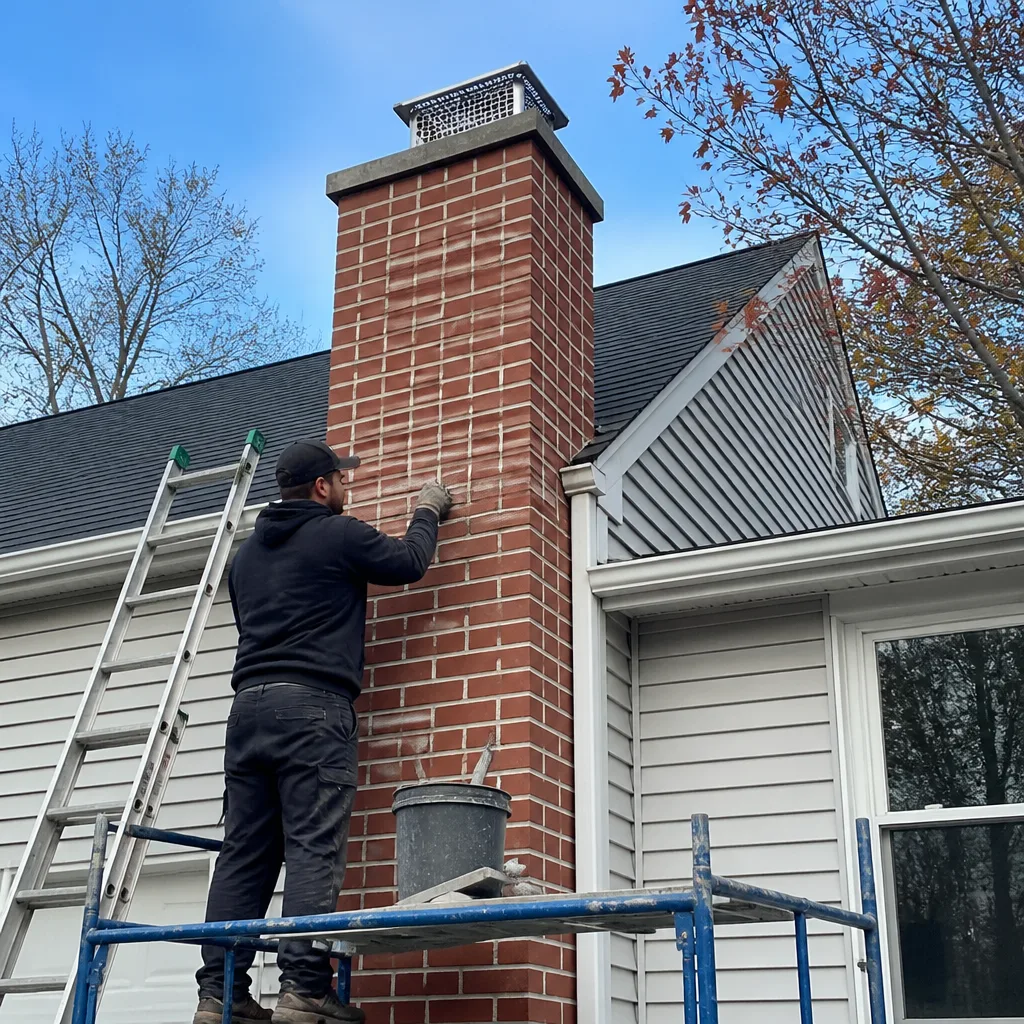 After
After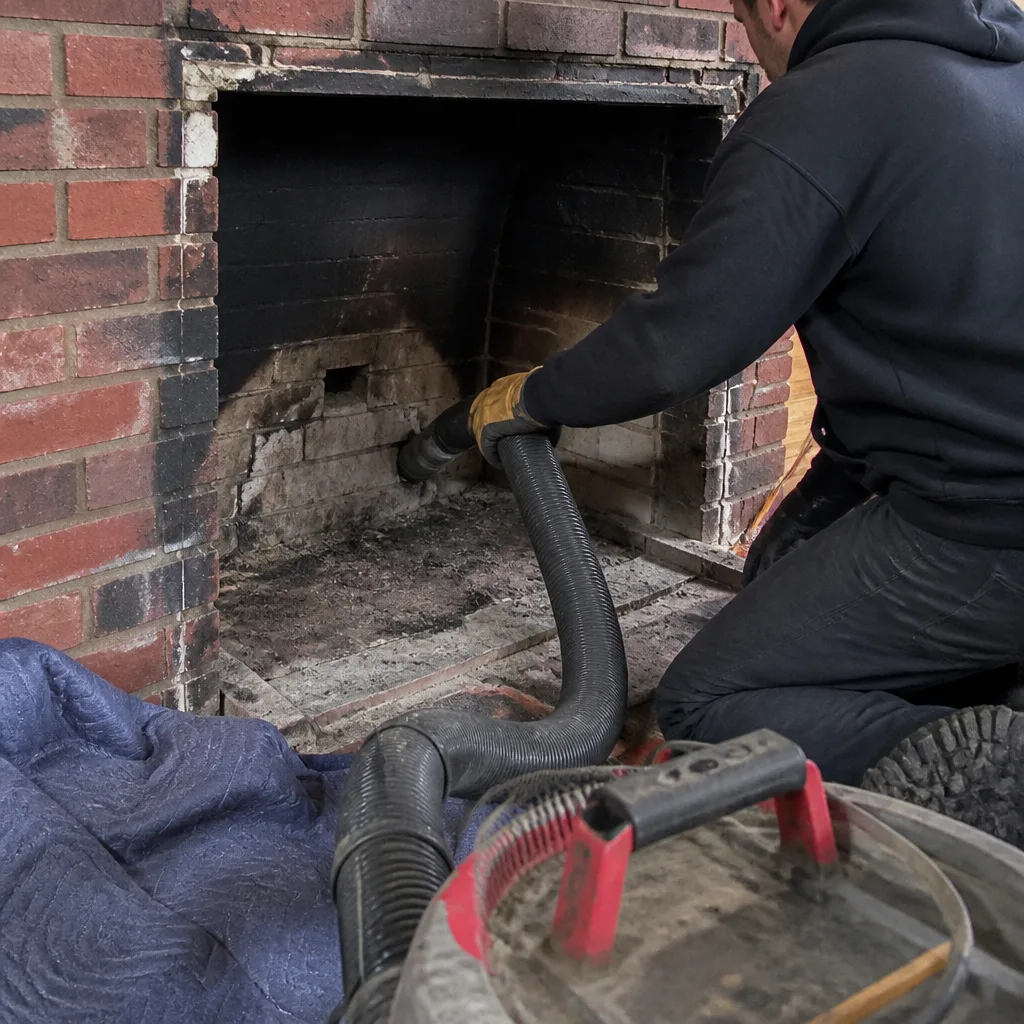 Before
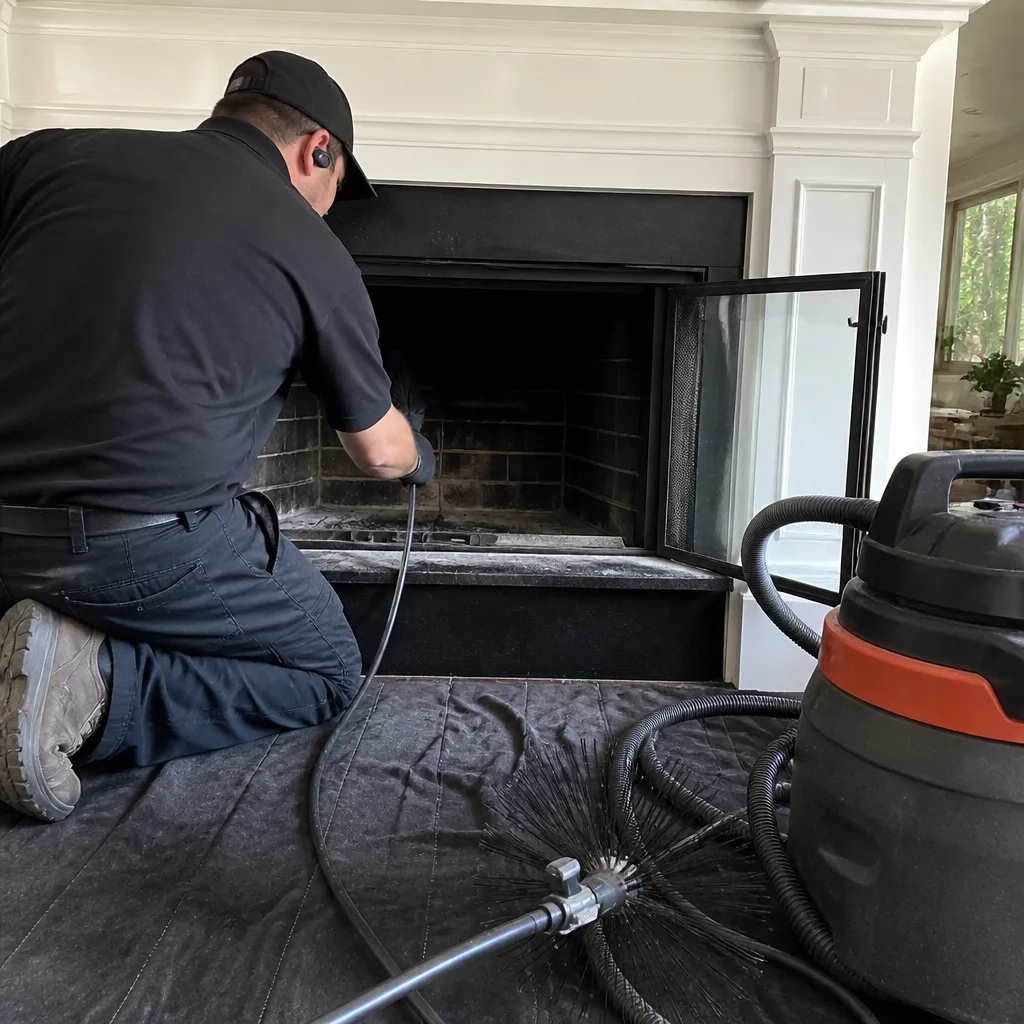 After
After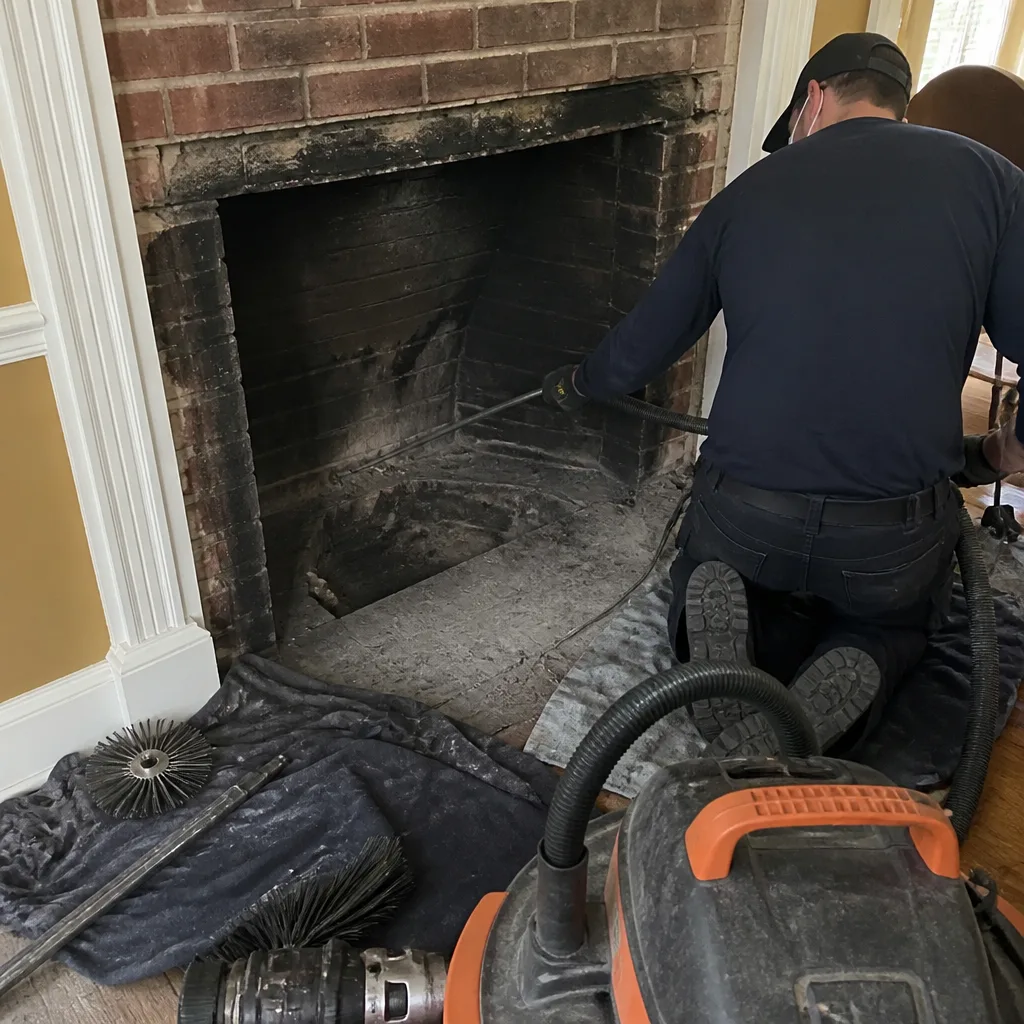 Before
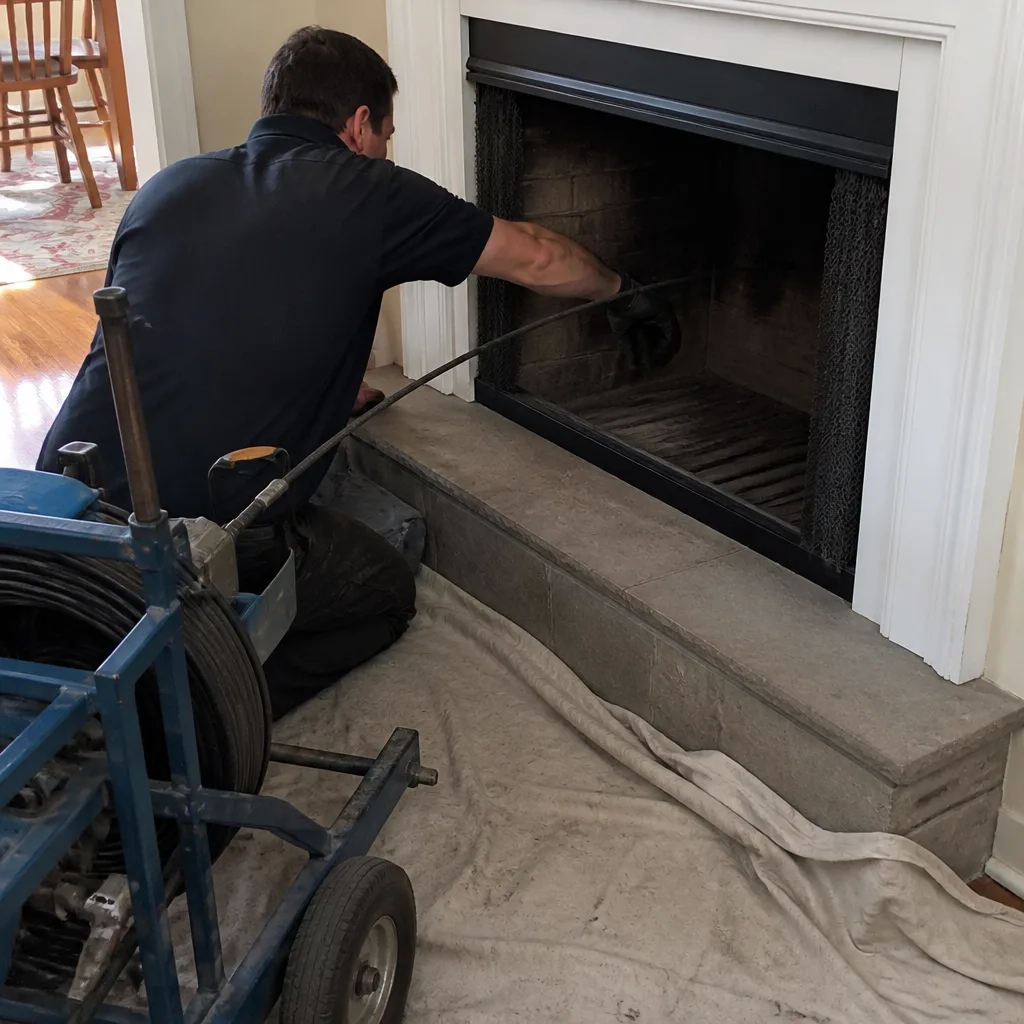 After
AfterChimney Cleaning & Sweep Maintenance Checklist for Framingham Homeowners
Most chimney maintenance checklists online were written by people who have never been on a roof in January. Here’s one built around what 25 years of crawling into Framingham fireplaces actually taught me. By the time you finish reading, you’ll know exactly which checks you can do from your living room floor with a flashlight, which ones belong to a sweep with a camera, and which ones you can honestly skip this year without lying to yourself.
Quick Answer
A practical chimney maintenance checklist for a Framingham home separates what you can see yourself from what only a camera can see. At minimum, once a year before burning season, check the firebox for creosote texture, confirm the damper opens and closes fully, and look for spalling brick or white staining on the exterior chimney. Then have a certified sweep run a flue camera and inspect the liner, because the problems that destroy chimneys in Middlesex County are almost never visible from the hearth. If you’re unsure whether it’s time, our Chimney Cleaning Warning Signs: A Framingham Homeowner’s Reference Guide can help you decide.
Table of Contents
- The Two-Column Checklist: What You Check vs. What the Camera Checks
- What Framingham’s Colonial and Cape-Style Homes Get Wrong
- Creosote Stages You Can Identify Without Tools
- The “Skip It This Year” Column: When a Cleaning Honestly Can Wait
- What to Document for Insurance and Home Sales
- The Framingham Burning Season Calendar
- Why the Flue Camera Is Non-Negotiable
- Common Mistakes to Avoid
- When to Call a Professional
- Frequently Asked Questions
The Two-Column Checklist: What You Check vs. What the Camera Checks
Here’s the honest split. Some tasks on a chimney checklist are visual and simple enough for any homeowner with a flashlight and ten minutes. Others require a flue camera, a trained eye, and sometimes a ladder. Mixing the two columns is how people end up thinking their chimney is fine when it is not, or paying for a service call they did not need.
Owner Tasks: What You Can Check From the Ground or the Hearth
These checks take about fifteen minutes total and require no special tools beyond a flashlight and maybe a phone camera. Do them once in early fall, before the first fire, and once more in late spring after the last one.
- Damper operation. Open and close the damper fully. It should move smoothly and seat firmly. If it sticks, squeals, or will not close all the way, cold air is leaking down your flue all winter and conditioned air is escaping all summer. In Framingham’s January cold, a damper that will not seal can add real dollars to your heating bill every month.
- Firebox visual sweep. Shine a flashlight up into the firebox and look at the walls. You are looking for three textures: flaky, powdery, or shiny and tar-like. More on what each means in the creosote section below.
- Odor monitoring. Walk into the room with the fireplace on a humid July day. If you smell a sharp, acrid, campfire-adjacent smell, that is creosote off-gassing moisture. Fluffy or powdery creosote smells mild. Glazed creosote smells strong and oily. A strong odor in summer is a signal worth a call.
- Exterior visual check from the ground. Stand across the street or at the far corner of your yard and look at the chimney. Look for white staining (efflorescence), dark streaks, missing brick faces, or a crown that looks cracked or tilted. Framingham homes with exterior-facing chimneys bear the full force of New England freeze-thaw cycles, and you can spot trouble before it becomes a $3,000 rebuild.
- Rain cap confirmation. If you have a rain cap, confirm it is still there and sitting level. Squirrels, raccoons, and wind storms all have opinions about rain caps. A missing cap lets water, leaves, and animals into the flue.
Sweep Tasks: What Belongs to the Camera
These are the checks that require a flue camera, professional lighting, and someone who knows what a failing liner actually looks like. No homeowner checklist should pretend otherwise.
- Full flue camera inspection. A camera run from the firebox to the chimney crown captures the entire interior surface. This is the only way to see cracked clay tiles, separated mortar joints, or a stainless liner that has begun to warp. We have pulled camera footage in Framingham homes that looked spotless from the hearth and showed a fully perforated flue liner three feet up.
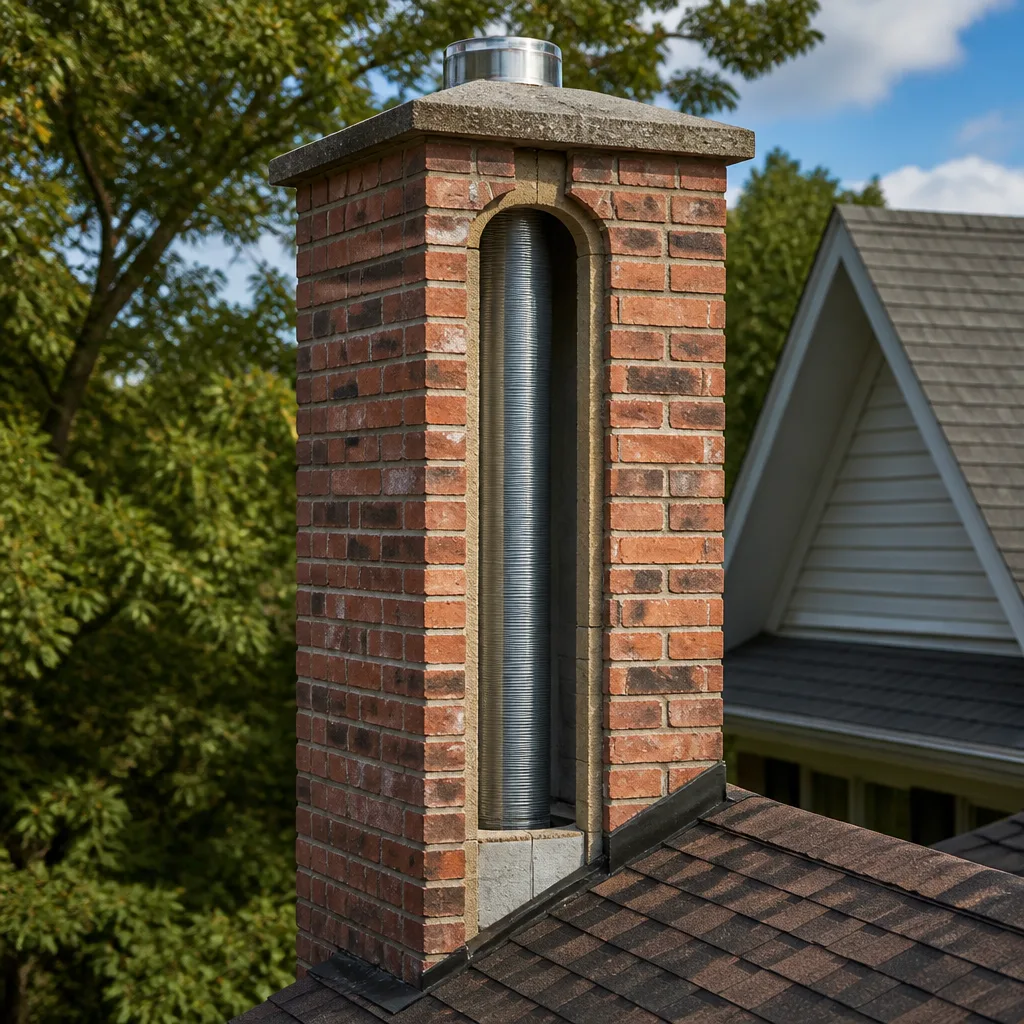
- Liner condition assessment. The liner is the most important safety component in the chimney. It contains heat, gases, and creosote. A cracked or missing section of clay tile is not something you can see from below, and it is a chimney fire waiting for the right conditions.
- Smoke chamber parge inspection. The smoke chamber is the transition zone above the firebox where smoke compresses and accelerates before entering the flue. In older Framingham capes and colonials built before modern parging standards, smoke chamber walls are often rough corbelled brick. Rough walls accumulate creosote in the exact spot where temperatures spike. A camera inspection confirms whether the parge coat is intact or whether the chamber needs resealing.
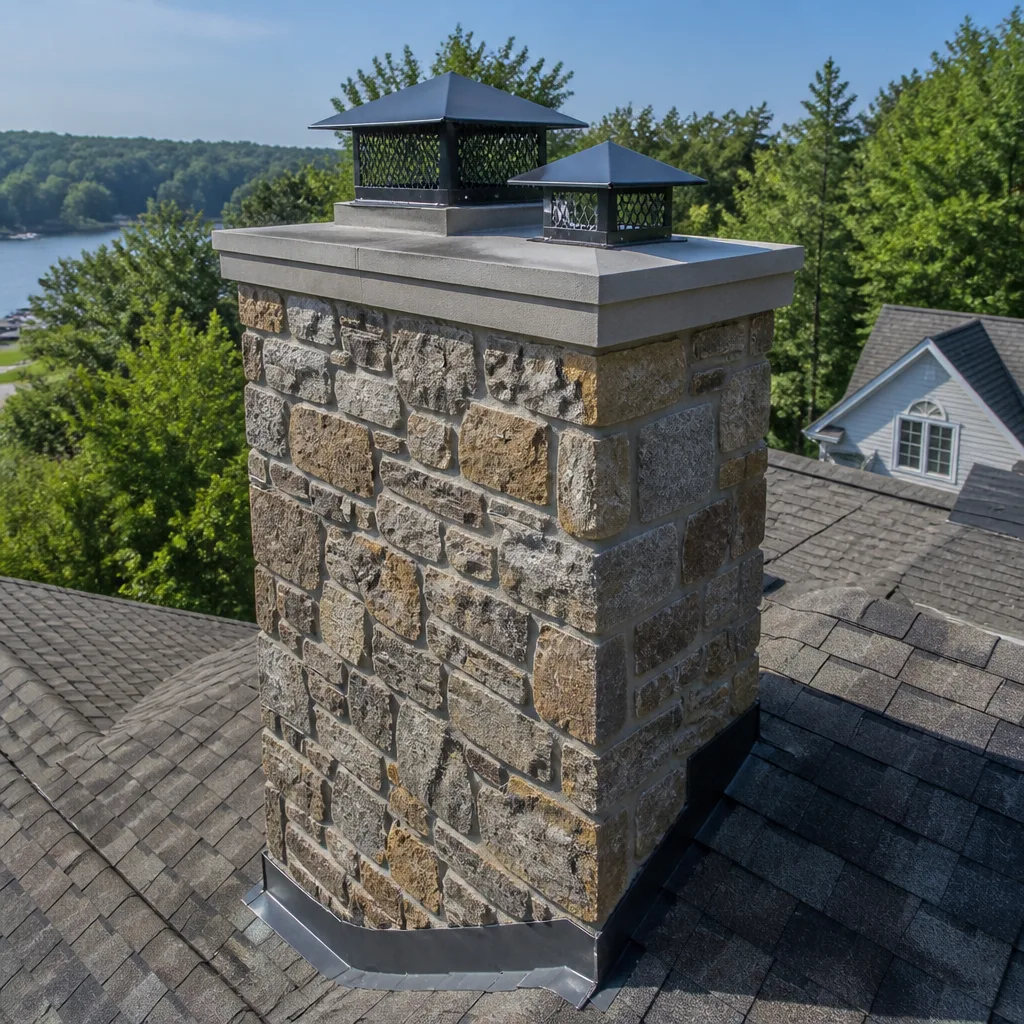
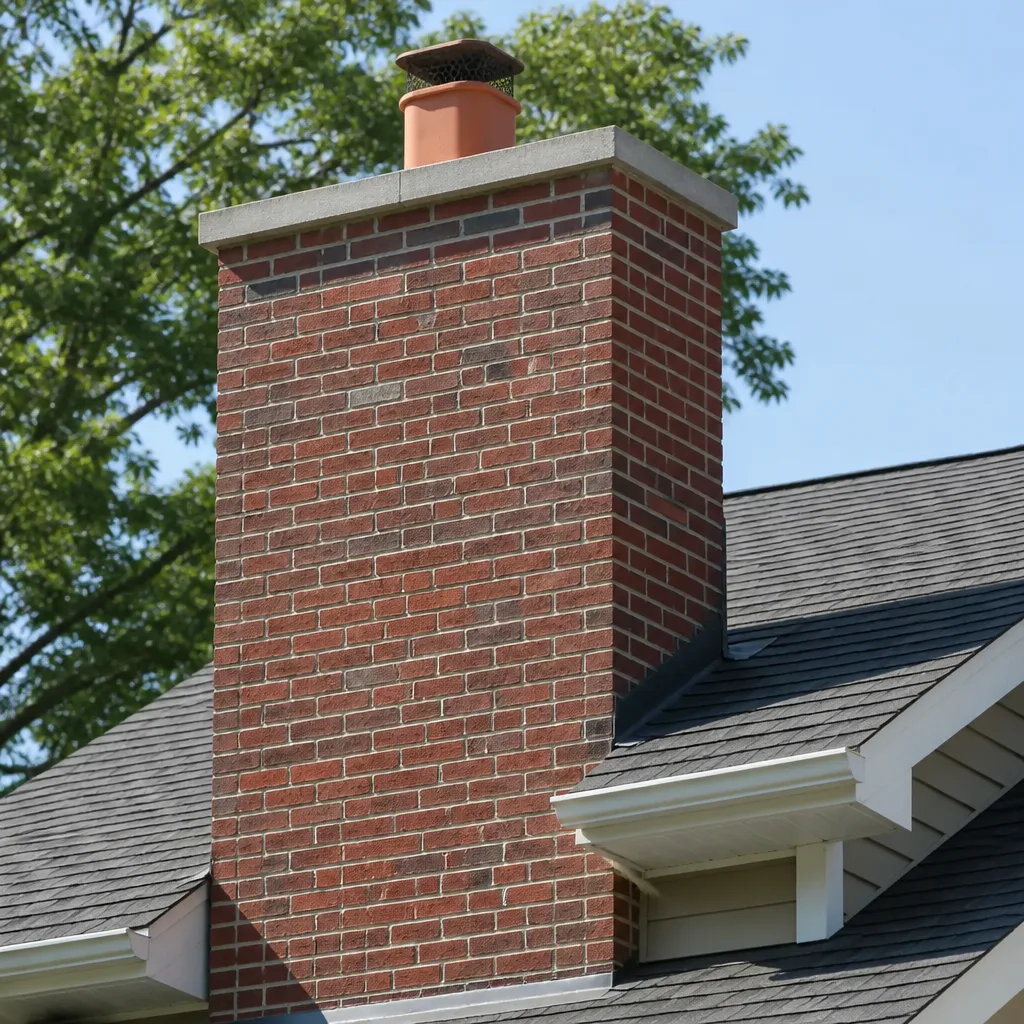
- Crown and chase cover evaluation. The crown is the concrete or mortar slab on top of a masonry chimney. After decades of Framingham freeze-thaw cycles, crowns crack, spall, and let water behind the brick. A visual check from the roof with close-up photographs is the only way to know the crown’s real condition.
- Chimney cap and spark arrestor check. A proper cap with a spark arrestor mesh keeps rain, snow, and animals out. The sweep verifies the cap fits correctly and that the mesh is not clogged with creosote or debris, which is a common cause of drafting problems in Framingham’s damp shoulder seasons.
If you are looking for a deeper walkthrough of what a full cleaning visit covers in this area, our Chimney Cleaning & Sweep in Framingham page breaks down the entire process step by step.
What Framingham’s Colonial and Cape-Style Homes Get Wrong
Framingham’s housing stock is not a generic suburb. The town was incorporated in 1700, and a substantial share of the homes here were built before the Great Depression. Colonials, capes, and the occasional Victorian bring three chimney problems that newer construction in, say, Northborough or Ashland simply does not have.
Exterior-Facing Chimney Exposure
Many Framingham colonials have chimneys on an exterior gable wall rather than running up through the center of the house. That design made sense two hundred years ago when fireplaces were the primary heat source and masons did not worry about heating efficiency. It matters now for two reasons. First, an exterior chimney stays cold during New England winters, which means smoke cools faster as it rises, creosote condenses more readily, and draft problems are more common. Second, exterior brick takes the full brunt of rain, snow, and freeze-thaw cycles on three sides. We routinely see mortar joint erosion and spalled brick faces on the weather side of Framingham exterior chimneys while the interior side still looks passable.
Undersized and Unlined Flues
Pre-1940 Framingham homes often have flues built for coal or cordwood fires in open fireplaces. The interior dimensions rarely match what modern EPA-rated wood stoves or fireplace inserts need. An oversized flue cools smoke too quickly and accelerates creosote buildup. An undersized one restricts flow and pushes smoke back into the room. The fix is usually a properly sized stainless liner, which is where a brand like DuraFlex or Copperfield enters the conversation. But the point for this checklist: if your Framingham home was built before World War II and the flue has never been lined or resized, that is a priority inspection item, not a cosmetic one.
Single-Flue Multi-Appliance Setups
We still find Framingham homes where a furnace, a water heater, and a fireplace all vent into the same flue. Code today requires separate flues or properly engineered multi-flue systems. If your home has any shared-flue configuration, have a liner professional evaluate it before burning season. Carbon monoxide does not care how original the brickwork is.
Creosote Stages You Can Identify Without Tools
Your flue doesn’t care how the fire looks. It cares how it breathes. Creosote is the byproduct of incomplete combustion, and it builds in three distinct stages. You can identify all three from the firebox with a flashlight and a little experience. Here is what to look for.
First-Degree: Powder or Fine Flakes
First-degree creosote looks like fine black dust or lightweight flakes that brush off easily. It forms from relatively efficient fires with dry, seasoned wood. In terms of risk, this is the least dangerous stage, but it still needs annual brushing. Powder creosote becomes flaky creosote quickly when moisture and cool flue temperatures are involved. First-degree creosote is a brush job. You can see it as a dusty film on the firebox walls and sometimes drifting down onto the hearth after a windy night.
Second-Degree: Crunchy Flakes and Tar Spots
Second-degree creosote looks like black cornflakes or crunchy chips of tar stuck to the flue walls. It forms from cooler fires, green or partially seasoned wood, and restricted air supply. At this stage, the creosote is hard enough that a standard fiber brush will move it, but it takes more passes and more effort. You can sometimes see second-degree creosote as raised, glossy black chips visible just above the damper line with a strong flashlight. If you see this in your Framingham firebox, schedule the sweep before you light another fire.
Third-Degree: Glaze
Third-degree creosote is shiny, hard, and tar-like. It looks like melted black glass coating the flue walls. It forms when creosote goes through repeated heating and cooling cycles, which is exactly what happens in exterior chimneys during a Framingham winter. Third-degree creosote is a glaze. A normal brush will not remove it. Glaze burns hot and long, which is what turns a small chimney fire into a house fire. If you see glazed, reflective black buildup anywhere in the firebox or just above the damper, do not burn another log. Call for a professional cleaning and camera assessment. If glazed creosote is confirmed by camera, the solution may involve a product like HeatShield or a mechanical rotary cleaning before the chimney is safe again. This is not a scare tactic. It is the single most important thing a homeowner can visually identify.
If the fireplace itself is giving you trouble beyond the flue, from smoke rollout to cracked refractory panels, our Fireplace Services in Framingham page covers what can and cannot be repaired.
The “Skip It This Year” Column: When a Cleaning Honestly Can Wait
No legitimate checklist pretends every box needs checking every time. Here is the honest column, because saying so plainly is the only way this guide stays useful. These are conditions under which an annual cleaning may not be urgent.
You Burned Fewer Than a Dozen Fires Last Season
If your firebox sees ten or twelve fires a year, always with dry hardwood, and the last camera inspection showed a clean flue, you can reasonably stretch to eighteen months between cleanings. Creosote buildup is a function of burn volume, wood quality, and flue temperature. Ten efficient fires do not produce the same deposits as three cord of green pine.
The Fireplace Is Decorative and Never Used
Some Framingham homeowners keep a fireplace for the look and have not lit it in years. If the flue has been capped, the damper sealed, and the fireplace is genuinely inert, an annual sweeping does nothing. What it still needs is an occasional visual check and a camera run every few years to confirm the liner is not failing from moisture alone. Chimneys break in the off-season too.
You Have a Recent Camera Report in Good Condition
If you have a flue camera report from the last twelve months showing first-degree creosote only, no cracks, no liner gaps, and no water intrusion, an unscheduled second cleaning this year is optional. Keep the report on file. A documented clean flue is a legitimate reason to skip the sweep.
The Odor and Deposit Checks Come Back Clean
No summer odor, no visible glaze, no flaking, no water stains on the ceiling near the chimney. When all the owner-level checks come back clean and your burn volume is modest, you have earned the right to push the cleaning to next season. That said, the camera is still the final word. Visual checks catch obvious trouble. They miss cracked liners and hidden water damage.
What to Document for Insurance and Home Sales
Framingham buyers’ inspectors routinely ask about chimney history, and insurance adjusters are becoming stricter about fireplace and chimney claims. A folder with the right documents can save you a claim denial or a sale delay. Here is what to keep.
Your Chimney File Should Include
- Every camera inspection report. The report should include still images or video stills, the date, the technician’s name and license number, and a written condition assessment. This is the single most valuable document in your file. It proves you maintained the chimney and documents baseline condition.
- Cleaning records. Each cleaning receipt should note the date, the amount of creosote removed, the type of brush or rotary system used, and any anomalies found. If your sweep does not document this, ask for it.
- Repair invoices with brand names. If a liner was installed, the invoice should list the brand (DuraFlex, Copperfield, Gelco, or similar) and the liner dimensions. If a crown was rebuilt or a flue was parged, keep the details. A future buyer or inspector can verify exactly what was done and when.
- Before and after photos. A good sweep will offer camera stills before and after the cleaning. These take ten seconds to save and are worth their weight when an insurance adjuster asks whether the chimney was properly maintained.
- Recurring maintenance notes. If the sweep flagged minor water staining in 2024 and you addressed it in 2025, write that down. A paper trail of small fixes is exactly what a home inspector wants to see.
We keep records like this for every home we serve in Framingham, and we are happy to hand over copies when you sell the house or file a claim. A chimney with a written history is a selling point, not a liability.
The Framingham Burning Season Calendar
Once a year, burn or no burn. Chimneys break in the off-season too. But if you want the cleanup timed right for Framingham’s climate, here is the rhythm we recommend.
Late Spring (April to May): The Post-Season Inspection
After the last fire of the season, do the owner-level checks: damper operation, firebox visual, odor test, exterior ground check. If anything looks off, call for a camera inspection now rather than in September when every other homeowner in Middlesex County suddenly remembers their chimney exists. Spring is also the right time for repairs, because masonry work benefits from warmer temperatures and you have the full summer to let repairs cure properly.
Summer (June to August): The Off-Season Work Window
If you need a liner replacement, crown rebuild, or smoke chamber parge, summer is the season. The work gets done faster, scheduling is easier, and the repair has time to cure before the first freeze. We offer a free second opinion on any written estimate, and looking in July gives you time to gather quotes properly. Call (781) 390-9211 and Wendell will talk you through what is urgent and what is not.
Early Fall (September to October): The Pre-Season Cleaning
Schedule your annual cleaning before the first fire. In Framingham, that is usually mid-to-late September. This catches any summer moisture damage, clears any nests or debris, and confirms the damper and cap are ready. It also means you are not calling during the October rush when every sweep is booked three weeks out.
Winter (November to March): Mid-Season Monitoring
During burning season, watch for signs of trouble: a fireplace that suddenly starts smoking back into the room, a persistent chemical odor, or soot falling into the firebox between fires. These are not normal. If you see them, call. We answer the phone around the clock with a live person, and it may well be Wendell himself on the other end.
For a complete breakdown of what a professional sweep visit includes and what it costs in this area, we keep the details current on our Top Hat Chimney home service pages.
Why the Flue Camera Is Non-Negotiable
Here is a fact most checklists will not say plainly: a chimney can look perfect from the hearth and be dangerous from the flue. We have pulled camera footage in Framingham homes where the firebox was spotless and the first twelve feet of flue looked like a cracked clay pipe held together by hope. You cannot see that with a flashlight. You cannot see that from the roof with the cap off. You can only see it with a camera pushed through the entire flue while the operator knows exactly what to look for.
The camera footage and a plain-English verdict, every time, no exceptions. That is the standard we hold ourselves to at Top Hat Chimney, and it is the standard you should expect from any sweep who works on your home. If a contractor wants to tell you the liner needs replacement without showing you camera images, thank them and get a second opinion. Nothing is recommended without evidence you can see for yourself.
What the Camera Actually Shows
- Hairline cracks in clay tile liners that are invisible to the naked eye
- Separated mortar joints between flue sections
- Warped or perforated stainless liners, particularly where the liner passes through the old clay flue
- Glazed creosote thickness and exact location, which determines whether a standard brush or rotary cleaning is needed
- Smoke chamber surface condition and whether the parge coat is intact
- Water entry points and staining patterns that indicate where leaks are entering
- Animal nests, debris blockages, and flue cap condition from the inside
If you need a full-service repair rather than just a cleaning, our Chimney Repair in Framingham page explains how we diagnose and fix liner, crown, and masonry issues.
Common Mistakes to Avoid
- Burning green or unseasoned wood. Wood needs six to twelve months of split-and-stacked drying to burn cleanly. Green wood cools the fire, smokes heavily, and glazes your flue. In Framingham’s humid summers, wood stacked tight without airflow will never dry properly.
- Skipping the camera inspection. A visual check catches surface issues. It does not catch cracked liners, hidden glaze, or smoke chamber damage. If your sweep does not run a camera, you are paying for half the service.
- Closing the damper immediately after the fire. Wait until the fire is fully out and the embers are cold. Closing early traps warm, moist air in the flue and accelerates creosote condensation. In an exterior chimney, this is a fast path to second-degree buildup.
- Ignoring summer odors. A strong creosote smell in July is not a nuisance. It is a signal that glaze has formed and is off-gassing. Waiting until October to address it means the chimney has had eight more months to collect moisture and worsen.
- Letting the crown crack. A cracked crown is a five-hundred-dollar fix if caught early. A failed crown becomes a three-thousand-dollar rebuild when water has been pouring into the brick for three winters. Check the crown annually from the ground or with a drone photo. Framingham freeze-thaw cycles are relentless.
- Assuming the previous owner maintained the chimney. Trust but verify. We regularly inspect Framingham homes that changed hands with a “clean chimney” note and show a flue with years of glaze and a damaged liner. The camera does not care what the disclosure said.
- Waiting until October to schedule. Every sweep in Middlesex County is booked solid from late September through November. Schedule your fall cleaning in August or early September. You will get better availability, lower stress, and the same price.
When to Call a Professional
Call a professional if you see glazed, shiny creosote anywhere in the firebox or flue. Call if the damper will not close, if the fireplace smokes back into the room, if you smell creosote strongly in summer, or if the exterior chimney shows spalled brick, white staining, or a cracked crown. Call if you have not had a camera inspection in more than two years, regardless of burn volume. Call if your Framingham home has an exterior chimney built before 1940 and the flue has never been relined. These are not optional checks. They are the difference between a warm fall evening and a fully involved chimney fire. Top Hat Chimney offers free estimates in Framingham. Call (781) 390-9211 and Wendell will tell you plainly whether the job needs doing.
Frequently Asked Questions
A chimney attached to a regularly used fireplace in Framingham should be swept by a professional once a year, ideally in late summer or early fall before burning season begins. Homes that burn wood more than three days a week during winter may need a second mid-season cleaning, especially if the flue runs through an exterior wall where creosote condenses faster.
A standard chimney cleaning and inspection in Framingham typically runs between $180 and $350 depending on flue height, creosote stage, and whether a camera inspection is included. Glazed third-degree creosote requires rotary cleaning and runs higher. Call (781) 390-9211 for a specific quote, and the number we give you on the phone is the number on the invoice.
Not annually, but you do need a camera inspection every two or three years even if the fireplace is decorative. Unused chimneys still absorb moisture, and a capped flue still degrades from freeze-thaw cycles. In Framingham’s climate, water damage is a year-round threat even when the firebox is cold.
Powder creosote is fine, dusty, and brushes off easily. Glazed creosote is shiny, hard, and tar-like, and it requires rotary cleaning or chemical treatment before a brush will touch it. Glazed creosote burns hot and long, which makes it the most dangerous form for chimney fires.
You can, but in most Framingham homes it is not worth the risk or the half-done result. A homeowner brush kit will not reach glazed buildup in the upper flue, cannot inspect the liner condition, and cannot document the work for insurance purposes. More importantly, working on a roof in January is dangerous. A professional sweep brings the camera, the right brushes, and the license to prove the job was done.
It means every cleaning and repair Top Hat Chimney completes in Framingham carries a written promise: if the work is not right, one call brings Wendell and his crew back to make it right at no additional cost. That promise is stamped on every job, and it is the reason homeowners who have been burned by national chains end up calling us.
The Bottom Line
A chimney checklist for a Framingham homeowner works best when it splits honest observation from professional inspection. Check the damper, the firebox, the odor, and the exterior brick yourself. Document everything. Keep records for insurance and resale. But understand that the real verdict comes from the flue camera, because the problems that cost thousands start where no flashlight reaches. Once a year, burn or no burn. Schedule early, watch for glaze, and never accept a liner recommendation without seeing the footage. If you ever have a question about what you are seeing, call (781) 390-9211. We will give you a straight answer, not a sales pitch.
Written by Wendell Pike, Owner at Top Hat Chimney, serving Framingham since 1999.