
Level 1 sweep and inspection to the NFPA 211 annual standard - flue, crown, cap, and flashing checked and photographed
Chimney sweep logs do not sweep chimneys. They loosen some creosote - which then falls where a brush and vacuum still have to collect it.
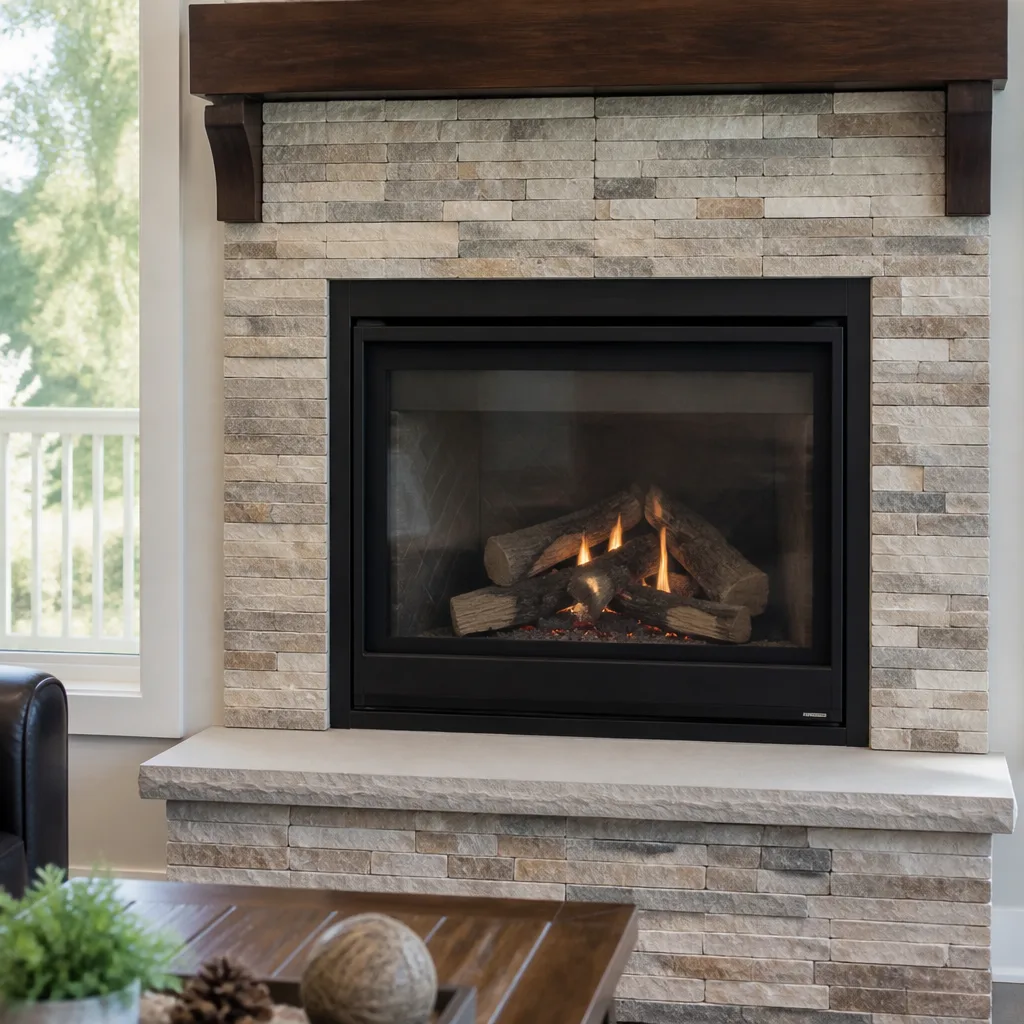
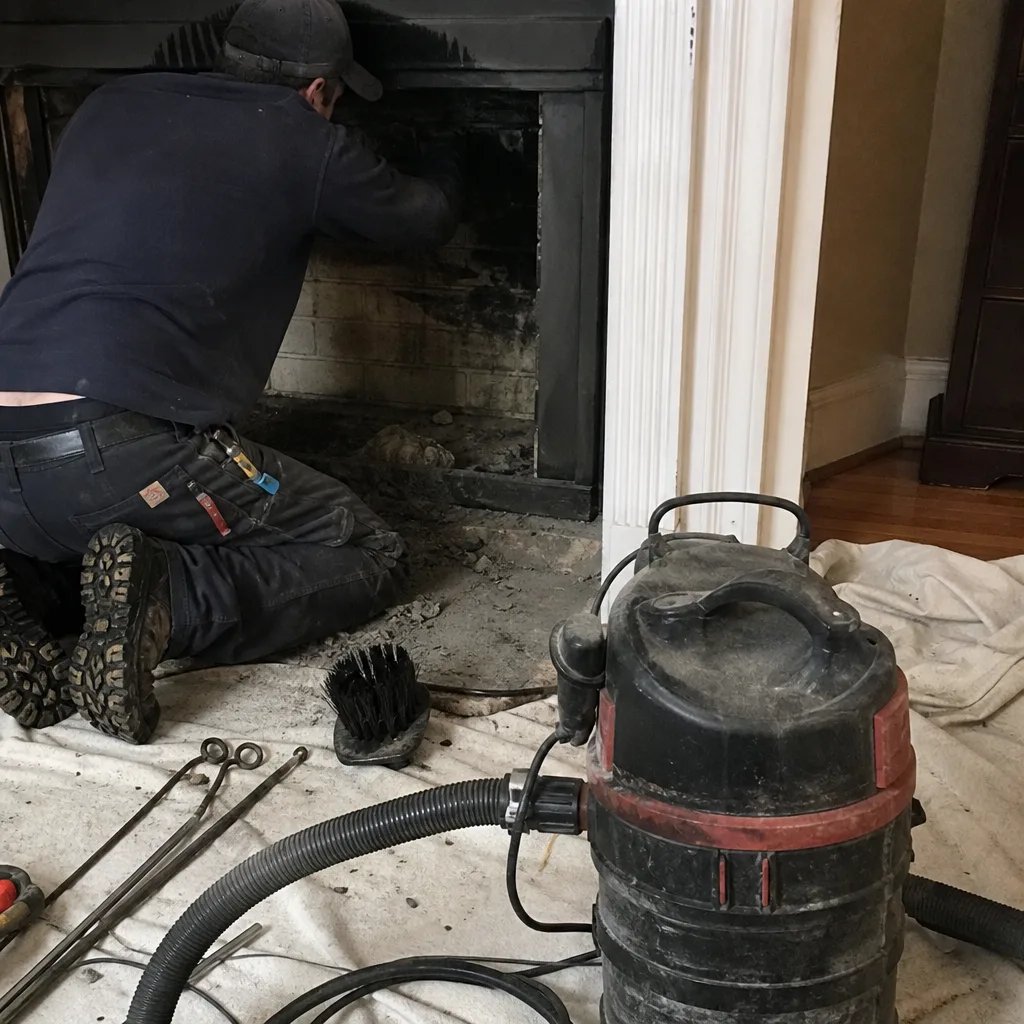 Before
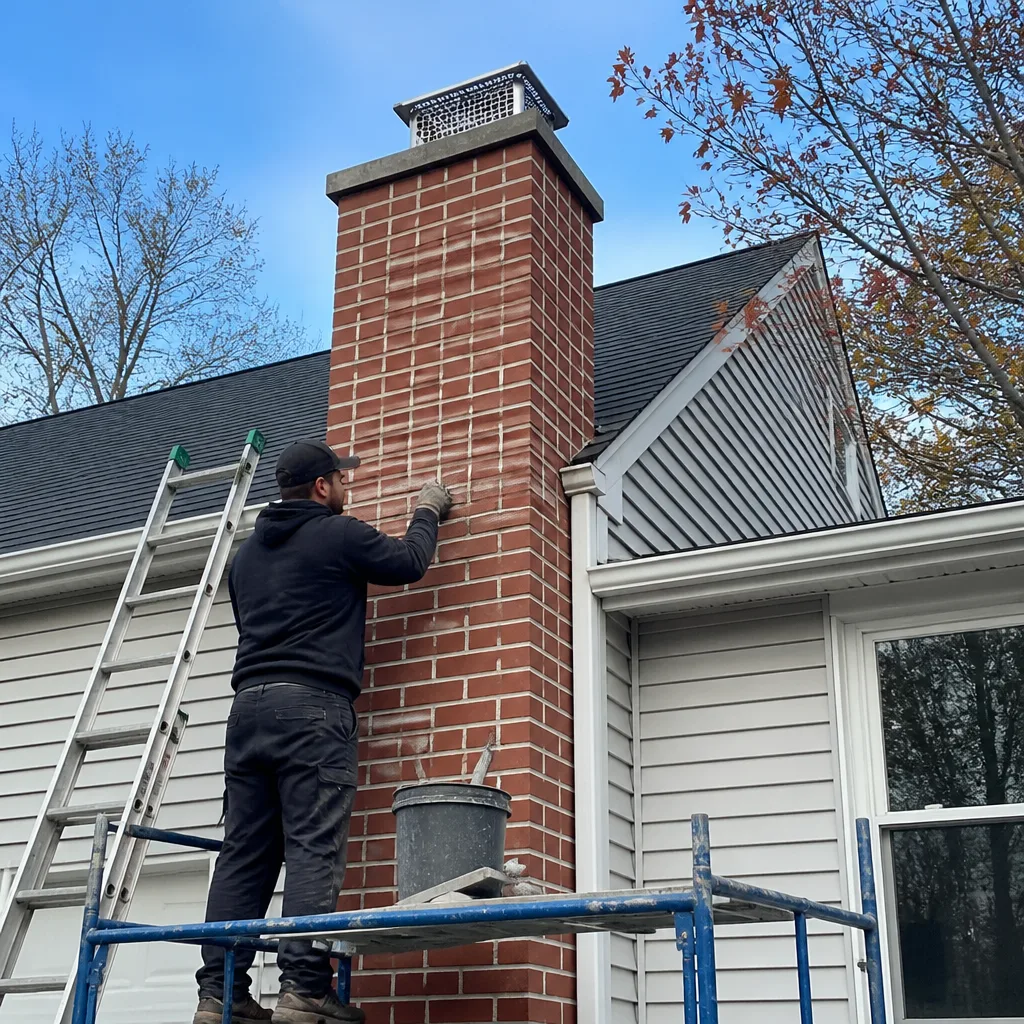 After
After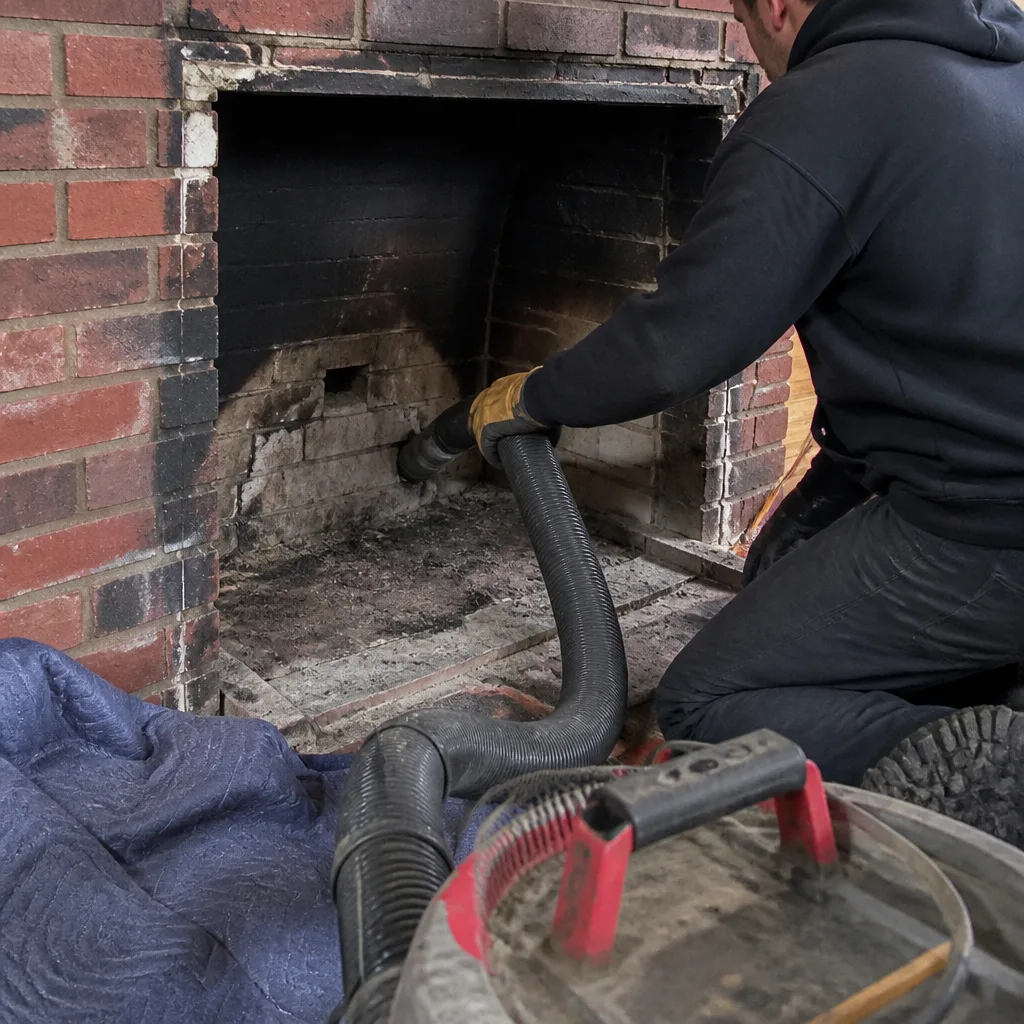 Before
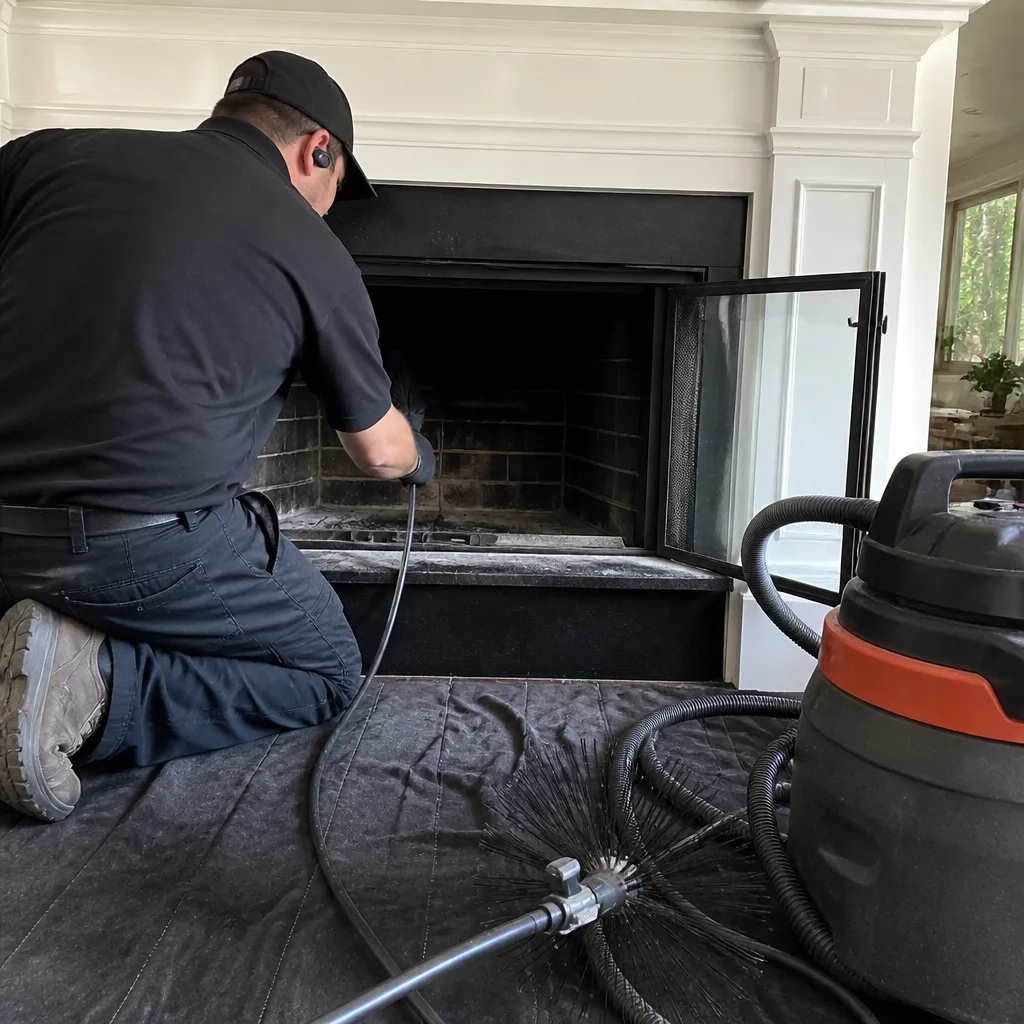 After
After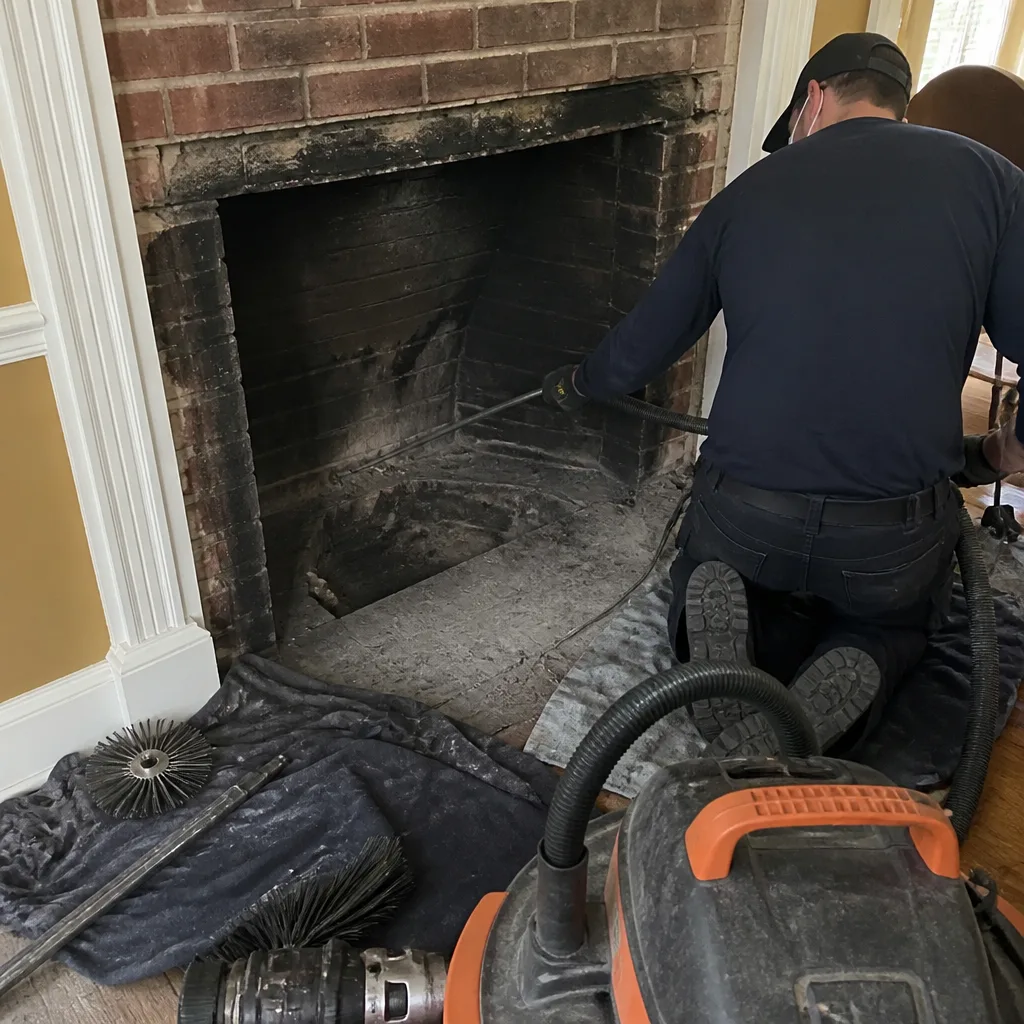 Before
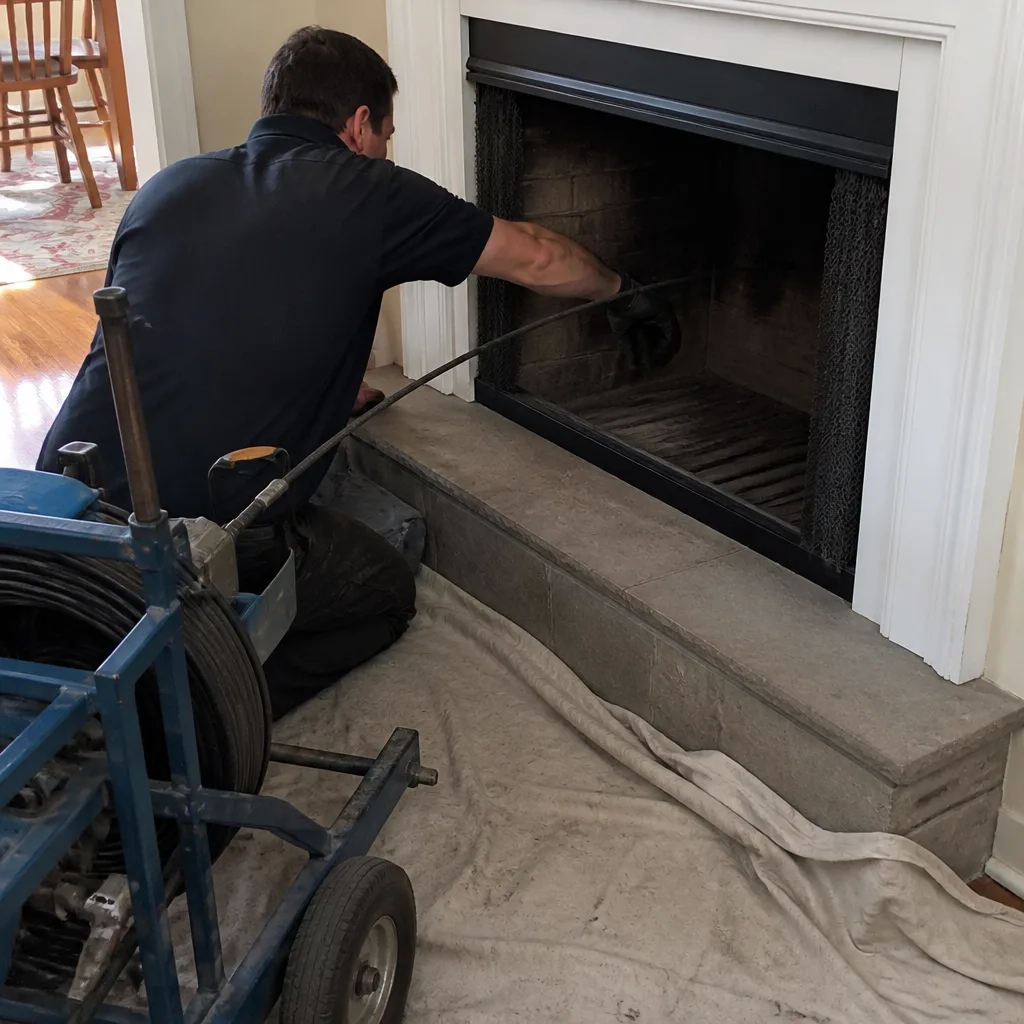 After
AfterDuraFlex Flue Liner Replacement: The Framingham Owner’s Guide
If your DuraFlex liner has failed, we stock and install replacement sections in the common diameters, and a typical swap in Framingham runs $350 to $800 installed depending on access and how many feet you’re replacing. Most folks discover the problem the same way: a water stain on the ceiling near the chimney, rust flakes at the cleanout door, or a sweep’s camera showing a seam that’s opened up. The liner is the pipe inside your chimney that carries smoke and gases up and out. When it fails, you’re not just losing draft, you’re letting heat and moisture into the masonry around it.
We’re not affiliated with DuraFlex, but we’ve worked with their product for years. We know which parts interchange and which ones don’t, and we’ll tell you plainly if a patch makes more sense than a full section. Wendell Pike has run a brush through more Framingham chimneys than he can count, and he’s seen plenty of DuraFlex liners that were installed wrong from day one. If it doesn’t need doing, he’ll tell you.
Which DuraFlex Models This Applies To
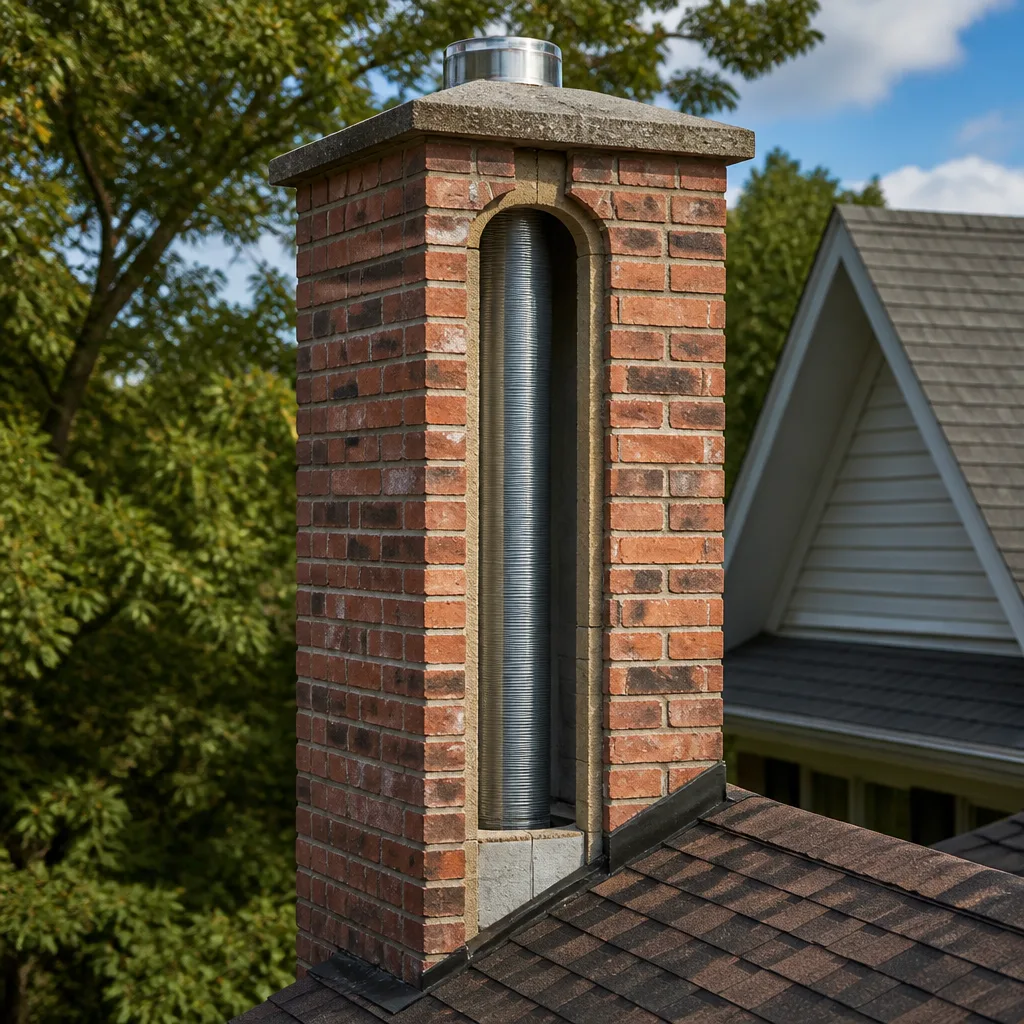
DuraFlex makes several liner lines, and the replacement path changes depending on what’s in your chimney. The most common in Framingham homes is the 316L stainless smooth-wall liner, typically in 5.5-inch or 6-inch diameter for wood stoves, and 6-inch or 7-inch for fireplace inserts. Some older installs use the corrugated 304 series, and those have a different flex pattern that affects how sections couple together.
Here’s the compatibility gotcha most homeowners don’t know: DuraFlex smooth-wall and corrugated sections do not always interchange at the coupling. If your original install used a specific series, matching the replacement to that series matters more than matching the diameter. We always check the printed label on the existing liner before quoting, because the series code tells us what will actually fit. If the label is gone, we measure the inside diameter and inspect the seam construction to identify it. OEM DuraFlex sections run about 20 to 30 percent more than quality aftermarket equivalents, but for mid-run repairs the aftermarket 316L sections hold up just as well in our experience.
Signs Your DuraFlex Flue Liner Replacement Is Failing
- Rust flakes or staining at the cleanout door. This usually means moisture is getting between the liner and the masonry, and the liner itself is corroding from the outside in. In Framingham’s freeze-thaw cycle, that trapped moisture expands and contracts all winter, which accelerates the damage.
- Water stains on the ceiling or wall near the chimney chase. A liner seam that’s opened up lets flue gases condense against the cooler masonry, and that condensation drains down inside the chase. By the time you see the stain, the seam has been leaking for a while.
- A faint acrid smell in the house after a burn. Exhaust that should be going up is instead seeping through a seam gap into the chimney cavity, and from there into wall spaces. It’s subtle at first, but it doesn’t get better on its own.
- Draft problems that get worse, not better. A liner that’s separated mid-run creates turbulence that kills your draft. You might notice smoke rolling back into the room when you open the stove door, or a fire that’s hard to get going even with dry wood.
- Visible rust scaling on the liner’s exterior during a sweep. This is the one we see most often on younger installs. It means the wrong grade of stainless was used for the fuel type, or the liner was installed without proper insulation and has been sweating against the cold masonry. Once scaling starts, the wall thickness is already compromised.
Replacement Cost & What’s Included
In Framingham, expect to pay between $350 and $800 for a typical DuraFlex section replacement. A short section near the top of the liner, where access from the roof is straightforward, lands at the lower end. A mid-run failure that requires pulling the appliance, working from the bottom up, or cutting into the chimney chase will push toward the upper end.
That price includes the replacement section or sections, coupling hardware, labor, and a camera inspection before and after so you can see exactly what was replaced and why. We give you the price before any tool comes off the truck, and the number we quote on the phone is the number on the invoice. Every replacement carries our 90-Day Done Right Promise in writing, and if something isn’t right, one call brings Wendell back at no charge to you.
DIY or Call Us?
You can safely do a visual check from the ground: look at the chimney cap with binoculars, check the cleanout door for rust, and note any new stains near the chase. That’s about where the safe part ends. Pulling a liner section means getting on the roof or working inside a tight chase, and if you misjudge the coupling or use the wrong series, you can create a gap that lets exhaust into the house. A liner that’s separated isn’t a nuisance, it’s a carbon monoxide pathway.
If you want a camera inspection and a straight answer on whether your liner has life left in it, call us at (781) 390-9211. We’ll tell you if a patch will hold or if you truly need a section swapped. And we’ll show you the footage either way.
FAQs
A properly installed 316L DuraFlex liner typically lasts 15 to 25 years in Framingham, though wood-burning appliances running hot fires year after year will age it faster on the interior wall. The real killer in New England is moisture from condensation and freeze-thaw cycles working against the masonry, not the liner itself, which is why proper insulation matters as much as the alloy. Call us at (781) 390-9211 for a camera inspection if your liner is past the 15-year mark.
Yes, if the failure is a separated seam or a small crack at a coupling, a repair section or a proper re-coupling can often get you years of safe service at a fraction of the cost. The decision comes down to what the camera shows: isolated damage can be repaired, but corrosion that’s spread across multiple feet of liner usually means a replacement. We’ll show you the footage and give you our honest recommendation before any work is scheduled.
Most single-section replacements take two to three hours from setup to cleanup, and we’re typically done the same day we start. If the failure is mid-run and requires pulling the stove or insert, figure half a day. Either way, we’ll give you a real arrival window and call you if anything changes.
We keep common 5.5-inch, 6-inch, and 7-inch 316L sections and coupling hardware on the truck, which covers the large majority of Framingham installations. Odd sizes or the corrugated 304 series may need a day or two to source. If you call us, we can usually tell you over the phone whether we have the part on hand based on your liner’s label or measurements.
Written by Wendell Pike, Owner, Top Hat Chimney at Top Hat Chimney, serving Framingham and nearby areas.