
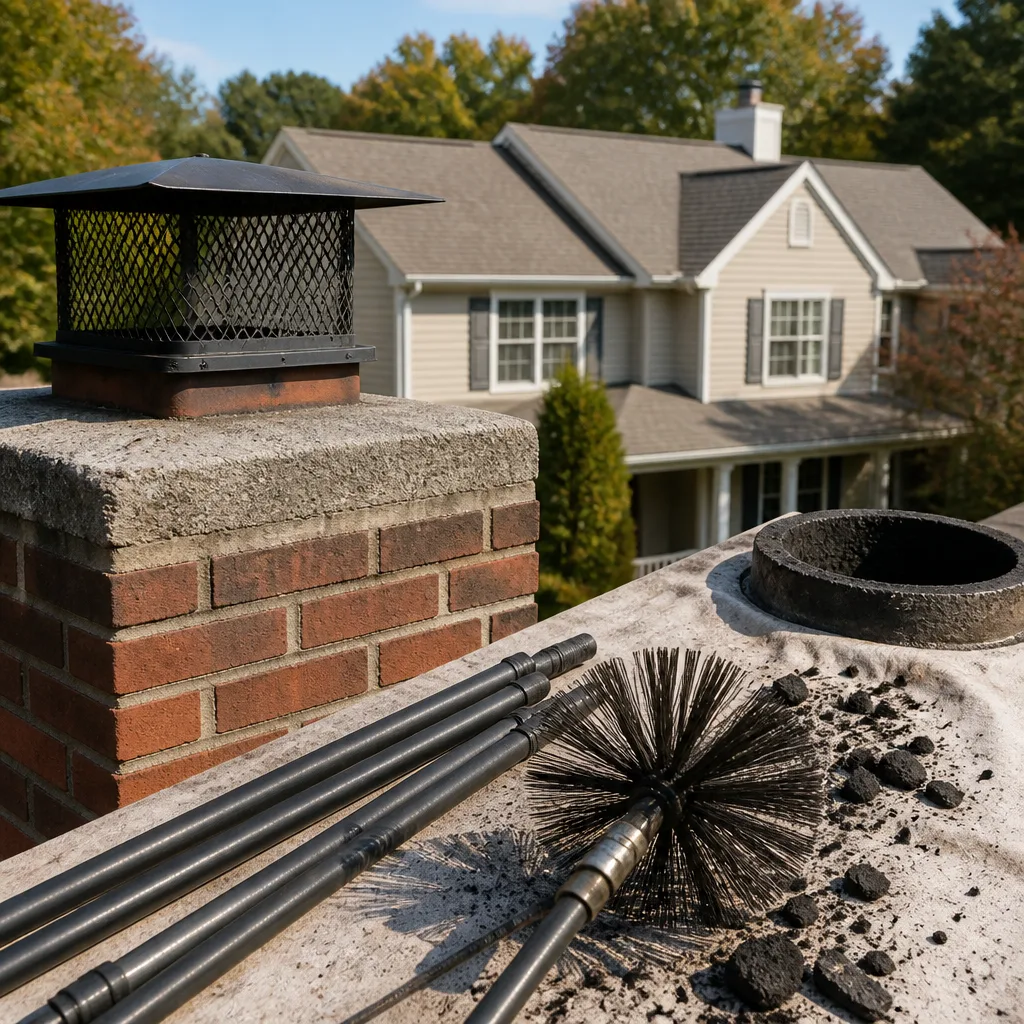
Level 1 sweep and inspection to the NFPA 211 annual standard - flue, crown, cap, and flashing checked and photographed
Chimney sweep logs do not sweep chimneys. They loosen some creosote - which then falls where a brush and vacuum still have to collect it.
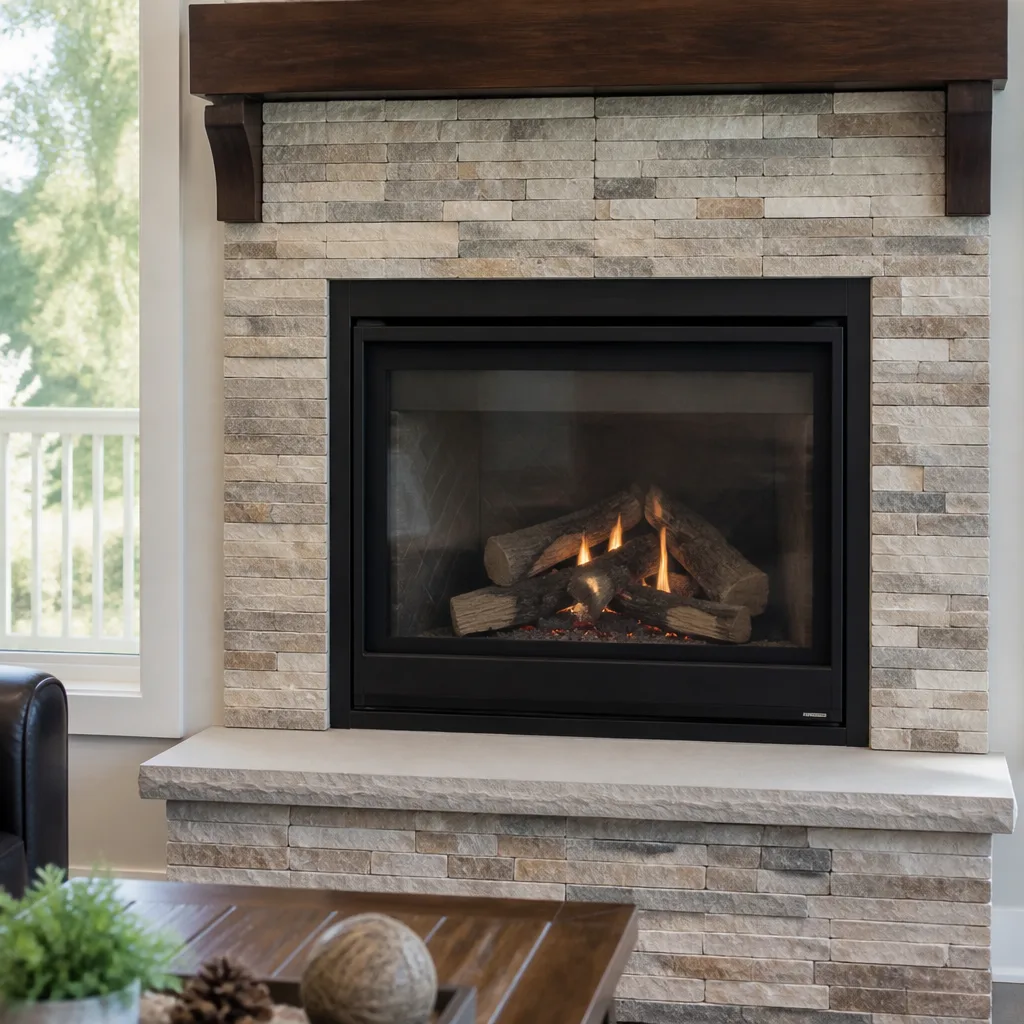
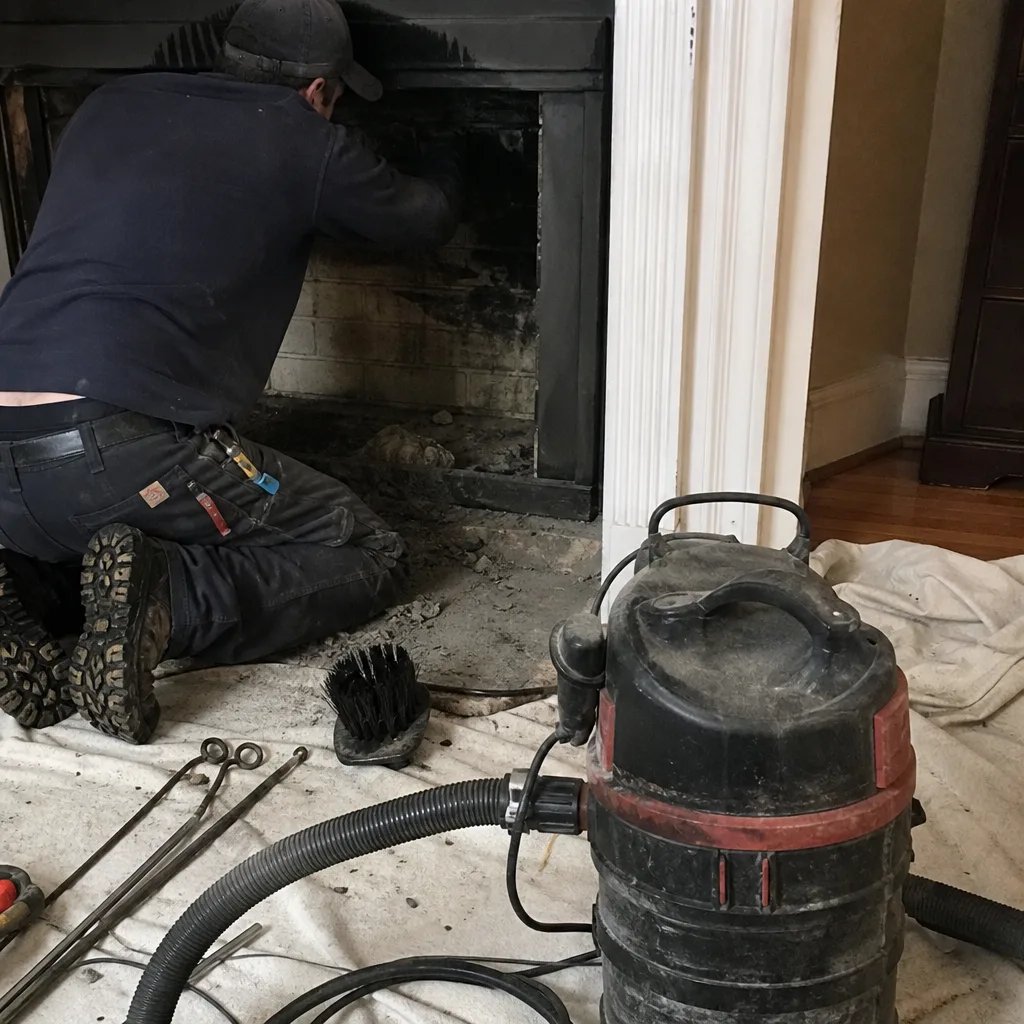 Before
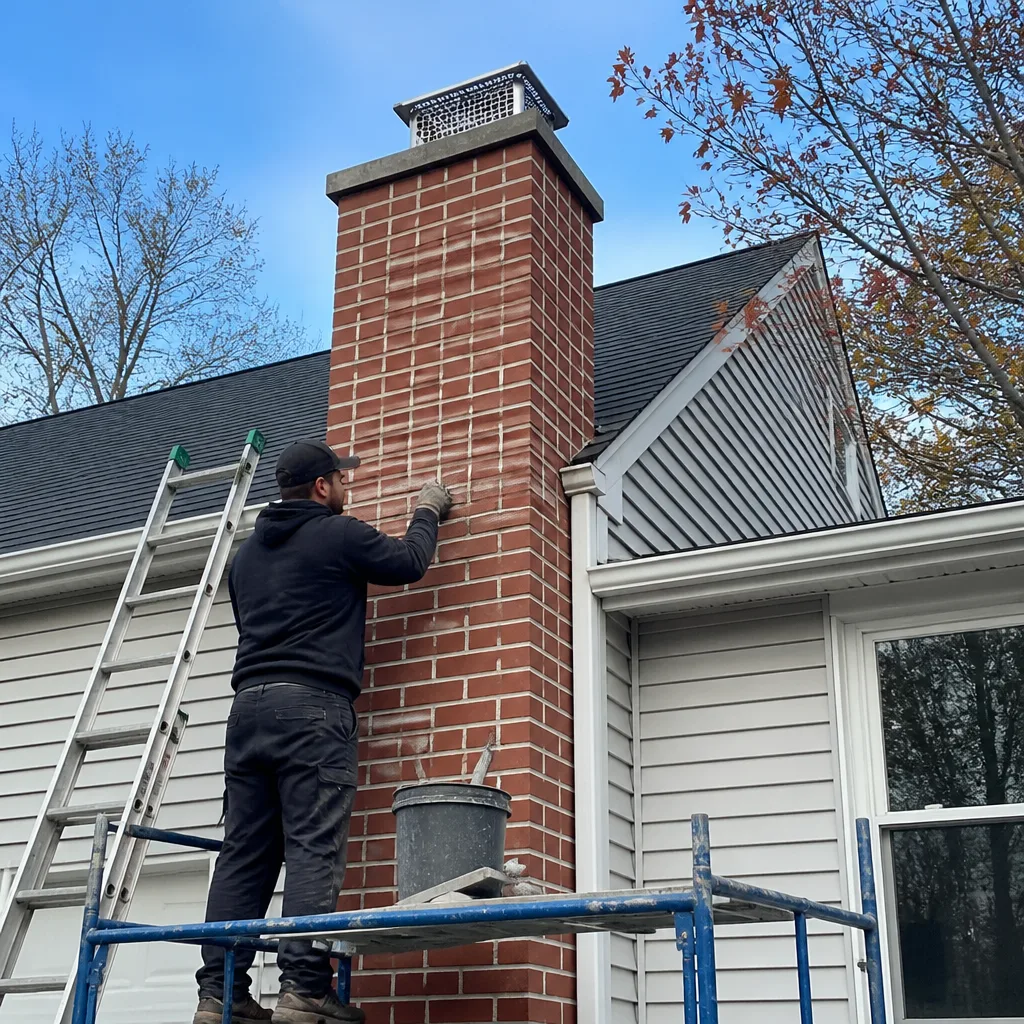 After
After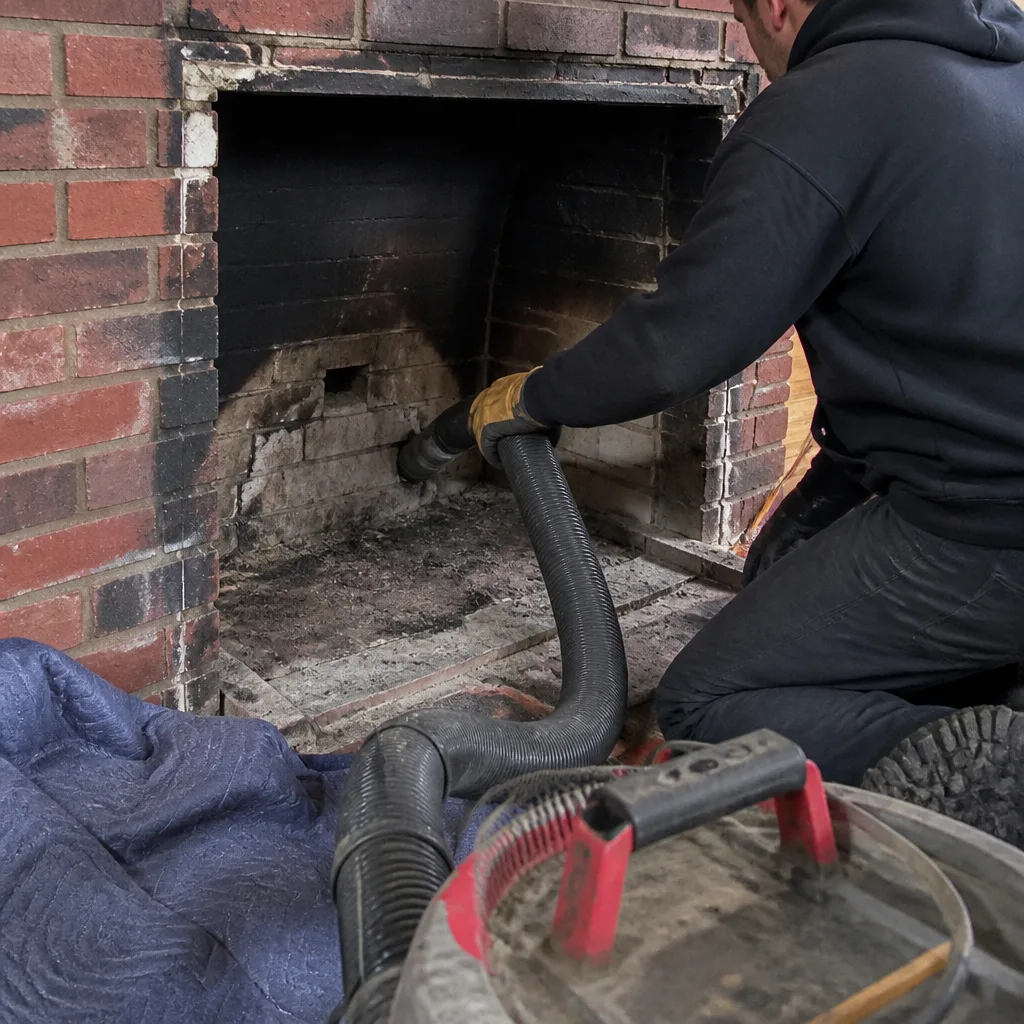 Before
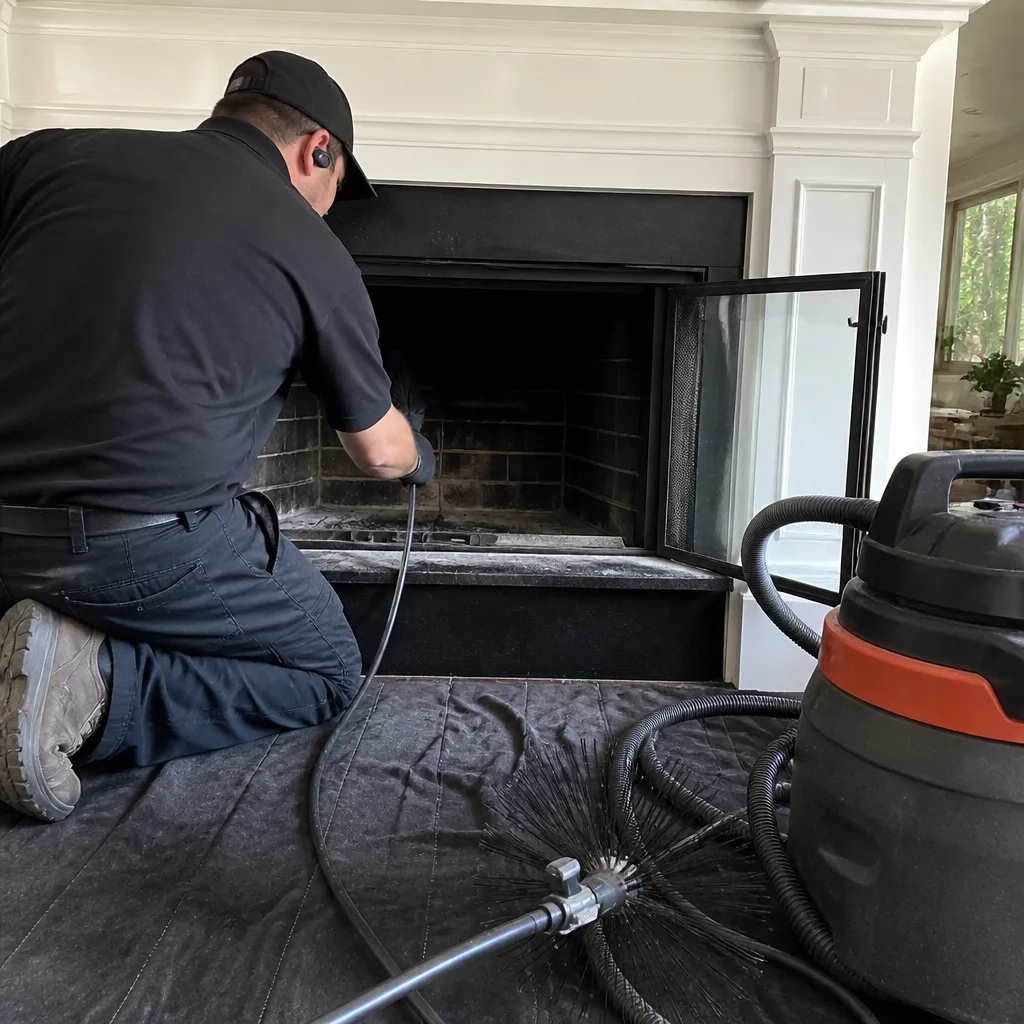 After
After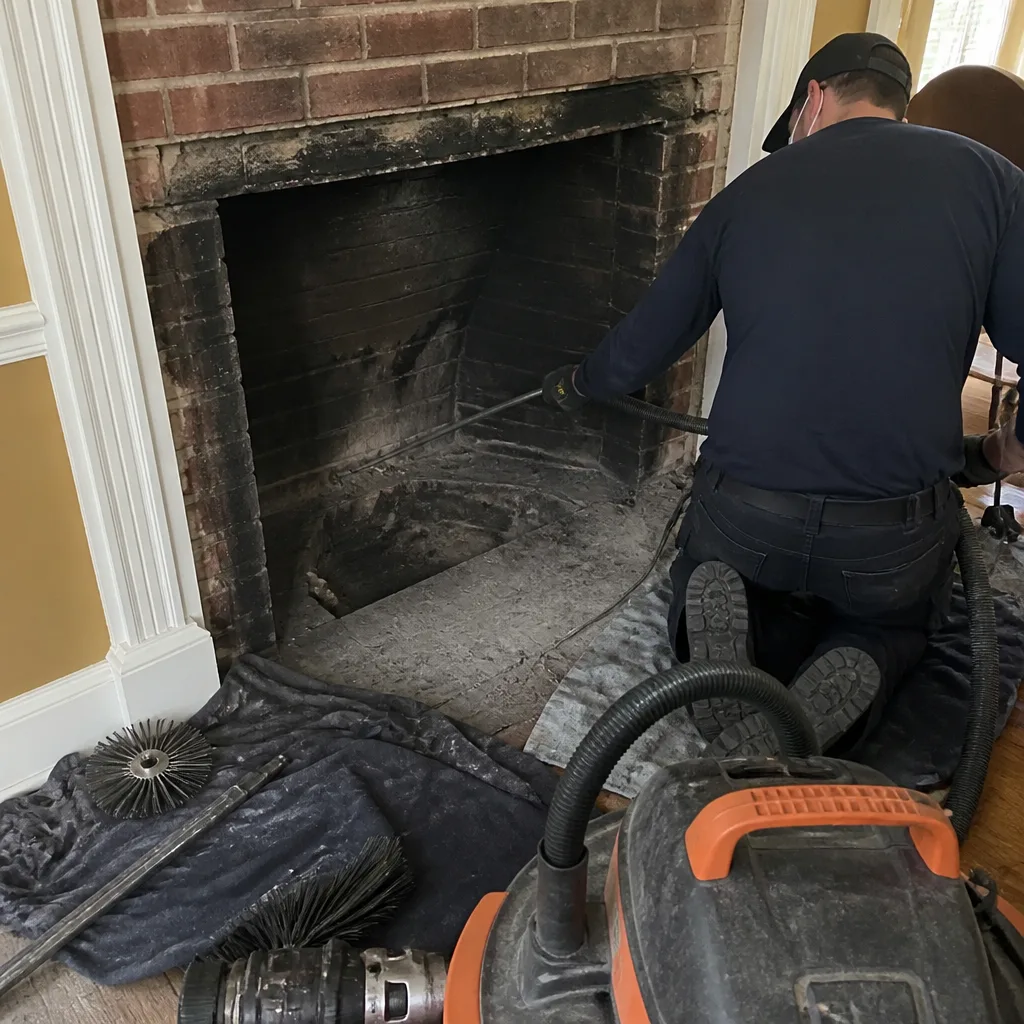 Before
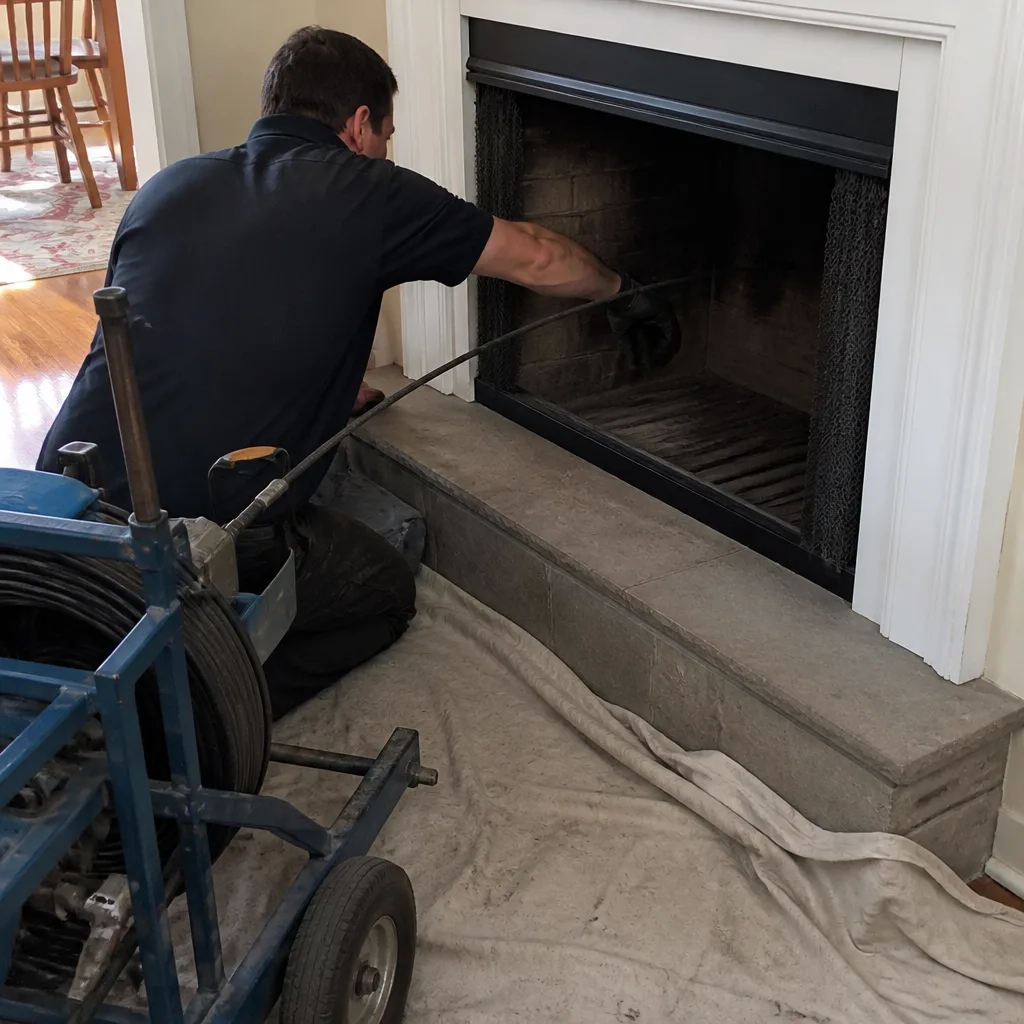 After
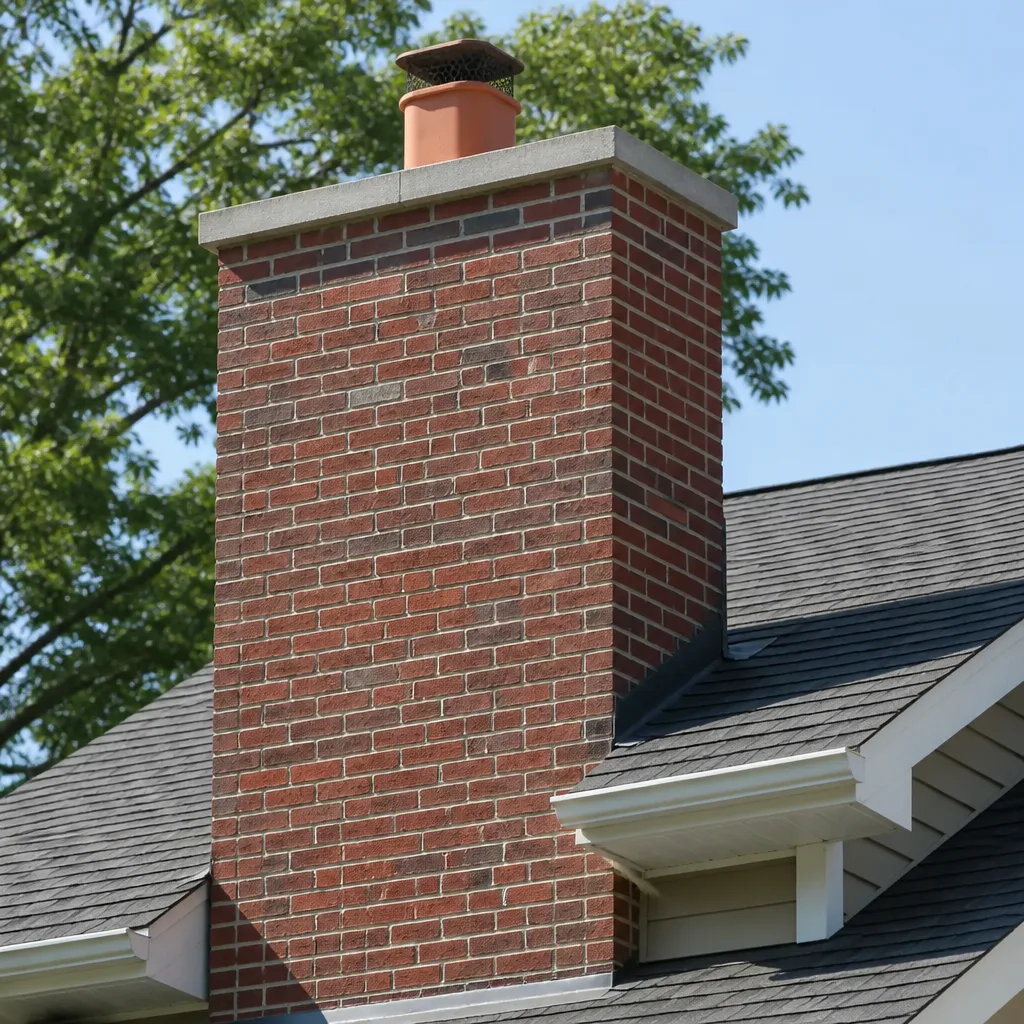
AfterSpalling Brick Repair in Framingham, MA
Spalling brick repair in Framingham typically runs between $350 and $1,800 depending on how many courses are affected and whether the chimney crown or mortar joints need attention at the same time. Most jobs we see in this area are caught early enough to repair without rebuilding - and same-week scheduling is usually available. If you’re watching bricks crack, flake, or shed chips onto your roof or patio, call us at (781) 390-9211 and we’ll tell you exactly what you’re dealing with before a single tool comes off the truck.
Spalling is what happens when water gets into the face of a brick, freezes, and forces the outer layer apart. Framingham’s freeze-thaw cycle is genuinely punishing. We get enough warm-to-cold swings between November and March that even well-built chimneys from the 1970s and ’80s start to show it - and the neighborhoods around Saxonville and Edgell Road, where a lot of those brick Colonials sit, keep us busiest every spring. The brick itself isn’t failing because it’s old. It’s failing because it’s wet, and it’s wet because something upstream let water in.
Top Hat Chimney has been doing this work in Framingham since 1999. Wendell Pike founded the company and still does the estimates himself on jobs like these, because spalling looks simple from the ground and isn’t. A loose chip on the cap might mean two replacement bricks. It might also mean the flashing has been wicking water into the crown for three winters and the damage runs halfway down the stack. You need someone who will actually look before quoting - and we back that look with upfront pricing and a 90-Day Done Right Promise, in writing, on every job.
If you want a second opinion on a quote you’ve already received, that’s free. No obligation. It’s one of the standing offers we’ve kept since the early days, because too many homeowners in Middlesex County have been handed a number over the phone and a different number at the door by outfits that aren’t answerable to anyone here. We are. For more context on the full scope of what we handle, the Chimney Repair in Framingham page covers the rest of the picture.
When You Need Spalling Brick Repair
- Brick chips or fragments on the roof deck or patio. If you’re finding reddish-orange chunks below the chimney after a cold snap, the face of the brick is separating. In Framingham, this happens most visibly in April and May after the freeze cycles finish their work. Don’t wait until the pile gets bigger.
- Horizontal cracking across the face of a brick. A crack that runs parallel to the mortar joint means water got in and froze behind the outer wythe. One or two bricks with this pattern is a repair. A whole course of them means the damage has been building for a while.
- White powdery staining on the chimney face (efflorescence). Efflorescence is salts being pushed out through the brick by moisture moving through the wall. It won’t hurt you to touch it, but it’s a clear sign the brick is saturated regularly. Left alone, spalling follows.
- Mortar joints that are recessed, crumbling, or missing in sections. When mortar goes, water finds the easiest path straight into the brick. Repointing the joints is often part of a spalling repair, not a separate project. We look at both together.
- A chimney that leans, bulges, or shows a visible offset. This one goes beyond surface spalling. If the stack looks like it’s moving, the structural integrity of the chimney is in question. Call us the same day. This is the version of the problem that does not wait.
- Damp spots on the ceiling near the fireplace wall, or rust stains inside the firebox. Interior water signs usually mean water is running down the flue or soaking through the brickwork above the roofline. In older Framingham homes with unlined flues, this path from exterior spalling to interior damage is short.
Our Spalling Brick Repair Process
- Free on-site estimate with a full visual inspection. Wendell or one of the crew climbs to the chimney and looks at the full stack – cap, crown, flashing, and every course of brick that’s accessible. We also check the firebox and throat from inside the house. The quote you get reflects what we actually saw, not a phone average. No trip charge inside Middlesex County.
- Identify and address the water source first. Replacing spalled bricks without fixing what let the water in is a waste of your money. We check the crown condition, the flashing seal at the roofline, and the chimney cap before we write a repair plan. If the cap is cracked or the flashing has lifted – both common in Framingham’s older housing stock – that gets folded into the scope.
- Remove damaged bricks and failed mortar. We cut out the compromised material cleanly. If the underlying brick courses are solid, we preserve them. If they’re not, we’re honest about that before we start. Partial rebuilds on older chimneys sometimes reveal a layer of damage that wasn’t visible from the outside, and we’ll stop and show you rather than proceed without telling you.
- Match brick and mortar to your existing chimney. This matters more than most contractors let on. Mortar that’s too hard for older soft brick will cause new spalling within a few winters – it’s a documented problem on pre-1980 chimneys throughout Middlesex County. We match the mortar type and texture to what’s there, and we source replacement brick that’s close in color and profile to what was original to the structure.
- Repoint surrounding joints where needed. Spalled sections almost always have softened mortar in the adjacent courses. We repoint those joints as part of the repair rather than leaving them for next season.
- Apply a penetrating masonry sealer. Once the new work has cured, we apply a breathable masonry water repellent rated for chimney use. This lets the masonry release vapor while blocking liquid water from entering the face. It won’t turn your brick shiny or change the look. It adds years between repairs in a climate like ours.
Spalling Brick Repair Pricing in Framingham
Framingham’s market for this type of work runs a fairly wide range because the scope varies so much between jobs. A chimney with two or three spalled bricks near the cap is a different afternoon than a chimney with deterioration running down six feet of exposed stack. Here’s what we typically see:
| Scope of Work | Typical Range |
|---|---|
| Minor repair – 1 to 5 spalled bricks, mortar repointing included | $350 – $650 |
| Moderate repair – 6 to 15 bricks, some repointing, sealer application | $650 – $1,100 |
| Larger repair or partial rebuild – 16+ bricks or structural involvement | $1,100 – $1,800+ |
| Crown repair combined with spalling repair (common package) | Add $200 – $500 |
| Masonry water repellent application (standalone or add-on) | $150 – $300 |
What moves the number up: scaffolding requirements on taller stacks, the need to match discontinued brick profiles on pre-1960 chimneys, flashing replacement as part of the same visit, and jobs where the damage has reached into the liner. What keeps it down: catching it early, when two courses of brick haven’t yet become six.
Every repair over $200 gets $40 off automatically – no code, no asking. Seniors and veterans always get 10% off the total. And if you’ve already got a written estimate from another company, bring it. The second opinion is free, and we’ll tell you honestly whether their scope looks right.
The number you hear on the phone is the number on the invoice. That’s been our policy since 1999, and it’s not going to change.
Why Spalling Brick Gets Worse Fast in Framingham
Framingham sits in a part of Middlesex County where January temperatures can drop to single digits one week and climb to the mid-40s the next. That cycle – freeze, thaw, freeze again – is the mechanism behind most of the spalling we repair. Brick is porous. It absorbs moisture from rain and snow. When that moisture freezes, it expands by about 9 percent. Do that thirty or forty times in a winter and even sound brick starts to fracture at the surface.
Chimneys are more vulnerable than walls because they stick up above the roofline on all four sides. There’s no overhang to keep rain off, no adjacent wall to block wind-driven water. The cap and crown are the first defense, and when those crack – which they do, especially on chimneys built before the mid-1990s when better crown mixes became standard – water gets in from the top and saturates the upper courses. Spalling starts there and works its way down.
In the Nobscot and Downtown Framingham areas, we see a lot of painted brick chimneys from the postwar era. Paint traps moisture inside the masonry rather than letting it breathe. That’s a reliable accelerant for spalling, and it’s one of the first things we flag on an inspection. We don’t strip the paint as a standalone job, but we factor it into how we seal and what we recommend.
The other factor is neglect during off-season months. Most homeowners don’t look at their chimney between May and October. Cracks form in summer heat, gaps open in the crown, and by the time November arrives the chimney is already set up for a rough winter. Once a year – burn or no burn – is the right interval for a look. Chimneys don’t take summers off from deteriorating.
What We Use and Why It Holds Up
We’re particular about materials on masonry repair jobs because cheap mortar and off-spec sealers are responsible for a lot of the repeat calls we get on work done by other contractors. For liner work that runs alongside structural repairs, we use HeatShield where the application fits – it’s a product designed specifically for chimney masonry and holds up to the thermal cycling in a way that generic patching compounds don’t. For sealing, we use penetrating water repellents from Copperfield and similar chimney-specific suppliers rather than the big-box sealers that film over the surface and trap vapor.
The brand matters less than the spec. What we’re looking for is a mortar with the right compressive strength for the existing brick – softer for older soft-fired brick, harder only when the substrate supports it – and a sealer that’s genuinely breathable. We’ve seen well-intentioned homeowners apply concrete sealer to a chimney and speed up the spalling significantly. The brick had no way to release vapor, and the water pressure behind the face went up instead of down.
Key Takeaways
- Spalling in Framingham is mostly freeze-thaw damage, not poor original construction. The climate does this to every chimney eventually.
- The repair cost in this area runs $350 to $1,800 depending on how much brick is affected and what else needs attention at the same time.
- Fixing the water source – cap, crown, flashing – has to happen before or with the brick repair, or the repair won’t last.
- Mortar type matters more than most contractors admit. The wrong mix on older brick creates new spalling within a few winters.
- Catching it early is significantly cheaper. Two spalled bricks is a half-day job. Twenty spalled bricks with structural involvement is a different project entirely.
- Every job is backed by the 90-Day Done Right Promise. If something isn’t right, one call brings us back – no runaround, no additional charge.
FAQs – Spalling Brick Repair
How much does spalling brick repair cost in Framingham?
Spalling brick repair in Framingham typically costs between $350 and $1,800, with most residential jobs falling in the $500 to $900 range when a moderate number of bricks are affected and mortar repointing is included. The main variables are how many bricks need replacing, whether the crown or flashing needs work at the same time, and how accessible the damaged section is. We publish upfront pricing before any work starts, and every repair over $200 gets $40 off automatically. Call (781) 390-9211 for a free estimate – it won’t cost you anything to find out exactly where your job falls.
Can I leave spalling brick alone if it doesn’t look that bad?
Waiting usually makes spalling more expensive to fix, not less. Each freeze-thaw cycle works on the existing fractures and opens new ones. What looks like surface cosmetic damage in October is often structural damage by March. In Framingham’s climate, a chimney that shows early spalling in fall will generally show noticeably worse spalling by the following spring. We’ll tell you honestly when a repair can reasonably wait a season and when it can’t – that’s part of the free estimate conversation.
Is spalling a sign my chimney needs to be rebuilt?
Spalling alone does not mean the chimney needs to be rebuilt. Most cases we see in Framingham are surface or upper-course damage that repairs cleanly without touching the structural base. A full rebuild becomes the right answer when the structural core of the chimney has deteriorated, when the damage runs from cap to roofline on multiple faces, or when the chimney is leaning. We’ll show you the camera footage and give you a plain-English verdict on the scope – no pressure in either direction.
How long does a spalling brick repair last?
A properly done spalling repair – matched mortar, replaced brick, sealed surface, and the water source addressed – should hold up for 15 to 25 years in this climate before the same area needs attention again. The big qualifier is “properly done.” Repairs made with overly hard mortar or sealed with a non-breathable product tend to fail within 3 to 5 years because they create new stress on the surrounding brick. We’re specific about materials for exactly that reason, and every repair we do carries the 90-Day Done Right Promise in writing.
For the full picture on what chimney repair looks like from the home inspection through final work, or to understand how spalling fits into the broader category of masonry and structural issues, the Chimney Repair in Framingham page is the right place to start.
Schedule Your Free Estimate in Framingham
If you’re seeing chips on the patio, cracks running across the face of the stack, or white staining on the brick – call (781) 390-9211. A live person answers around the clock, and it may well be Wendell himself. We’ll schedule a time that works, show up with a real arrival window, and give you honest pricing before anything else happens. No trip charge inside the county. No runaround. If the repair needs doing, we’ll tell you what it takes and back the work with the 90-Day Done Right Promise. If it doesn’t need doing yet, we’ll tell you that too.
Written by Wendell Pike, Owner at Top Hat Chimney, serving Framingham since 1999.